
Meet the newest members of the Early Career Board whose expertise spans the diverse landscape of toxicology.

Chemical Research in Toxicology is pleased to announce the newest members of its Early Career Board (ECB), a cohort of 11 emerging researchers who will help shape the journal’s evolution and growth.
Established in 2025, the ECB reflects the journal’s commitment to fostering collaboration across career stages and bringing emerging perspectives into the evolution of Chemical Research in Toxicology. ECB members help the journal stay connected to the changing research landscape by identifying emerging topics and contributing perspectives that provide a forward-looking view of the field or a critical, holistic assessment of important areas of toxicology. Through this engagement, they help inform the journal’s editorial direction and strengthen its connection with the next generation of toxicology research. ECB members also support special issues and virtual collections, serve as ambassadors for the journal within their scientific communities, participate in peer review within their areas of expertise, and provide input that advances diversity and inclusion across the journal’s content and community.
The newest members join the inaugural cohort of ECB members, bringing the Board’s total membership to 18 and further broadening the expertise and perspectives helping to shape the journal’s future.
Browse by Member:
Fei Cheng, Guangzhou Institute of Geochemistry, Chinese Academy of Sciences, China
Luke Erber, University of Kansas, United States
Lakindu S. Pathira Kankanamge, Aldevron LLC, United States
Faria Khan, Institute of Physical Chemistry, Polish Academy of Sciences, Poland
Marissa Kosnik, Swiss Federal Institute of Aquatic Science and Technology, Switzerland
Xinyan Li, Guangdong University of Technology, China
Zhong-Min Li, Nankai University, China
Rukmankesh Mehra, Indian Institute of Technology Bhilai, India
Srijit Seal, Human Chemical Co., United States
Xiliang Yan, South China Agricultural University, China
Guomao Zheng, Southern University of Science and Technology, China
Meet the Newest Members of the Chemical Research in Toxicology Early Career Board
Fei Cheng
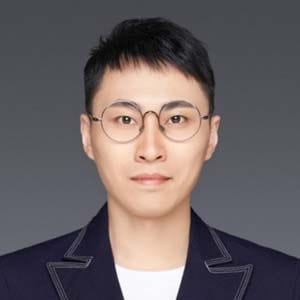
Dr. Fei Cheng is an Associate Researcher at the Guangzhou Institute of Geochemistry, Chinese Academy of Sciences. His work integrates environmental toxicology, analytical chemistry, and data science to identify hazardous chemicals in complex mixtures.
Dr. Cheng developed an event-driven taxonomy framework that classifies chemicals by bioactivity and mechanistic pathways, combining high-throughput screening, adverse outcome pathway knowledge, and computational modeling to identify drivers of mixture toxicity. He also uses text mining, machine learning, and large toxicological databases, including ToxCast and Tox21, to prioritize contaminants and toxicity pathways. More recently, he has combined deep learning with high-resolution mass spectrometry–based non-target analysis to connect bioactivity signatures, structural features, and spectral evidence.
His research advances new approach methodologies and supports more predictive, reproducible, and mechanistically interpretable chemical safety and environmental risk assessment.
Luke Erber
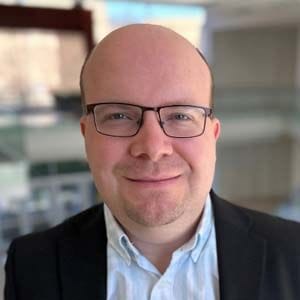
Dr. Luke Erber conducts research in the Department of Medicinal Chemistry at the University of Kansas, using mass spectrometry to connect changes in cell phenotype with disease. His program examines endogenous and exogenous DNA modifications, DNA–protein interactions, the DNA damage response, and epigenetic regulation through bio-orthogonal chemistry, nucleic acid chemistry, and biological mass spectrometry.
Dr. Erber earned a B.S. in chemistry and biology from Concordia University Chicago and a Ph.D. in biochemistry from the University of Minnesota, followed by postdoctoral training in medicinal chemistry and biological sciences. His graduate research characterized oxygen- and iron-sensing pathways involving proline hydroxylation and phosphorylation, including the regulation of BRD4 by PHD2. During subsequent training, he developed quantitative mass spectrometry methods to study genotoxic and carcinogenic mechanisms, including DNA adduct formation following 1,3-butadiene exposure. This work has contributed to multiple first-author and collaborative publications.
Lakindu S. Pathira Kankanamge
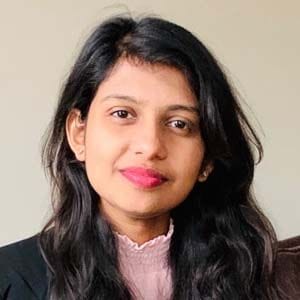
Dr. Lakindu S. Pathira Kankanamge is a biomedical scientist with more than 10 years of research experience across molecular biology, biochemistry, regenerative medicine, bioinformatics, and drug discovery. At Aldevron LLC, she leads research on polymerase engineering, enzyme-fidelity assessment, and rolling-circle amplification workflows to improve nucleic acid performance in therapeutic and biomanufacturing applications.
Dr. Kankanamge earned her Ph.D. from Northeastern University and completed postdoctoral training at Harvard Medical School. She has authored more than 10 peer-reviewed publications and contributed to the discovery and characterization of five novel enzymes, the identification of 17 cancer biomarkers, and targeted therapeutic strategies in oncology, cardiometabolic disease, and infectious disease. Her expertise includes protein and viral-vector engineering, next-generation sequencing, single-cell and multi-omics analysis, assay development, and bioinformatics. She is also experienced in technical leadership, cross-functional collaboration, and mentoring.
Faria Khan
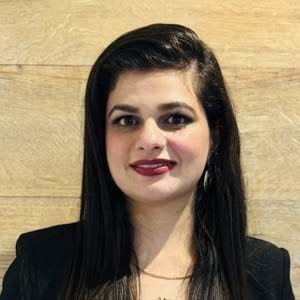
Dr. Faria Khan is an environmental inhalation toxicologist and Assistant Professor in the Environmental Chemistry Group at the Institute of Physical Chemistry, Polish Academy of Sciences, in Warsaw. Her research examines how climate-related air pollutants and emerging contaminants affect respiratory health using mechanistic, human-relevant lung models. She integrates atmospheric chemistry and advanced in vitro methods to characterize exposure–response relationships and pathways involving oxidative stress, inflammation, and epithelial dysfunction.
Dr. Khan earned her Ph.D. in Chemical Sciences in 2022 as a Marie Skłodowska-Curie Fellow and completed postdoctoral training at the Harvard T.H. Chan School of Public Health. She has authored 18 peer-reviewed publications, secured principal-investigator funding from Poland’s National Science Centre, and contributed to international collaborations, including NIEHS-supported research. She also serves on the Executive Board of the Marie Curie Alumni Association and supports scientific reviewing, editing, mentorship, and postgraduate training.
Marissa Kosnik
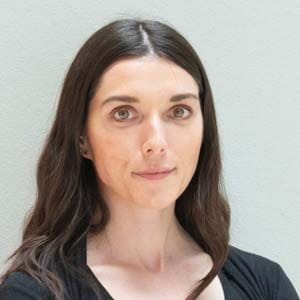
Dr. Marissa Kosnik is a tenure-track group leader at the Swiss Federal Institute of Aquatic Science and Technology, where she leads the Systems Biology group in the Department of Environmental Toxicology. Her research investigates how chemical exposures interact with genetic variation to influence health and disease across human and non-human organisms. Supported by the Swiss National Science Foundation, Novartis, and the EU-funded TerraChem project, her group applies adverse outcome pathways, landscape genomics, and data-integration pipelines to predict chemically induced effects.
Dr. Kosnik earned her Ph.D. in Toxicology from North Carolina State University in 2019, focusing on computational methods that integrate in vivo, in vitro, in silico, epidemiological, and genetic data. She subsequently completed postdoctoral training at Stockholm University and the Technical University of Denmark, where she continued studying gene–environment interactions and contributed to the emerging field of absolute environmental sustainability assessment of chemical pollution.
Xinyan Li
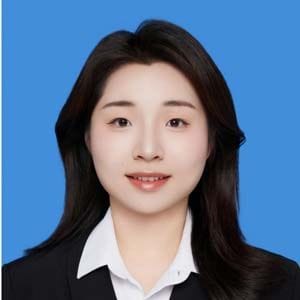
Dr. Xinyan Li is an Associate Professor in the School of Biomedical Engineering at Guangdong University of Technology through the Young Hundred Talents Program. She earned a B.S. in Environmental Science from Tongji University and a Ph.D. from the Research Center for Eco-Environmental Sciences, Chinese Academy of Sciences. Her research integrates environmental toxicology, analytical chemistry, organoid models, and deep learning. Current priorities include high-throughput toxicity screening, the immunotoxic mechanisms of emerging pollutants, organoid-based pharmacological and toxicological assays, and computational toxicology.
Dr. Li has authored or co-authored more than 20 SCI-indexed papers, contributed a book chapter, and holds four Chinese and two U.S. invention patents. As principal investigator, she has secured 10 research grants totaling more than one million RMB. She received the Fourth Chinese Chemical Society Young Environmental Chemist Award and holds several professional service and editorial roles.
Zhong-Min Li
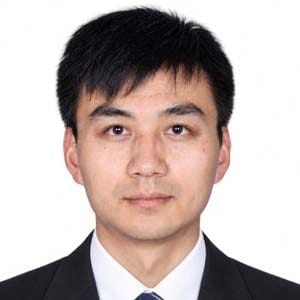
Dr. Zhong-Min Li is a Professor at Nankai University in Tianjin, China, a position he has held since February 2026.
He earned a B.S. in Environmental Science from Jilin University in 2013 and an M.S. in Environmental Science from the Chinese Academy of Sciences in 2016. In 2020, he completed a Ph.D. in Environmental Health at the Technical University of Munich. Dr. Li subsequently worked as a Postdoctoral Fellow at the New York University School of Medicine and as a Research Scientist at the New York State Department of Health.
His academic and professional training spans environmental science, environmental health, and biomedical research in China, Germany, and the United States.
Rukmankesh Mehra
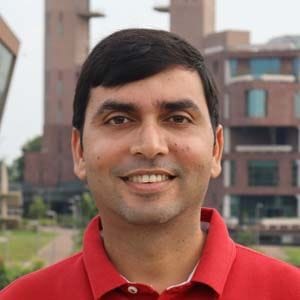
Dr. Rukmankesh Mehra is an Associate Professor in the Department of Chemistry at the Indian Institute of Technology Bhilai. His research integrates computational chemistry, chemical biology, and toxicology, with expertise in molecular modeling, drug design, bio- and cheminformatics, molecular dynamics, and artificial intelligence for drug discovery. He investigates protein folding, stability, and molecular recognition, with applications to infectious diseases, Alzheimer’s disease, cytochrome P450 biology, and the effects of mutations on protein function.
Dr. Mehra earned his Ph.D. in 2016 from the CSIR–Indian Institute of Integrative Medicine in Jammu. He subsequently held a National Postdoctoral Fellowship at the University of Jammu and completed postdoctoral research at the Technical University of Denmark. His publications span computational drug discovery, protein biophysics, genomics, and structure-based analysis of viral fitness.
Srijit Seal
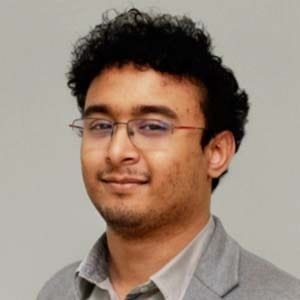
Dr. Srijit Seal is a computational scientist working at the intersection of artificial intelligence, cheminformatics, and toxicology. He is a Principal Scientist at Human Chemical Company and a Visiting Researcher at Uppsala University.
Dr. Seal earned his Ph.D. from the University of Cambridge under the supervision of Andreas Bender, where he developed machine-learning approaches to predict drug safety by integrating chemical and biological data. He later trained in the Carpenter–Singh Lab at the Broad Institute of MIT and Harvard and previously served as a Senior AI Scientist in industry. His work focuses on applying data-driven and computational methods to chemical safety and toxicological prediction.
Xiliang Yan
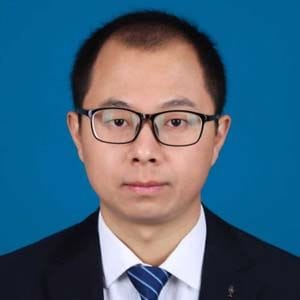
Dr. Xiliang Yan is an Associate Professor in the College of Animal Science at South China Agricultural University.
Dr. Yan earned his Ph.D. in 2020 from the School of Chemistry and Chemical Engineering at Shandong University and completed joint training in computational chemistry at Rutgers University through the China Scholarship Council. From 2020 to 2023, he served as a Lecturer at the Institute of Environmental Research at Guangzhou University. His research combines big data, machine learning, and molecular simulation to understand nano–bio interactions.
He has published more than 60 peer-reviewed articles, including work in Nature Communications, Chemical Reviews, and Angewandte Chemie. His current goal is to use artificial intelligence and computational techniques to address challenging mechanistic questions in nano–bio interactions.
Guomao Zheng
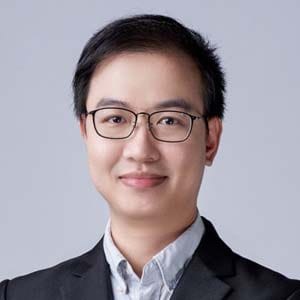
Dr. Guomao Zheng is a faculty member in the School of Environmental Science and Engineering at Southern University of Science and Technology. His research spans environmental analytical chemistry, exposure science, and toxicology, with an emphasis on emerging contaminants, human exposure, bioaccumulation, and metabolic transformation.
Using targeted and high-resolution mass spectrometry, he investigates contaminants in environmental and biological matrices, including quaternary ammonium compounds, PFAS, brominated chemicals, and disinfection byproducts. His work has identified underrecognized bioaccumulative contaminants and developed protein-affinity-guided approaches to discover chemicals with enhanced biological retention potential. Dr. Zheng has also studied xenobiotic biotransformation, toxicokinetics, and intrinsic clearance as predictors of bioaccumulation and trophic magnification.
Before joining SUSTech, he conducted research at Indiana University and Peking University. His publications include articles in Environmental Science & Technology, Environment International, and Proceedings of the National Academy of Sciences.
About the Journal
Chemical Research in Toxicology publishes on a wide range of topics in Toxicology that inform a chemical and molecular understanding and capacity to predict biological outcomes on the basis of structures and processes. The overarching goal of activities reported in the journal is to provide knowledge and innovative approaches needed to promote intelligent solutions for human safety and ecosystem preservation. The journal emphasizes insight concerning mechanisms of toxicity over phenomenological observations. It upholds rigorous chemical, physical and mathematical standards for characterization and application of modern techniques.
