
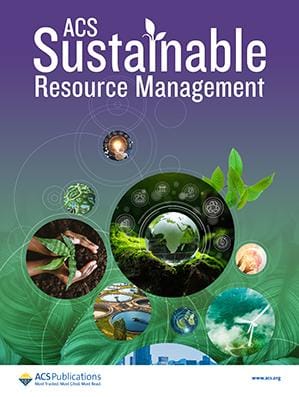
ACS Publications recently launched ACS Sustainable Resource Management, an interdisciplinary journal publishing original research describing the science and practice in the sustainable use of natural and waste resources.
The journal is led by Deputy Editor Professor Michael Tam, Ph.D. He will work closely alongside Editor-in-Chief Professor Peter Licence, Ph.D. (who also manages sibling publication ACS Sustainable Chemistry & Engineering) to help grow ACS Sustainable Resource Management in its inaugural year and further strengthen the ACS Publications Sustainability journal family.
We recently caught up with Prof. Tam and Prof. Licence to learn more about their backgrounds, what inspires their research, and their hopes for the future of ACS Sustainable Resource Management.
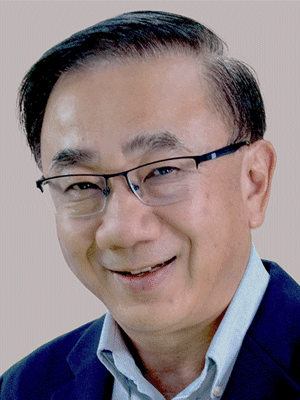
Professor Michael Tam, Deputy Editor, ACS Sustainable Resource Management
What is your vision for ACS Sustainable Resource Management, and how do you hope the community will benefit from research published in the journal?
The vision of ACS Sustainable Resource Management is to inspire and empower researchers, practitioners, and policymakers to fulfill the United Nations Sustainable Development Goals. We hope that the community will gain new knowledge and ideas that will feed into the future research activities.
What are you currently working on, and what excites you most about it?
My research focuses on sustainable nanomaterials, particularly cellulose nanocrystals with the goal of exploiting them for water treatment, functional foods, agriculture, biomedical science, and consumer goods. Sustainable nanomaterials are excellent carbon sinks, and they are renewable and have unlimited supply, which will be critical in sustaining the needs of future generations.
What do you think are the most important challenges facing environmental chemistry today?
Some of the key challenges facing environmental chemistry is to find innovative and economical approaches to close the loop in the utilization of natural resources. Another challenge is to conduct efficient reactions with high yield in water or green solvents at ambient temperature, and which do not require extensive purification.
Which of the UN Sustainable Development Goals would you most like the journal to support?
The journal will contribute to several UN Sustainable Development Goals, however the one that the journal will contribute most is Goal 12 – Responsible Consumption and Production
Where do you think your field will be 10 years from now? How do you hope ACS Sustainable Resource Management will be in 10 years?
The future of the planet depends on society in making a shift from unsustainable to sustainable practices. It is our hope that ACS Sustainable Resource Management will be the journal of choice for researchers working in the field of sustainable resource management. Our hope is that the journal will make an impact by disseminating knowledge and information that inform society on the progress made in this domain.
As Deputy Editor of ACS Sustainable Resource Management, what are you looking for in a paper?
We look for papers that push new boundaries and offer new paradigms and strategies on topics closely related to sustainable resource management. The papers should contribute new knowledge, scientific discoveries, chart new frontiers that will also generate healthy debates, which will advance our understanding on this important field.
Do you have any advice for emerging researchers for their career development?
My advice to emerging researchers is to take risks, solve difficult problems and be patient while waiting for the results of your labor of love.
Prof. Tam is a Professor and University Research Chair in the Department of Chemical Engineering at the University of Waterloo, Canada. He obtained his B.Eng. and Ph.D. degrees in Chemical Engineering from Monash University, Australia. He served as an Associate Editor of ACS Sustainable Chemistry & Engineering from 2015 to 2023 and holds the position of University Research Chair in the field of functional colloids and sustainable nanomaterials.
----------------------------
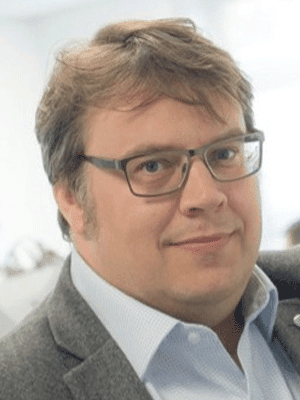
Professor Peter Licence, Editor-in-Chief, ACS Sustainable Resource Management
What does it mean for you to be Editor-in-Chief of ACS Sustainable Resource Management?
For me taking the role of EiC is a pinnacle position in terms of the level of leadership and influence that I can share to ensure the health and vibrancy of this truly critical field of activity. As a practitioner, a chemist!, I genuinely believe that the physical sciences and engineering communities must focus on the challenge of today, addressing the multiple crisis that we are experiencing in terms of social, economic and indeed environmental impacts. As chemists we are solely responsible for the creation and management of novel chemical entities, surely it is also our responsibility to claim back the planetary boundary?
Who have been your biggest mentors throughout your research career?
Well that is truly a very difficult question to answer because there have been so many amazing mentors from whom I have learned and indeed been inspired. If I was forced to distil these down then I would come to a list of three! Sir Martyn Poliakoff, who introduced me to the field of Green Chemistry, Paul Anastas who has been a career long inspiration to me and my dear friend Nigist Asfaw who has worked tirelessly to secure the position of Green Chemistry, under challenging conditions, in Ethiopia. Together they epitomize why we must push for sustainable solutions to secure a healthy and balanced future, but I would say there are many more heros across the field of sustainable chemistry and engineering who inspire me every day 😊.
Which of the UN Sustainable Development Goals would you most like the journal to support?
I genuinely believe that the ACS Sustainable family, ACS-SCE and ACS-SRM, offer contributions that resonate to all of the 17 SDGs especially goal 17 which heralds the need for partnerships to truly deliver impact! I think that this is a fantastic question to turn back to the many contributors to our family of journal at the ACS, where does your work land and how can this be more openly communicated to non-specialist readers and those who are simply just visiting our journals for inspiration?
Where do you think your field will be 10 years from now? How do you hope ACS Sustainable Resource Management will be in 10 years?
I guess that that many of us active in the field of sustainable chemistry and engineering share a similar hope or aspiration, that at some point in the future adjectives including sustainable, or perhaps green are simply no longer needed, and that all research is rightfully recognized as delivering new insight that it improves the way we realize products or processes that deliver societal impacts without causing harm or damage along the way. I truly believe that no one attempts an experimental programme, or indeed any form of research, with the aim to make their subject less efficient or worse in terms of performance or efficiency.
Do you have any advice for emerging researchers for their career development?
The best advice that I could give to any early career researcher at this point in time would be to focus on a topic that they are truly passionate about! Research has a unique was of toying with our emotions…. there are days that bring highs which are inevitably followed by days when nothing appears to work.
Prof. Licence is Professor of Chemistry at the University of Nottingham, UK. He obtained his B.Sc. and Ph.D. degrees in Chemistry from Bangor University, UK. He is also the inaugural director of the GlaxoSmithKline Carbon Neutral Laboratory for Sustainable Chemistry, a globally unique £25M multi-disciplinary research institute that is designed to radically reduce the environmental impact of carrying out chemistry in every sense.
Want More from This Journal?
Stay Connected
Sign up today for email updates on the latest research, issues, and other content from ACS Sustainable Resource Management.