
This Special Issue aims to showcase cutting-edge research that explores innovative chemical principles, materials, and methodologies to advance battery science and technology. Submit your manuscript by November 30, 2026.
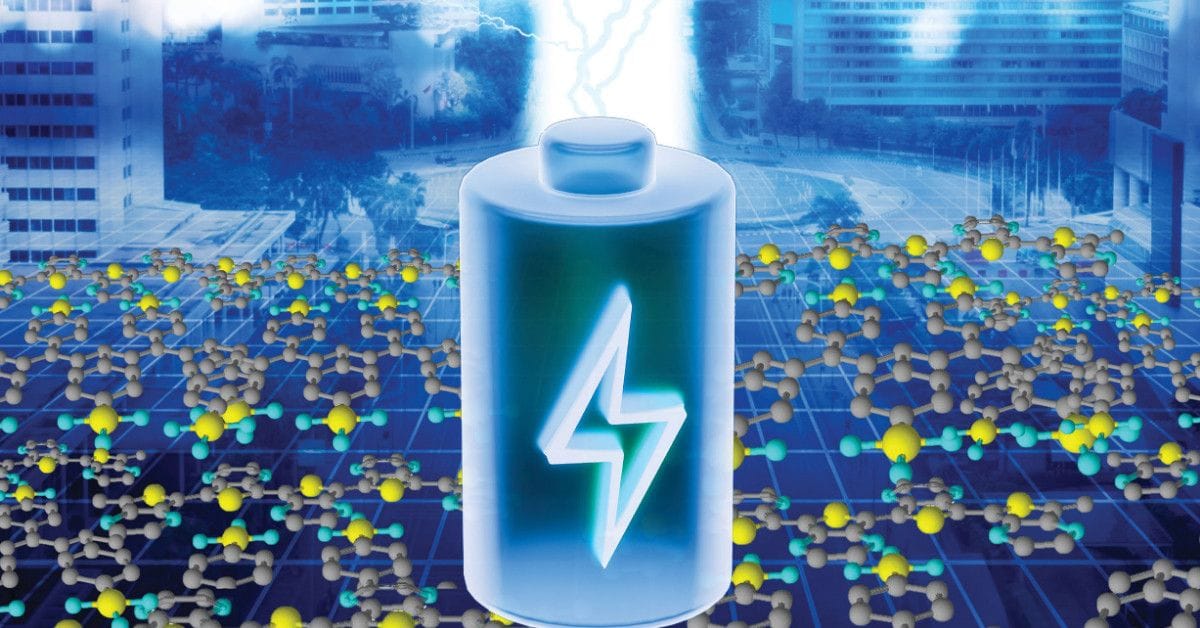
The invention of the Voltaic Pile by Alessandro Volta marked the first time humans could generate a steady electric current on demand; improved batteries like the Daniell Cell made long-distance communication possible; the invention and commercialization of the Lithium-ion battery, pioneered by John B. Goodenough, Stanley Whittingham, and Akira Yoshino, have transformed modern life. With the expansion of renewable energy sources like solar and wind, batteries play a critical role in making these intermittent sources dispatchable, enabling a sustainable, electrified world in the near future. Batteries matter because they decouple energy from place and time—allowing energy to be stored when and where it is available and use it when and where it is needed. This seemingly simple capability has repeatedly reshaped technology and society.
Precision chemistry is essential for battery science and technology because electrochemical performance is governed by highly localized, nonlinear, and dynamically evolving chemical environments. By enabling deterministic control over interfacial structures, reaction pathways, and concerted atom and charge transport processes, precision chemistry transforms battery research from empirical optimization to mechanism-driven design.
This Special Issue, to be featured in Precision Chemistry, aims to showcase cutting-edge research that explores innovative chemical principles, materials, and methodologies to advance battery science and technology. We welcome contributions spanning fundamental studies, materials design, and device-level innovations that leverage precision chemistry to enable next-generation energy storage systems.
Topics may include, but are not limited to:
- Interface and interphase chemistry in batteries
- Novel electrochemistry for next-generation batteries
- Multiscale transport of charges and masses in porous electrodes
- Data-driven analysis of battery failure mechanisms and safety hazards
Organizing Editors
Hengxing Ji, Guest Editor
University of Science and Technology of China, China
Yan Yu, Guest Editor
University of Science and Technology of China, China
Xiangfeng Duan, Executive Editor, Precision Chemistry
University of California, Los Angeles, United States
Submission Information
Manuscripts accepted for inclusion in this Special Issue will be highlighted as a significant contribution to this expanding field. If accepted, publications will go online as soon as possible with a DOI, and will be published in one of the next available issues. Publications on this topic will be assembled into a Special Issue and widely promoted.
Submissions are welcome through November 30, 2026. All articles will be peer reviewed prior to acceptance to ensure they fit the scope of the Special Issue and meet the high scientific publishing standards of Precision Chemistry. The peer review process for all papers will be managed by the journal editors to ensure rigor is maintained.
Precision Chemistry is an open access journal.
How to Submit
- Log in to the ACS Publishing Center.
- Select the "Journals" tab.
- Choose Precision Chemistry.
- Click "Submit."
- Select your manuscript type, and, under "Special Issue Selection," choose “Charge by Design: Precision Chemistry for the Future of Batteries."
Please see our Author Guidelines for more information on submission requirements. The deadline for submissions is November 30, 2026.

Get e-Alerts
Stay Connected With Precision Chemistry
Never miss an issue again! Sign up now for email updates on future calls for papers, the latest articles, and other content from Precision Chemistry.