
ACS Catalysis encourages researchers to share a Review on a topic in catalysis or an Account of a key individual in the field. Learn more about how to submit a proposal.
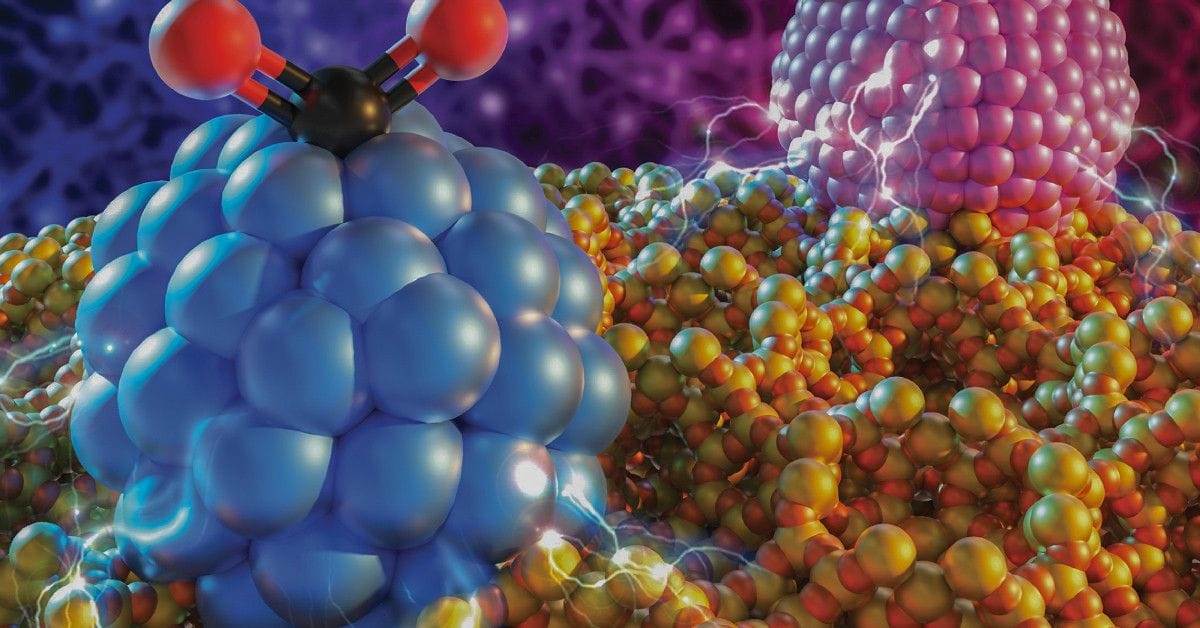
Reviews and Accounts are key manuscript types at ACS Catalysis, providing authors with the opportunity to share an in-depth review of a selected topic or prominent researcher’s career. These manuscripts are typically invited by editors, and now prospective authors may submit a proposal for consideration by the editorial team.
What are Reviews and Accounts at ACS Catalysis?
Reviews are comprehensive, critical examinations of a selected topic, typically over a defined time period. Unsolved problems and emerging areas should be highlighted. A Review should consist of a maximum of 40 pages (approximately 65,000 characters) of main text, literature citations, tables, and legends. Most Reviews are expected to be substantially shorter in length, but the length will be dictated by the subject matter to some degree. Authors are strongly encouraged to remember that catalysis should be the primary focus of the work and to address in the cover letter what differentiates their submission from the most recent and related Reviews, Perspectives, or Viewpoints published in the topic area.
Accounts are reviews of a prominent catalysis researcher's scientific contributions, published to mark the researcher's retirement or other notable event/anniversary. They should include details of the researcher's career, including their scientific and technical influences and positions held, with the main body of the piece discussing the major new findings or advances he/she made over his/her career. In the majority of cases, these will be organized chronologically. Contributions are not written by the subject of the contribution, but are instead typically written by current or former associates of the scientist or engineer. Accounts adopt a format similar to Perspectives, being typically 6–20 journal pages in length (8,000-15,000 words) and using figures, schemes, and tables where possible as well as photographs where appropriate. Note that permission must be obtained for use of all pictures and figures. Accounts will be published infrequently by the journal.
How to Submit a Review or Account Proposal
Review Proposals
Review proposals should be submitted in the form of a Proposal manuscript type via the ACS Publishing Center. The manuscript document should include the following and be no longer than 1 page in total. If the manuscript document does not meet these requirements, your proposal will not be considered.
- Proposed Title
- Abstract
- Key References to be included in the Review
- Author list (including the corresponding author’s email address)
- References to your own work which showcase why you are a suitable expert to write this review
Proposals will be reviewed by the editorial team like a typical submission. As such, you will receive a decision letter via email and, if approved, you will be sent an invitation to submit your Review manuscript.
Account Proposals
Account proposals should be submitted via the form linked below. Proposed Accounts will be collected and reviewed together by the editorial team every six months in January and July. Follow-up emails will come shortly thereafter once decisions have been made. Please note that Account proposals will not be reviewed immediately upon submission.
If you have any questions regarding such proposals, please contact the editorial office at eic@catalysis.acs.org.
Highlighted Examples of Published Reviews
- Photocatalytic CO2 Reduction: A Review of Ab Initio Mechanism, Kinetics, and Multiscale Modeling Simulations
- Heterolytic Dissociation of H2 in Heterogeneous Catalysis
- Choose Your Own Adventure: A Comprehensive Database of Reactions Catalyzed by Cytochrome P450 BM3 Variants
- P,N Ligand in Ni-Catalyzed Cross-Coupling Reactions: A Promising Tool for π-Functionalization
- Pulse Manipulation on Cu-Based Catalysts for Electrochemical Reduction of CO2
- Aromatics Production via Methanol-Mediated Transformation Routes
- Mechanisms of Photoredox Catalysis Featuring Nickel–Bipyridine Complexes
- A Review on the Application of In-Situ Raman Spectroelectrochemistry to Understand the Mechanisms of Hydrogen Evolution Reaction
- Nature’s Toolbox for the Hydrolysis of Lactams and Cyclic Imides
- Catalytic Routes for Direct Methane Conversion to Hydrocarbons and Hydrogen: Current State and Opportunities
- Single Electron Transfer-Induced Redox Processes Involving N-(Acyloxy)phthalimides
- Photocatalysis toward Microplastics Conversion: A Critical Review
Get e-Alerts
Stay Connected With ACS Catalysis
Never miss an issue again! Sign up now for email updates on future calls for papers, the latest articles, and other content from ACS Catalysis.