Learn more about each of the winners, gain insight into their research inspirations, and view their winning posters.

ACS Publications, in partnership with the University of Vienna, hosted a Symposium, "Catalysis for Organic Synthesis," from July 31 - August 1, 2024. This two-day event presented a exciting convergence of ideas and discovery across organic, organometallic, and related fields of chemistry.
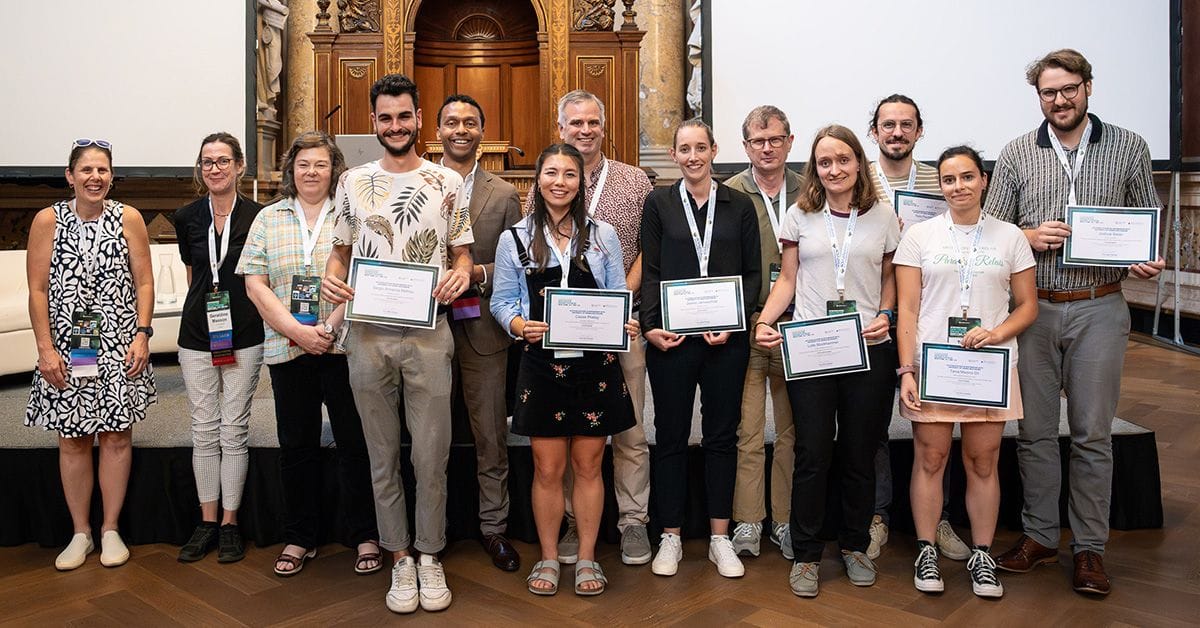
The symposium's Scientific Organizing Committee accepted 95 abstracts, which were presented in person during the event. Six poster winners and one fan favorite were selected based on their exceptional research. We caught up with each of the winners to learn about what inspires their work, current unsolved issues affecting their respective fields, and helpful tips for first-time poster presenters.
We hope you enjoy getting to know each of the winners and exploring their research below.
Tania Medina Gil, Poster Prize Winner
View the Winning Poster
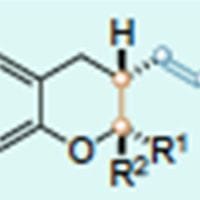
Synthesis of 3-Vinylchromanes Combining Gold(I)-Catalysis and the Use of Acetylene Gas
Tania Medina-Gil, Anna Sadurní, Anders L. Hammarback, Antonio M. Echavarren
What inspired you to pursue your area of research?
I have wanted to be a chemist since I was in high school. However, it was not until my second year of my Bachelor program when I decided to pursue organic chemistry. In particular, I think catalysis has made possible reactions that before were considered impossible.
Who are your mentors? How have they impacted your work so far?
My mentor is my Thesis Director and Supervisor Prof. Antonio M. Echavarren. He has always guided me through my research and I've had the opportunity to share with him many scientific discussions.
Where did you get the idea for the research presented in your talk?
We were highly interested in the development of gold(I)-catalyzed intermolecular reactions because they have remain underdeveloped for decades. In addition, we wanted to use acetylene (the smallest alkyne) in combination with gold(I) catalysis, and with this aryloxyvinylation reaction we were able to report a novel intermolecular reaction to obtain chromane-containing products. Given these results, we were intrigued about the possibility of performing this transformation in a completely intermolecular manner where neither the alkyne, the alkene, nor the nucleophile are covalently linked. Finally, we found N-vinyl benzamides as suitable substrates for the three component gold(I)-catalyzed alkoxycyclization reaction.
What advice would you give to anyone presenting a poster or talk for the first time?
My advice would be to remain calm and be confident of the research that you are about to present. Don't start thinking that your work is not important enough or that you are not going to be able to communicate it to others. Your poster or talk is going to be as important as the others, so be sure about your work and try not to get nervous.
What do you think is the most important unsolved problem in your field right now?
In general, in catalysis, I think there are still some transformations that can't be performed as well as some others that, even though they work, researchers don't really have a full mechanistic picture.
Jasmin Janneschütz, Poster Prize Winner
What inspired you to pursue your area of research?
I have always been interested in chemistry and organic synthesis appears to be the perfect fit for me. The fact that we can contribute to the development of potential lead structures for new therapeutics inspires me.
Who are your mentors? How have they impacted your work so far?
I met my current supervisor, Prof. Nina Schützenmeister, at the beginning of my studies and since then I had the opportunity to develop both theoretical and practical skills in organic synthesis. She taught me to stay curious and to learn something from every setback. In addition, Dr. Thomas Hackl introduced me to the fascinating field of NMR, which opened up a different perspective for my current research projects.
Where did you get the idea for the research presented in your talk?
The initial idea was based on previous research results from our group combined with the research on air-stable N-methyliminodiacetic acid (MIDA) boronates in Suzuki-Miyaura cross coupling reactions, introduced by Burke in 2009.
What advice would you give to anyone presenting a poster or talk for the first time?
Talk about the core message first and build a story around it. Know your audience and do not be afraid to share the challenges you faced during the presented project. Sometimes great ideas come up during these discussions.
What do you think is the most important unsolved problem in your field right now?
One of the main challenges that will remain in our society is the emerging antibiotic/antiviral resistance to current drugs. Therefore, development of novel drugs is absolutely essential. A dream would be to design an antibiotic, which will not cause development of resistances in bacteria.
Sergio Armentia Matheu, Poster Prize Winner
View the Winning Poster
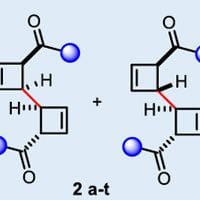
Ni-Catalyzed Stereoconvergent Dimerization of Cyclobutenes
Sergio Armentia Matheu, Philipp Spie, Adriano Bauer, Guilhem Coussanes, Saad Shaabana, and Nuno Maulide
What advice would you give to anyone presenting a poster or talk for the first time?
Be confident about your work, you are an expert on it. Learn to enjoy to present it and talk about it, and also enjoy the whole experience regarding the event you are in: it involves being exposed to new exciting topics and meeting new and interesting people!
Dr. Pietro Pecchini, Poster Prize Winner
View the Winning Poster
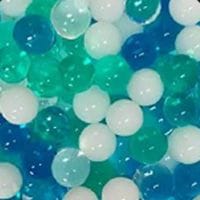
Barium Alginate Gel Beads: A Chiral Macroporous Material from Brown Algae for Heterogeneous Asymmetric Catalysis
Pietro Pecchini, Daniel Antonio Aguilera, Alberto Soccio, Alessio Lombardi, Fátima Sanz Azcona, Nicolò Santarelli, Mariafrancesca Fochi, Pierrick Gaudin, Nathalie Tanchoux, and Luca Bernardi
What inspired you to pursue your area of research?
The pioneering research on aminocatalysis performed by MacMillan and List were my very first approach to the catalysis world, that amused me from the very beginning. Later, I started to explore organocatalysis with its wide range of applicability.
Who are your mentors? How have they impacted your work so far?
I really love the versatile approaches in science, so between the many scientists that I consider extremely valuable I would say Ben Feringa. Then, my supervisor Luca Bernardi is a daily inspiration in my work, since he is able to combine a huge knowledge of chemistry and the rigidity of science to the fantasy and versatility of his work on heterogeneous catalysis.
Where did you get the idea for the research presented in your talk?
The main idea was to explore the field of transfer of the chiral information from a biopolymer to a prochiral substrate.
What advice would you give to anyone presenting a poster or talk for the first time?
Chill! It's your research and your topic. Be calm and explain it as clear as possible in very few words.
What do you think is the most important unsolved problem in your field right now?
Even if it is not really original, the environmental aspect is nowadays still the most important to care about.
Dr. Cassie Pratley, Poster Prize Winner
View the Winning Poster
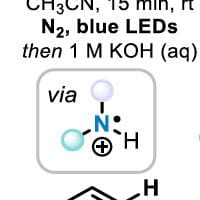
Ground State Generation and Cyclization of Aminium Radicals in the Formation of Tetrahydroquinolines
Cassie Pratley, Sabine Fennera, John A. Murphy
What inspired you to pursue your area of research?
Organic chemistry has always fascinated me, whether it is finding new ways to create complex structures or the developing of new technologies to enable new types of reactions, there is always something exciting around the corner.
Who are your mentors? How have they impacted your work so far?
I have been incredibly fortunate to be surround by inspiring scientists, far too many to name. One thing I will take with me is how my supervisors/mentors have always been extremely generous with their time. With that, they have always been willing to open doors for me, whether that is opening up their network or finding opportunities for me to develop (both personally and scientifically).
Where did you get the idea for the research presented in your talk?
My research was focused on looking photochemical methods to form C–N bonds, although as the project progressed, we found under certain conditions light wasn’t actually a necessary component of the reaction. I think it highlights how research isn’t always linear and can evolve out of serendipitous findings.
What advice would you give to anyone presenting a poster or talk for the first time?
Some of the most engaging discussions I have had with other researchers have always been rooted in enthusiasm for the research being presented. Be confident and proud of your research!
What do you think is the most important unsolved problem in your field right now?
As someone who enjoys researching in photochemistry, there is a consistent stream of exciting photochemical transformations being published. However, from an industry perspective, one of the key problems with these photochemistry transformations is how do we scale them? It’s exciting to see the effort going into researching how industry can utilize these cool transformations.
Joshua Sailer, Poster Prize Winner
View the Winning Poster
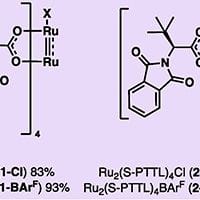
Diruthenium Tetracarboxylate Catalysts for Selective Cyclopropanation and C–H Insertion Reactions with Aryl Diazoacetates
Joshua K. Sailer, Huw M. L. Davies
What inspired you to pursue your area of research?
Controlling reactive intermediates has always fascinated me since taking sophomore organic chemistry. I wanted to learn how to use these compounds to our advantage in designing novel organic transformations.
Who are your mentors? How have they impacted your work so far?
My PI, Dr. Huw Davies, has had a tremendous impact on my work. Working with Dr. Davies, I have learned to analyze every result with a high level of scrutiny. You never know what surprising conclusions you might reach by looking at things from a new perspective.
Where did you get the idea for the research presented in your talk?
When I began graduate school, the price of rhodium was as high as it had ever been. We wondered whether we could find a viable alternative metal for metallo-carbene transformations.
What advice would you give to anyone presenting a poster or talk for the first time?
Be genuine! It can help keep your audience's attention if they see that you are genuinely excited to share your research with them.
What do you think is the most important unsolved problem in your field right now?
Developing C–H functionalization reactions using first-row transition metal catalysts is critical for generating industrially practical and environmentally friendly organic transformations for the future.
Lotte Stockhammer, Fan Favorite
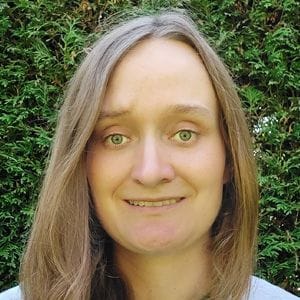
What inspired you to pursue your area of research?
To me, it is fascinating to see how nature selectively synthesizes single enantiomers with ease, while we chemists need complicated methods and/or catalysts to do so. Still, it intrigues me, what we already are able to do in the lab. This, together with the possibility to "play around with molecules" is what probably got me into organic chemistry—and of course the great working atmosphere in the Waser group!
Who are your mentors? How have they impacted your work so far?
Here, I have to mention my supervisor Mario Waser, who is not only a great role model on an academic, but also on a personal level. I am sure I can speak in the name of the whole group here! During my Ph.D., I also had the chance to work together with Andrew D. Smith (St. Andrews), one of the pioneers of isothiourea chemistry. During a research stay at LMU Munich I also had the chance to work together with Armin R. Ofial, where I could learn a lot about physical organic chemistry. In this context, I would also want to mention my colleague Andreas Eitzinger.
Where did you get the idea for the research presented in your talk?
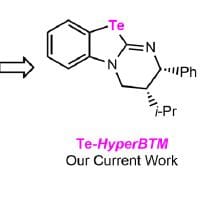
My poster presentation mainly revolved around the synthesis and characterization of novel isoseleno- and isotelluroureas. This research project started, as we, alongside with the Smith group, saw that selenium containing catalysts often outperformed their sulfur analogs. We were interested in whether this is a more general trend among the chalcogen group and also whether this applies to performance in reactions only but also to properties such as nucleophilicity and Lewis basicity.
What advice would you give to anyone presenting a poster or talk for the first time?
For me, a good tip was to try to figure out who your audience is and to not overcomplicate: It might be logical for you, as you have spent a long time reading and doing the lab work, but the people you are talking to might never have heard about the concept at all. It is also makes a difference whether you present at a general chemistry conference, or a more specific one. A good tip is to talk to more senior colleagues beforehand, they usually had similar worries/questions when presenting for the first time and have made a lot of experiences since then.
What do you think is the most important unsolved problem in your field right now?
When thinking about isochalcogenourea catalyzed asymmetric a-functionalization reactions of C(1) ammonium enolates, one quickly notices, that most methods build up tertiary stereocenters only and come to their limits when attempting to build up quaternary centers. When thinking about organic chemistry in general, it might be the origin of homochirality of nature.
View all of the winners below:
Want to Learn More About ACS Publications Journals and Events?

Submit a Manuscript
Publish Your Research in ACS Journals
Contribute to advancing the forefront of organic and inorganic chemistry by publishing your next paper in an ACS journal. Explore our portfolio of prestigious, impactful organic and inorganic journals to find the best fit for your research.

Learn More
Browse and Register for Upcoming Events
Discover and register for events in chemistry and related fields from ACS Publications global events including in-person, virtual, hybrid, and even on-demand.