Get to know this year's winners, what inspires their research, and the future breakthroughs they hope to see in their fields.

Annually, ACS Catalysis has the pleasure of honoring recent and significant contributions to the field of catalysis by an individual or a team with the ACS Catalysis Lectureship for the Advancement of Catalytic Science award. In partnership with the ACS Division of Catalysis Science and Technology (CATL) and the ACS Division of Organic Chemistry (ORGN), this year’s awards tie directly to a ground-breaking publication in ACS Catalysis.
In recognition of the large scope of catalysis covered by ACS Catalysis, the 2024 award has been given in each of the three areas of catalysis covered by the journal: biocatalysis or enzymology, heterogeneous catalysis, and homogeneous catalysis.
It is our pleasure to announce the 2024 awardees:
- Biocatalysis: Serge Ruccolo, Merck & Co., Inc., United States
- Heterogeneous Catalysis: Christina W. Li, Purdue University, United States
- Homogeneous Catalysis: Christo S. Sevov, The Ohio State University, United States
Learn more about each of the winners below.
Serge Ruccolo

Serge grew up in the northeast of France and did his undergraduate studies at the Ecole Normal Supérieure in Lyon, France. He did his doctoral research with Prof. Gerard Parkin at Columbia University focused on the synthesis and characterization of zinc complexes and postdoctoral studies with Prof. Dan Nocera at Harvard University on in photoredox catalysis, spectroscopy and kinetics. He began his career at Merck in 2018 where he supported a variety of small and large molecule projects first in the Analytical R&D department, then in Process Chemistry R&D. He has developed various transition metal and enzyme-catalyzed transformations and worked on electrochemistry for large-scale processes.
Can you give us a short overview of the research you are currently undertaking?
At Merck, our group is focused on developing new synthetic techniques to advance and accelerate the production of active pharmaceutical ingredients (APIs). We explore cutting-edge synthetic methodologies and data-rich technologies combined with computational modeling and machine learning. Our goal is to cut down the number of steps in API synthesis, replace expensive, toxic and unsustainable reagents with more cost effective and green alternatives, and to build extensive knowledge on our processes to achieve the ideal commercial manufacturing route for our APIs. We recently have been exploring electrochemical methods to recycle critical cofactors in biocatalytic reactions, as well as developing new catalytic systems for the reduction of disulfide bonds in proteins, with applications towards antibody-drug conjugates.
What inspired you to pursue your area of research?
I’ve always been fascinated by the complexity of biology and the ability of enzymes to drive complex reactions in a chaotic environment. During my grad school experience in Prof. Ged Parkin’s lab at Columbia University, I had a chance to learn about how enzymes incorporate metals and use their unique properties to expand the scope of biochemical reactions. I learned a lot about electrochemistry and electron transfer during my postdoc with Prof. Dan Nocera at Harvard University, especially how enzymes transport electrons across many hurdles to their final target.
When I arrived at Merck, I was exposed to the exponentially growing power of biocatalysis, driven by the ability to evolve, engineer and optimize enzymes to achieve unprecedented reactivity and performance. This situation enabled me to perfectly tie in my curiosity for biology with my training in inorganic chemistry and electrochemistry. I noticed several instances where electrochemistry could improve biocatalytic reactions and was able to find exciting applications in various Merck API synthetic routes and in other highly impactful problems arising in our pipeline.
What does winning this award mean to you?
I am proud to receive this award, but none of this work would have been possible without the support and commitment of many colleagues with varied scientific and personal backgrounds who came together as one team to solve challenging problems and achieve results that none of us would have been able to achieve on our own. I want to dedicate this award to everyone who was involved in this work, and beyond that, all the mentors and collaborators I had the privilege of interacting with over the course of my career.
This recognition also highlights the growing importance of biocatalysis and electrochemistry and their potential to solve important problems in pharmaceutical synthesis.
What advances are you hoping to see in your field in the next decade?
I believe that biocatalysis and electrochemistry have the potential to have much greater impact on the many challenges facing the world today including dwindling natural resources and ever-increasing pressures on the environment. I look forward to seeing rapid uptake of these technologies to bring forward a new wave of green and sustainable processes.
What’s one piece of advice you’d give to someone just entering the field?
There are many of exciting potential applications for these technologies, don’t be afraid to be bold with your ideas. But make sure you surround yourself with the best people because they will truly lift you up and enable you to go much further than you would have ever imagined.
____
Christina W. Li
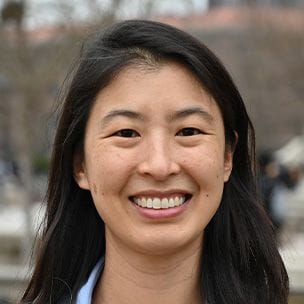
Christina W. Li was born and raised in southern California. She received an A.B. in chemical and physical biology from Harvard University in 2009, performing undergraduate research with Professor David Evans. She completed her Ph.D. in chemistry at Stanford University, working with Professor Matthew Kanan on nanostructured Cu electrodes for CO2 reduction. She then did postdoctoral work at UC Berkeley with Professor Paul Alivisatos on colloidal semiconductor nanocrystals.
She began her independent career in the chemistry department at Purdue University in 2016 where her group focuses on colloidal synthetic strategies to tune the electronic properties and ensemble geometry of nanoparticle active sites for electrochemical, thermal, and organic catalytic reactions. She was promoted to associate professor in 2023. She received an NSF CAREER Award in 2021 and an NIH MIRA in 2023.
Can you give us a short overview of the research you are currently undertaking?
Our current research focuses on developing heterogeneous catalysts for stereoselective organic reactions. Heterogeneous hydrogenation catalysts are incredibly useful in organic synthesis because of their fast reactivity and broad scope but could gain even greater traction if their selectivity were better controlled. However, achieving stereoselectivity using a heterogeneous catalyst is extremely challenging for the simple reason that heterogeneous surfaces tend to be flat.
Our research has been trying to tackle this challenge by designing bimetallic alloy surfaces for substrate-directed hydrogenation reactions. We take inspiration from molecular catalysts to design surfaces that can simultaneously bind a directing group and an alkene, and we have now shown that bimetallic alloys containing a noble metal (Pt, Pd) and a first-row transition metal (Ni, Cu) are capable of highly diastereoselective OH-directed hydrogenation of tri- and tetrasubstituted olefins. We are excited to further elucidate the structure of the active site as well as to expand the catalytic concept to more challenging reactivity problems.
What inspired you to pursue your area of research?
Heterogeneous catalysts are structurally very complex, but I have always aspired to think about active sites on these materials in a molecular fashion. This project, which takes a well-known concept from molecular catalysis and translates it onto a nanoparticle surface, has really been the perfect combination of ideas that I gravitate towards as a chemist. I take constant inspiration from the molecular catalysis community, both from the pioneering examples of directed hydrogenation catalysts from the 1980s as well as more generally on how to think about designing well-defined active sites for selective reactivity.
This project also combines all of the aspects of my academic training. My undergraduate research was in organic synthesis, but I transitioned to materials chemistry during my Ph.D. and postdoctoral training. It has been very fun to come full circle in my independent career and bring a materials chemistry approach to organic catalysis.
What does winning this award mean to you?
Winning this award is an incredible honor, and it is really a credit to my graduate students and the brilliance, creativity, and tenacity that they exhibit every day in the lab. Our work is rooted in heterogeneous catalysis but intersects with many other fields of chemistry, so I’m hoping that this award will bring greater visibility to our work in the broader chemistry community.
What advances are you hoping to see in your field in the next decade?
I’m excited to see heterogeneous catalysis continue to broaden and intersect with other disciplines of chemistry. Traditionally, the heterogeneous catalysis community rarely interacts with organic chemists despite the fact that organic chemists use heterogeneous catalysts all the time. I think there are a ton of exciting opportunities and interesting scientific problems to tackle at this intersection. Materials chemistry is also advancing rapidly in terms of the precision of our synthetic methods and our ability to characterize surfaces at the atomic level, so I’m hoping that my aspiration to think of surface active sites as molecular entities will soon become a reality!
What’s one piece of advice you’d give to someone just entering the field?
Be open and curious about your science, and you’re bound to find something cool!
____
Christo S. Sevov
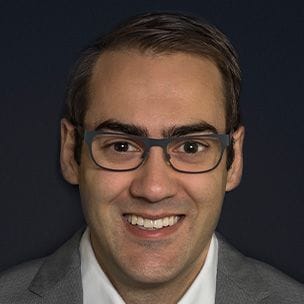
Christo was born in Sofia, Bulgaria and moved to the US at the age of four. He spent his formative years in South Bend, IN and received his B.S. in 2009 from the University of Notre Dame. There, Christo worked with Prof. Olaf Wiest on photocatalyzed cycloaddition reactions with selectivities that complement those of traditional Diels-Alder processes. Christo earned his Ph.D. in 2014 after beginning his studies at the University of Illinois Urbana-Champaign with Prof. John Hartwig and later moving with the group to the University of California Berkeley. His research involved the development of methods and mechanistic study of metal-catalyzed additions of C–H, N–H, and O–H bonds across alkenes. Following his doctoral studies, Christo conducted his postdoctoral work with Prof. Melanie Sanford at the University of Michigan. Applying an organic chemist’s approach to energy storage, Christo designed new organic and organometallic compounds that could serve as redox liquids for large-scale flow batteries.
Christo joined the faculty of The Ohio State University in the summer of 2017 and is now an associate professor. His group merges his love of catalysis and electrochemistry to develop new synthetic organic methods, upcycle chemical wastes and plastics, and design high-capacity flow batteries.
Can you give us a short overview of the research you are currently undertaking?
My team’s research centers on the development of strategies at the interface of homogeneous catalysis and electrochemistry that can be broadly applied towards organic synthesis and electrochemical storage. Many of the electrosynthetic methodologies developed by our group are possible because of a synergy between conventional transition metal catalysts for cross coupling and redox-active mediators developed by the battery community. In certain instances, yields from electrocatalytic reactions can be dramatically improved with the incorporation of co-catalytic quantities of soluble battery compounds and other redox mediators that serve to either assist in electron transfer with the coupling catalyst, protect the coupling catalyst from over-oxidation/reduction and degradation, or promote in the formation of highly-reactive intermediates. This merger of organic synthesis and battery chemistry has allowed us to uncover unexpected reaction mechanisms that enable new chemical reactions, in a range of oxidative and reductive coupling reactions. Finally, insights into electrocatalytic mechanisms have led us to catalytic target reactions that remediate chemical wastes, such as phosphine oxides, or modify plastics, such as PVC.
What inspired you to pursue your area of research?
I have always been inspired by the elegance of catalysis. During my time as a graduate student, the organometallic community had established a very thorough understanding of the elementary organometallic reactions (oxidative addition, migratory insertion, etc) that occur in many metal-catalyzed synthetic methods. Right when many of these catalytic reactions seemed predictable, we began seeing single-electron processes merged into transition metal catalysis. These new one-electron processes, often driven by photoredox catalysts, completely upended what I thought was possible. Revisiting the classic field of electrosynthesis, but with our modern understanding of organometallic chemistry, seemed like an exciting strategy to driving these 1e- processes that could further advance our synthetic capabilities.
What does winning this award mean to you?
I’m thrilled to see that the creativity and dedication of my coworkers is recognized by this fantastic award. They are the ones that brought these catalytic methodologies to life and worked tirelessly to gain insights into the underlying reaction mechanisms.
What advances are you hoping to see in your field in the next decade?
My wish-list for advances in electrocatalysis is long! At the practical level, I would like to see improvements to the miniaturization of electrochemical reactions. This would greatly accelerate reaction discovery and might further improve the accessibility of electrosynthesis within the synthetic community. At the conceptual level, I hope to see an improved understanding of interactions between homogeneous catalysts and electrodes at the electrode interface that can be used to guide an organic chemist’s intuition. Finally, I would like to see more battery chemists join the field of electrosynthesis. Many of the challenges that synthetic electrochemists encounter are issues that battery community has solved long ago. They have unique insights and perspectives that can greatly accelerate the pace of reaction discovery.
What’s one piece of advice you’d give to someone just entering the field?
First, design a reliable electrochemical setup that will yield consistent and reproducible results. Once you have a system established, go for it! The field of electrocatalysis as applied to organic synthesis remains extremely underdeveloped. Many of the reactions you target will spawn completely unexpected and exciting chemistries.