
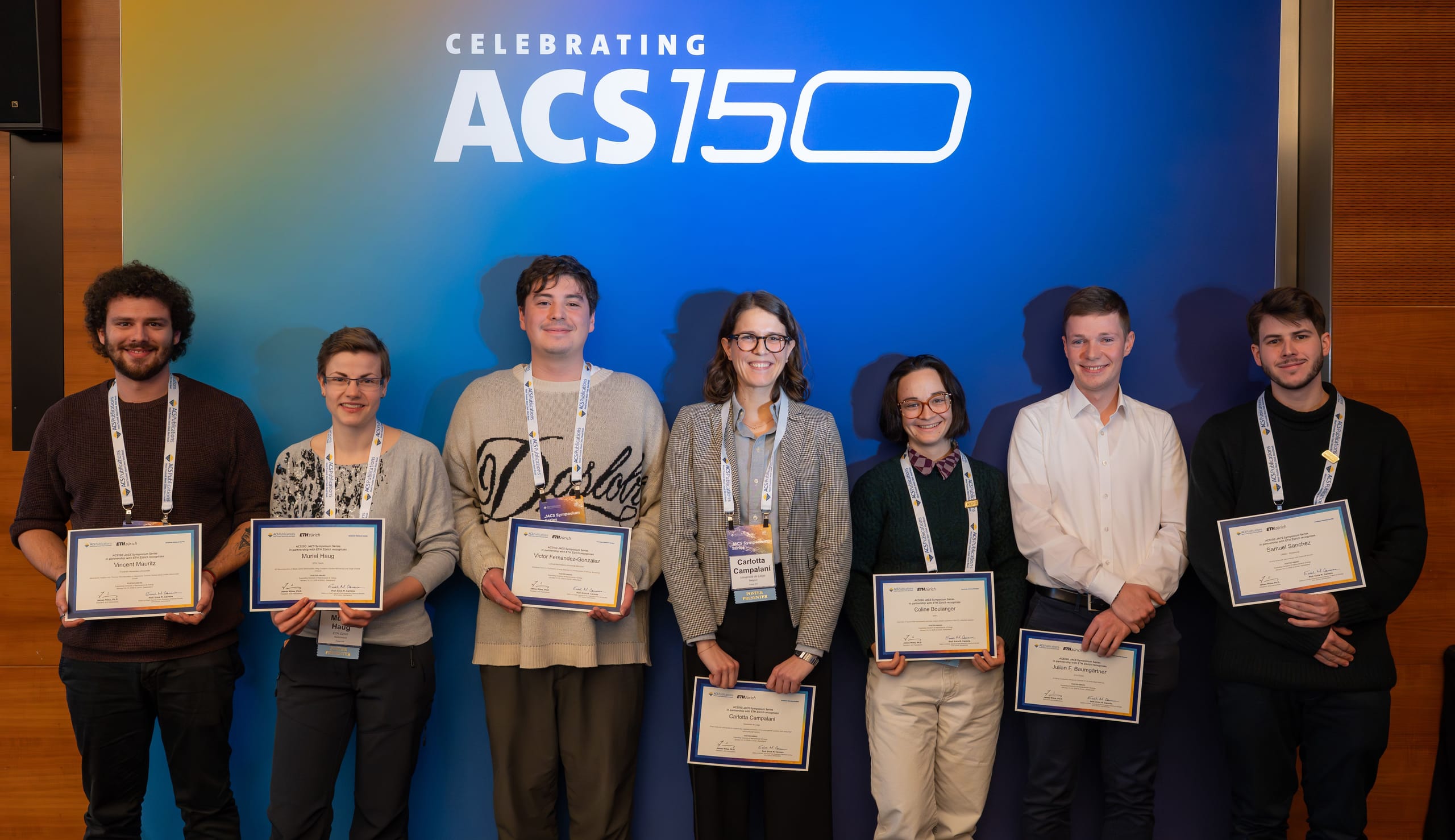
This celebratory event, which brought together leaders in nanoscience and energy, recognized seven emerging researchers for their exceptional poster presentations. Learn more about the winners and their outstanding work.
As part of the global ACS150 celebrations, ACS Publications hosted the inaugural JACS Symposium at ETH Zürich this January.
Aligned with the theme, "Expanding Horizons of Nanoscience & Energy,” the symposium brought together leading voices in nanoscience, materials, and energy research, and featured 10 keynote lectures—including Nobel Laureate Moungi Bawendi—and four Lightning talks.
The Editors-in-Chief of JACS, ACS Nano, Nano Letters, and ACS Energy Letters participated along with several associate editors. Over 1.5 days of talks, more than 350 participants experienced a JACS in Conversation panel discussion, vibrant networking, and exciting poster sessions highlighting cutting-edge work from early‑ and mid-career researchers across Europe and beyond. On-demand recordings are now available for all to view.
The symposium’s poster session showcased the creativity and scientific excellence of the next generation. After careful evaluation by the Scientific Organizing Committee, seven outstanding posters were selected for special recognition. Please join us in celebrating the Poster Prize Winners of the inaugural JACS Symposium at ETH Zürich.
Meet the Poster Prize Winners:
Julian F. Baumgärtner
Vincent Mauritz
Dr. Carlotta Campalani
Coline Boulanger
Victor Fernandez-Gonzalez
Samuel Sanchez
Muriel Haug
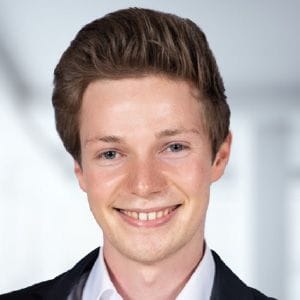
Julian F. Baumgärtner
Winning Poster: A Highly Conductive Halospinel Cathode for All-Solid-State Batteries
Research Area: Energy Conversion and Storage
What inspired you to pursue your area of research?
At the core of my chemical education and research lies a strong motivation to address climate change through a fundamental understanding of functional inorganic materials. During my PhD studies, I therefore chose to study novel cathode materials based on earth-abundant elements for Li-ion batteries. This work combines the development of novel synthesis methods with structural characterization using diffraction and electron microscopy, as well as detailed electrochemical analysis.
Who are your mentors? How have they impacted your work so far?
Throughout my chemistry journey, I have been lucky to encounter many exceptional scientists who offered me their support and guidance. Starting from Prof. Ingo Krossing (University of Freiburg) whose creativity continuously amazed me; to Prof. Christophe Copéret (ETH Zürich), who placed an enormous amount of trust in me early on, guided me closely, and always did so with a smile on his face; to Prof. Maksym Kovalenko (ETH Zürich), my current PhD supervisor. You'll know it when you meet him, but his ability to think outside the box and grasp ideas effortlessly is unmatched, and I feel honored to work alongside him.
What inspired the idea for the research presented in your poster?
From my initial PhD studies, I gained a deep insight into the design principles that underpin fast charge and discharge on an atomic scale, which led me to hypothesize that the modest mixed ionic–electronic conduction of state-of-the-art oxide-based cathodes may be greatly improved by substituting their rigid oxide sublattice with a softer chloride one. Indeed, the mixed ionic–electronic conduction in spinel-type lithium iron chlorides is approximately 10 times higher than in state-of-the-art cathode materials.
What advice would you give to anyone presenting a poster or talk for the first time?
You're presenting your work to educate people, not to impress them. As a teacher, ask yourself how you would like this work to be presented to you, and not just what you would like to show people.
What do you think is the most important unsolved problem in your field right now?
Supplying enough electrochemical energy storage to power the energy transition is ultimately a resource problem. Since it's questionable whether the raw materials for Li- or even "post" Li-ion batteries will suffice to meet this demand, the development of a battery composed of earth-abundant elements, preferably an aqueous proton battery, that can match the energy and power density of current Li-ion batteries, would be the ultimate goal.
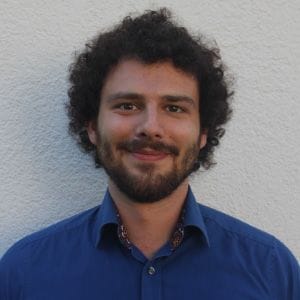
Vincent Mauritz
Winning Poster: Mechanistic Insights into Thiourea Decomposition in Oleylamine Towards Tailored Metal Sulfide Nanocrystal Growth
Research area: Quantum Dots
What inspired you to pursue your area of research?
During my studies in chemistry, I worked as a student trainee in the electrical engineering field. For my PhD, I therefore wanted to combine my passion for chemistry with my interest in engineering. Nanomaterials combined these two worlds for me, because we use chemistry to synthesize them and engineering principles to put them to use.
Who are your mentors? How have they impacted your work so far?
Dr. Ryan W. Crisp is a key figure in my career as a researcher. Together with my colleague Katharina E. Dehm, we started a new research group four years ago and have been building it up since then. Both Dr. Ryan W. Crisp and Katharina E. Dehm have supported and guided me along this path, and together we made the best persons out of each other.
What inspired the idea for the research presented in your poster?
In my PhD studies on metal sulfide nanomaterials, I struggled with reproducibility. So I took a step back and asked, "Do we really understand the chemistry behind nanomaterial formation?" I then wrote a review paper on the chemistry of sulfur sources in nanomaterials synthesis and realized that we still know surprisingly little about this chemistry. Building on this insight, I took my go-to sulfur precursor in my syntheses and investigated the chemistry behind it. Ultimately, this led to beautiful results, I was even able to make a synthesis work after four years of trying because of this study.
What advice would you give to anyone presenting a poster or talk for the first time?
It is not about how cool, how new, or how high impact your research has. It is about how you present it and how enthusiastic you are about your topic!
What do you think is the most important unsolved problem in your field right now?
As Prof. Raffaella Buonsanti put it in her talk: "We need to understand the formation mechanism and the chemistry behind nanomaterials formation. As molecular chemists have retrosynthesis with molecules, we as nanomaterial researchers also need a retrosynthesis toolbox for nanomaterials."
Dr. Carlotta Campalani
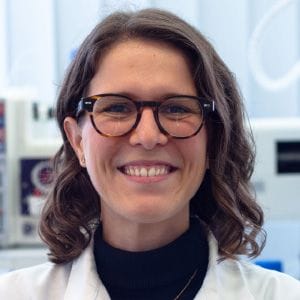
Winning Poster: From Molecular Mechanism to Scalable Flow: Aqueous Production of Cd Chalcogenide Quantum Dots using tris(2-carboxyethyl)phophine
Research area: Quantum Dots
What inspired you to pursue your area of research?
I became interested in chemistry in high school thanks to an inspiring teacher. I initially trained in green organic chemistry, but during my master’s thesis, I discovered nanomaterials and was immediately fascinated. At the nanoscale, materials can behave in counterintuitive ways, showing properties that do not exist at larger scales. Quantum Dots are a striking example: their optical properties depend on particle size, allowing the same material to emit different colors. This combination of fundamental science and tunable functionality convinced me to pursue research in this field.
Who are your mentors? How have they impacted your work so far?
My first mentor was my PhD supervisor, Prof. Alvise Perosa. He taught me how to approach challenges with perspective and showed me that, in science and in life, communication and collaboration are often the key. My current PI, Prof. Jean-Christophe Monbaliu, has been another important mentor. He encouraged me to see chemistry with broader boundaries, combining synthesis with engineering and regulatory aspects, and taught me resilience when facing complex challenges.
What advice would you give to anyone presenting a poster or talk for the first time?
My main advice would be to stay calm and confident, and not feel pressured to know everything. A poster or talk is an opportunity for discussion, not an exam. Be open, honest, and curious: both about the science and about the person in front of you. A clear explanation, a positive attitude, and genuine interest in feedback go a long way.
What do you think is the most important unsolved problem in your field right now?
One of the most pressing challenges in the Quantum Dots field is toxicity. While some of the highest-performing Quantum Dots contain toxic elements, such as cadmium, and their use could raise serious environmental and health concerns. Developing less toxic alternatives that can match the performance of these established systems, while remaining scalable and sustainable, is a key challenge that the field must address.
Coline Boulanger

Winning Poster: Chemistry of Liquid Metal Nanoparticles and their Unique Catalytic Properties in the CO2 Reduction Reaction
Research area: Nanocatalysis, Energy Conversion and Storage
What inspired you to pursue your area of research?
I find the nanoworld fascinating, especially when nanomaterials can be used as catalysts for more sustainable and greener chemistry. Liquid metals took this fascination a step further, as their liquid nature makes them behave very differently from solid nanoparticles.
Who are your mentors? How have they impacted your work so far?
I’m fortunate to work in a lab with experienced colleagues who naturally became mentors over time. Through everyday challenges, they’ve strongly shaped the way I think about experiments and approach research challenges.
What inspired the idea for the research presented in your poster?
Copper is the most widely used catalyst for producing C2+ products in the electrochemical CO2 reduction reaction (CO2RR), but it undergoes reconstruction during operation, often leading to a rapid decrease in catalytic activity. In contrast, liquid metals such as gallium exhibit properties distinct from solid catalysts, avoiding issues like facet reconstruction and coking, but they still require improved activity. This motivated the idea of combining gallium with other metals to enhance catalytic performance while preserving the advantages of its liquid nature.
What advice would you give to anyone presenting a poster or talk for the first time?
The best conversations I’ve had at conferences have always come from genuine excitement about the work being presented. If you’re enthusiastic and engaged, people will respond to that. Trust your work, be confident, and don’t be afraid to show why you find it interesting.
What do you think is the most important unsolved problem in your field right now?
While many CO2RR catalysts show promising activity, ensuring their stability over long operating times and translating these results to scalable processes remains a major open challenge.
Victor Fernandez-Gonzalez
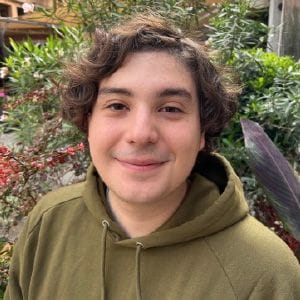
Winning Poster: Visualizing Dynamic Processes in Energy Materials by Interferometric Scattering Microscopy
Research area: Energy Conversion and Storage, Plasmonic Nanomaterials, 2D Materials
What inspired you to pursue your area of research?
I have always been fascinated by the idea of unraveling processes that occur at the nanoscale, particularly in energy-related materials. Much of today’s cutting-edge technology relies on physical and chemical processes that we still do not fully understand at this scale. What excites me most is the opportunity to bridge that knowledge gap by collaborating across different scientific communities and using that collective insight to rationally design and improve functional materials.
Who are your mentors? How have they impacted your work so far?
My primary mentor is my supervisor, Prof. Emiliano Cortés. His work pushing the frontiers of nanoscale energy conversion has inspired me to pursue a deeper understanding of complex material systems and to explore a wide range of energy-relevant phenomena using interferometric scattering (iSCAT) microscopy.
What inspired the idea for the research presented in your poster?
The motivation was to showcase iSCAT microscopy as a powerful tool for visualizing nanoscale processes in energy materials and to spark interdisciplinary discussions about how this technique can benefit a wide range of material systems.
What advice would you give to anyone presenting a poster or talk for the first time?
I would say: relax, enjoy the moment, and try to communicate why you find the work exciting. When your message is clear and your enthusiasm is genuine, it will naturally connect with the audience.
What do you think is the most important unsolved problem in your field right now?
One of the most important open challenges is achieving a detailed understanding of processes at the nanoscale. Gaining real-time insight into how materials evolve during synthesis and how they operate under working conditions is essential for the rational design of next-generation, sustainable materials that can meet global climate and energy demands.
Samuel Sanchez
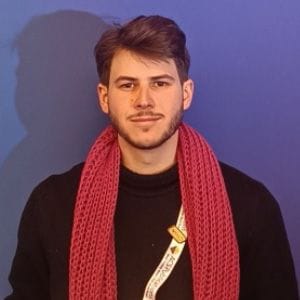
Winning Poster: Driving Molecular Upconversion with Molecular Wheels
Research area: Photovoltaics, Energy Conversion and Storage
What inspired you to pursue your area of research?
Lanthanide coordination chemistry is often overlooked and considered too bland or limiting. However, I believe that, in the coming decades, lanthanide coordination and supramolecular chemistry for luminescent probes and single-molecule magnets will continue to grow and become an increasingly important branch of chemistry. I therefore wanted to expand my knowledge to include this fascinating area of science.
Who are your mentors? How have they impacted your work so far?
During these early years, I’ve had the fortune of meeting many inspiring scientists, which has helped shape who I am, both personally and scientifically. I will always be grateful to Dr. Chryslaine Rodriguez for helping me develop a critical attitude toward my work and myself. I would also like to thank Dr. Jennifer Wytko and Dr. Jean Weiss for helping me develop my laboratory skills. And my supervisor, Dr. Loïc Charbonnière, for his kindness and for the high level of scrutiny and analysis he has provided, which has resulted in a standard I aim to achieve in my professional life.
What inspired the idea for the research presented in your poster?
Literature surveys and simplicity. You can't get simpler than a wheel! When I started my project, I often took an overly complicated approach, but sometimes good, solid ideas result from simple concepts backed by experience.
What advice would you give to anyone presenting a poster or talk for the first time?
People can always sense authenticity and calmness. For me, this is partly due to preparation and confidence.
What do you think is the most important unsolved problem in your field right now?
In our field, achieving efficient up- or down-conversion of photons at the molecular scale while utilizing simple systems remains a persistent challenge.
Muriel Haug
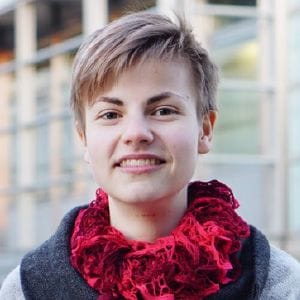
Poster Title: 3D Reconstruction of Magic-Sized Nanocrystals Using Cryogenic Electron Microscopy and Single Particle Analysis
Research area: Quantum Dots
What inspired you to pursue your area of research?
More than what it is, it is the who that inspired me the most. I gave myself a lot of time to decide whether I wanted to do a Ph.D. or enter industry after finishing my studies. Because of the amazing time I had working on my research project under the supervision of Dr. Michael Lerch at Harvard, in Prof. Joanna Aizenberg’s group, I realized how valuable a strong support network is.
It is often said that you should pursue a Ph.D. only if at least two of these three align well: the project, the supervisor, and the group. In my opinion, the latter two are the most important. I am a very curious person, so getting interested in almost any topic is not too hard. But finding the right group and supervisor might be trickier. This is why I am most happy to have found such a welcoming, social, humane, and healthy group to work with.
This culture stems from Prof. David Norris, our supervisor, and his hands-off, trusting, and approachable style of guiding the group. Without Michael, who showed me how enjoyable the life of a researcher can be, and David, who proves that good work can be done in a healthy way, I would not have chosen to do a doctorate; in that sense, they made me pursue my area of research.
Who are your mentors? How have they impacted your work so far?
Apart from the aforementioned, I have benefited from almost every interaction I had with teachers, comrades, and acquaintances. Another mentor I want to highlight is my coach, Dr. Tobias Vančura, who supported me with his experience and connections during my decision about whether to pursue a Ph.D. and has stayed in contact with me ever since.
What inspired the idea for the research presented in your poster?
As with so many other great ideas, it is not me who came up with this one. A former postdoc in our group started this project. Dr. Jacob Held was inspired by the Nobel Prize-winning method of single-particle analysis using cryogenic electron microscopy when he sought to link features of single particles to their spectra. As the resolution is not (yet) good enough to do so, he explored different ways to discern their true shape.
What advice would you give to anyone presenting a poster or talk for the first time?
The people you meet at such events are, first and foremost, curious. So, instead of overwhelming them with too many cryptic graphs and high-end genius stuff, give them a good foundation to catch their curiosity. Lead them through your thinking process and convey a clear message with a well-structured argument that guides them to your conclusions.
What do you think is the most important unsolved problem in your field right now?
Apparently, many smart people are working on their “most important unsolved problem”, which is why I don’t think I can give a satisfactory answer to this question.
The issue I would like to have overcome, however, is the post-synthetic treatment. Size-selective precipitation might have a fancy name, but it is anything but sophisticated: it is super random and only somewhat reproducible. So, if we had an easy, less resource-intensive process to separate nanoparticles by size and remove any synthesis remnants, my research would be much easier. If someone has an idea, please feel free to reach out.
Learn More About the ACS150 JACS Symposium Series
The American Chemical Society commemorates its 150th anniversary in 2026. To mark this historic milestone, ACS Publications presents the JACS Symposium Series: eight exclusive, international, in-person events to inspire researchers worldwide. Learn more and register your interest today!

ACS 150th Anniversary
Celebrating ACS150: Chemistry is Everything
Throughout 2026, ACS will mark 150 years of advancing chemistry — a historic milestone built on discovery, innovation, and community.
