
In this interview, Professor Suzie Pun shares her vision for the journal, her passion for research, and her thoughts on how young researchers might approach their careers.
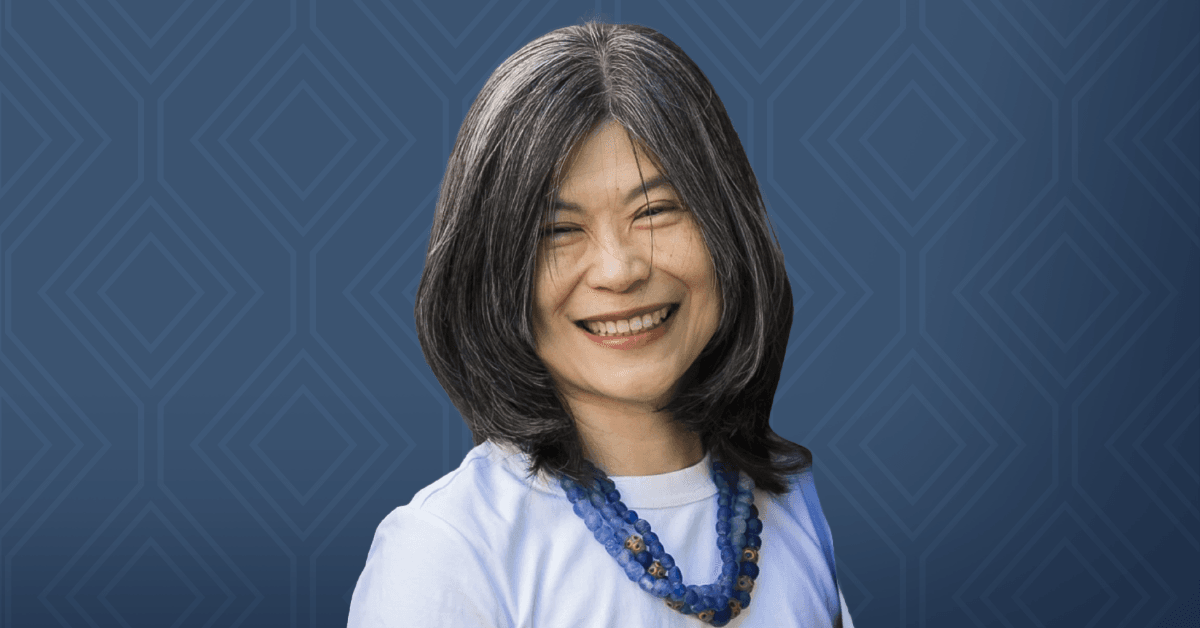
Professor Suzie H. Pun, of the University of Washington, USA, has been appointed as Editor-in-Chief of ACS Nano Medicine. She assumed her new role on April 1, 2026, succeeding Interim Editor-in-Chief Professor Dipanjan Pan.
We recently spoke with Prof. Pun to learn more about her vision for the journal, what excites her most about her current research, and her guidance for early career researchers who are entering the field of nanomedicine.
In Conversation with Prof. Suzie H. Pun
What did it mean for you to become the Editor-in-Chief of ACS Nano Medicine?
It is a tremendous honor to take this role for our field. Publications are a very important way for our community to share findings and move science forward and I am grateful to be in this role with my exceptional colleagues, Dipanjan Pan, Michelle Bradbury, and Hui Wei.
What is your vision for the journal over the coming years?
I hope that ACS Nano Medicine will become the premier forum for scientists and engineers working in nanomedicine, biologics development and delivery, and therapeutic applications of synthetic biology to publish their work. My vision is for this journal to include the full translational continuum, from mechanistic studies to efficacy and tolerability studies to manufacturing, production, and reproducibility.
Why should researchers in nanomedicine and technology consider submitting their next best manuscript to ACS Nano Medicine?
I encourage researchers to submit their nanomedicine manuscripts to this journal. We strive to uphold high standards for review with fairness and efficiency in the editorial and manuscript-handling process. We see the journal as partners with the nanomedicine community for sharing important findings in a timely manner, helping authors to maximize the influence of their work.
What will you look for in the manuscripts you receive?
I love manuscripts where I learn something new. That could be a novel finding, an innovative material or formulation, or a creative solution to an existing challenge. I am especially eager to see studies that push the field forward and help move nanomedicine closer to real clinical impact.
What excites you about your current research?
So much! All my research is in collaboration with amazing colleagues and students, which makes the process fulfilling and enjoyable. For example, with Dr. Nathan White (University of Washington, Emergency Medicine), we are developing polymeric solutions for challenges in trauma medicine. With Drs. Patrick Stayton and Nora Disis (University of Washington, Bioengineering and Medicine), we are developing nano formulations for immuno-oncology applications. We have a new collaboration with Prof. Wilson Wong (Boston University, Biomedical Engineering) to develop a cell therapy system that is potentiated by targeted polymers. My laboratory is also developing aptamer technologies to streamline manufacturing of cell therapies.
What advice would you give to young researchers entering the field of nanomedicine and technology?
This is a great time to enter the nanomedicine field. Nanomedicine is an inherently interdisciplinary space. My advice is one that my undergraduate advisor, Prof. Chaitan Khosla, shared with me many years ago. Do not use your current toolbox of knowledge to solve the problem before you. Instead, learn what is necessary to equip yourself to solve the problem. This means staying intellectually curious and fearless about stepping outside your original training and embrace collaborations across fields.
