ACS Publications' Organic & Inorganic portfolio brings together trusted journals, broad visibility, and a seamless submission experience designed for working researchers.
Originally published March 2026; updated September 2026.
Publishing your work shouldn’t feel like overcoming a barrier between you and the scientific community you’re trying to reach. You want a journal that fits your research, a submission process that respects your time, and a publishing partner that helps your discoveries gain visibility and recognition.
The ACS Organic & Inorganic portfolio of journals is built to support you through every step of that journey, no matter what kind of manuscript you’re preparing or where you are in your career.
Your Work Deserves to Be Seen and Cited
You’ve invested a lot of time and effort into your research. Publishing with ACS ensures your work reaches the global community and gets noticed by your peers.
ACS Inorganic & Organic journals are:
- Highly cited, increasing the reach of your work.
- Rigorously peer reviewed, ensuring scientific integrity.
- Comprehensive, covering every corner of organic and inorganic chemistry.
With over 33 million downloads across the portfolio, your discoveries don’t just sit on a shelf; they’re actively read, cited, and used to drive the next wave of scientific innovation. Below is a quick guide to help you find the best home for your work.
The ACS Organic & Inorganic Portfolio
ACS Organic & Inorganic Au, led by Editor‑in‑Chief Prof. Shelley D. Minteer and Deputy Editor Dr. Géraldine Masson, is a fully open access journal advancing both organic and inorganic chemistry. It publishes experimental and theoretical work across catalysis, organometallics, natural products, process chemistry, and crystallography, offering broad interdisciplinary visibility.
The journal’s influence continues to grow, with a 2‑Year Impact Factor of 5.2, 815 citations and 249,944 downloads in 2025, showcasing its strong global visibility and influence.
ACS Organic & Inorganic Au is known for its efficient and author-focused review process, with a first editorial decision in just over 4 days, a first peer review decision in about three weeks, and online posting in just over a week after acceptance.
Journal Highlights:
- Electrochemical Explorations in Organic and Inorganic Chemistry
- Explore Tutorials, ACS Organic & Inorganic Au’s new manuscript type
- A Terbium(III) Luminescent Probe for Quantifying Bicarbonate Levels in Ocean Water — Editor’s Choice
Inorganic Chemistry, led by Editor‑in‑Chief Prof. Dr. Stefanie Dehnen, is a premier journal publishing cutting‑edge research across the full spectrum of inorganic chemistry. It features impactful work on synthetic methods, reaction mechanisms, and applications spanning organic, medicinal, biological, and materials‑related chemistry, making it a key resource for understanding structure, bonding, and reactivity in inorganic systems.
The journal’s influence is reflected in its metrics: a 2‑Year Impact Factor of 4.6, and 6.9 million downloads in 2025, proving its strong global visibility and influence.
Inorganic Chemistry is known for an efficient publication process, with a first peer review decision in under a month, acceptance in just over two months, and online posting in about a week after acceptance.
Journal Highlights:
Organic Process Research & Development (OPR&D), led by Editor‑in‑Chief Dr. Margaret M. Faul, is a leading journal focused on safe, sustainable, and efficient methods for synthesizing and manufacturing organic compounds.
OPR&D is a key resource for industrial chemists is a key resource for industrial chemists, achieving an Impact Factor of 3.3, 11,604 citations and 2.7 million downloads in 2025, demonstrating high impact and influence across industrial chemistry and chemical engineering as a key resource for industrial chemists, and chemists working in universities and research institutes alike.
OPR&D is known for an efficient publication process, with a first peer review decision in just over a month, acceptance in about two and a half months, and online posting in about 10 days after acceptance.
Journal Highlights:
- Special Issue: Lessons Learned in Organic Process Chemistry
- Extracting Mechanistic Information from an Open Data Set for a Pharma-Relevant Suzuki–Miyaura Cross-Coupling Reaction
- Development of a Practical and Scalable Synthetic Route for DBPR112: A Clinical Candidate for the Treatment of Non-Small Cell Lung Cancer
Organic Letters, led by Editor‑in‑Chief Prof. Marisa C. Kozlowski, is a leading journal for rapid, high‑impact reports in organic synthesis. It highlights innovative work across catalysis, natural products, reaction methodology, and functional materials, offering swift and visible dissemination.
Its strong reputation is reflected in a 2‑Year Impact Factor of 4.7, 96,858 citations and 11.7 million downloads in 2025, highlighting its strong global visibility and influence.
The journal is known for exceptional speed: first editorial decision with peer review in about two weeks, acceptance in just over a month, and online posting in under 4 days after acceptance.
Journal Highlights:
Organometallics, led by Editor‑in‑Chief Prof. Paul J. Chirik, is a leading journal within the organometallic chemistry community at the intersection of organic and inorganic chemistry. It publishes high‑quality research on the synthesis, structure, reactivity, and applications of organometallic compounds, serving as a key resource for advancing chemistry related to metal-carbon bonding and reactivity.
In addition, Organometallics also publishes Flash Communications, a manuscript type designed to give authors a venue to rapidly publish results that are short and focused.
The journal achieved an Impact Factor of 2.4, 24,109 citations and 2.2 million downloads in 2025, serving as a foundational source for primary research in the field.
Organometallics is known for an efficient publication process, with a first peer review decision in about a month, acceptance in just under two months, and online posting in about a week after acceptance.
Journal Highlights:
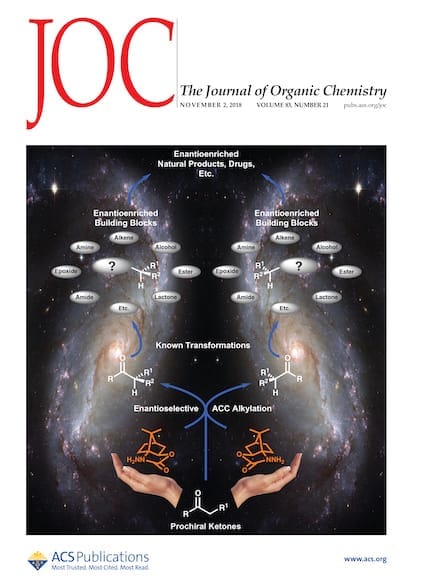
The Journal of Organic Chemistry (JOC), led by Editor‑in‑Chief Prof. Scott J. Miller, is a premier journal advancing the frontiers of organic chemistry with a legacy for reproducibility and rigor in all branches of the theory and practice of organic chemistry. It publishes impactful work on new synthetic methods, reaction mechanisms, and applications across natural products, medicinal chemistry, biochemistry, and chemical biology.
Its influence is reflected in a 2‑Year Impact Factor of 3.3, 84,801 citations and 9.4 million downloads in 2025, highlighting its strong global visibility and influence.
JOC is known for an efficient publication process, with a first peer review decision in about a month, acceptance in just over two months, and online posting in about a week after acceptance.
Journal Highlights:
A Submission Experience Designed for Researchers
You shouldn’t have to wrestle with a submission system. The ACS Publishing Center is designed to simplify your workflow, helping you compare journals, understand manuscript types, and track your submission with ease.
ACS is the home for your organic/inorganic chemistry research. Submit your manuscript through ACS Publishing Center.
Your Next Breakthrough Belongs Here
You’ve done the experiments, the analysis, and the writing. Now give your research the publishing home it deserves.
Submit your manuscript and join a global community advancing the future of organic and inorganic chemistry.