
Read interviews with the winners below to learn more about their research and their hopes for future advances in physical chemistry.
The Journal of Physical Chemistry and PHYS Division Lectureship Awards honor the contributions of investigators who have made a major impact on the field of physical chemistry in the research areas associated with each section of the journal – The Journal of Physical Chemistry A, The Journal of Physical Chemistry B, and The Journal of Physical Chemistry C.
We are pleased to announce this year's winners:
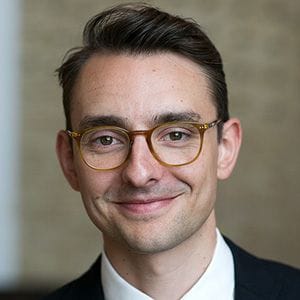
Janus Juul Eriksen,Technical University of Denmark, Denmark
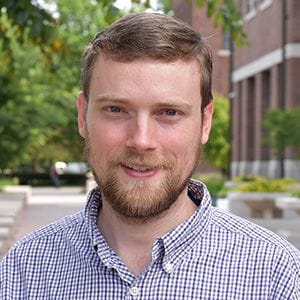
Mike Reppert, Purdue University, United States
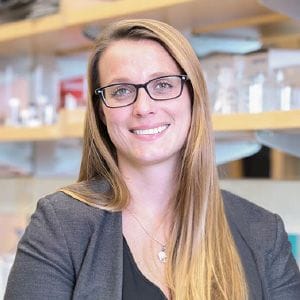
Lea Nienhaus, Florida State University, United States
The awards will be presented at ACS Fall 2024 taking place in August in Denver, Colorado, United States, where the winners will be invited to speak as part of the PHYS division programing.
Hear from each of our three winners in their own words below.
Janus Juul Eriksen
What inspired you to pursue your particular topic/area of research?
In all honesty, I recall being torn between pursuing studies in a number of scholarly areas, both within the humanities and the natural sciences, and I think I eventually ended up choosing upon chemistry as a sort of coincidence really. While most kinds of lab work at uni completely failed to win me over, theory and quantum mechanics, in particular, appealed to me, and I soon found my niche as I started to learn about the rigorous application of the laws of physics to chemical problems. I’ve been particularly blessed with close mentors over the years, from whom I’ve learned a lot and who’ve never stopped supporting me. As a result of the training I’ve received in Denmark, Germany, and the UK, I now tend to work more autonomously on different scientific topics I happen to fancy at any given time than on particular areas of research that happen to be in vogue.
What advances has your lab made in the past five years?
Over the past five years, I’ve been involved in work spanning almost the entire spectrum of electronic-structure theory, from developments of methods capable of simulating modest- sized systems at near-exact accuracy to widely applicable methods operating at a much more limited level of accuracy. I find having a foot in both camps extremely satisfying and highly motivational. In my opinion, the need for calibration and advancements on leading approximations to formally exact theory is more pressing and relevant today than it has perhaps been throughout the past two or three decades, particularly with the advent of novel forms of computation in mind. At the same time, the ability to render alternative views on simulations that lend themselves to the more popular and traditional workhorses of quantum chemistry through new and more local lenses has the potential to both nuance and progress our knowledge of how best to approximate the electron correlation problem. Furthermore, formal decompositions of molecular simulations amongst either individual atoms or functional moieties allow for the resolution of training data underpinning contemporary machine learning models in chemistry to be greatly refined, a problem which my group and I are becoming increasingly interested in contributing to.
What’s next for your research?
The common denominator throughout most of the work I’m involved with these days is the concept of spatially localized molecular orbitals, both a beautiful, wide-ranging conceptual tool and a hard numerical problem in practice. I’m forever fascinated by the infinitely many ways to rotate a standard set of canonical orbitals into optimized representations and how to interpret and extract chemical meaning and properties from these. Over the years to come, I’m planning to stay focused on expanding upon current limitations in terms of what size and composition of chemical systems we can simulate at the highest possible degree of accuracy. At the same time, I’m equally interested in exploring novel ways in which to use localized orbitals to extract finer mechanistic details of diverse chemical reactions from local electronic structures, while also aiding in the development of more sophisticated machine-learned models with wide applicability across the vastness of chemical compound space.
What physical chemistry problems are you hoping to see solved in the next decade?
I hope to see how combined endeavours across both theoretical and experimental chemistry will help improve carbon circularity and the efficient utilization of CO2 as a precursor in organic synthesis. To that end, I firmly believe that electronic-structure theory has a massive part to play in the development of new catalytic systems that allow for CO2 to be effectively valorized into industrially useful chemical building blocks under benign conditions. Our need for a shift away from technologies driven by fossil fuels and petrochemicals to a modern circular economy based on sustainable and financially viable solutions is more urgent today than perhaps ever before, and I believe only a committed cooperation between theoretical and experimental practices in chemistry will help pave the way towards this goal.
Mike Reppert
What inspired you to pursue your particular topic/area of research?
As an undergraduate at Kansas State University, I got involved in photosynthesis research under Ryszard Jankowiak, and I was hooked almost from the start. On the one hand, it was beautiful to see so many areas of science coming together—not only physics and chemistry topics like spectroscopy and quantum dynamics, but also life-science areas like genetics and protein structure. And on the other hand, I loved working in a field that I could talk about with non-scientists. I grew up on a small farm, gardening and raising livestock, and it was very important to me to be able to communicate with my friends and neighbors about what I was doing in life. Photosynthesis was for me this sort of magic intersection of worlds that I could talk about with both quantum physics folks and the farmers down the road.
That undergraduate work became a launch pad for me to dive into ultrafast spectroscopy and protein structure during my Ph.D. with Andrei Tokmakoff and then into quantum dynamics during my postdoc with Paul Brumer. Each of those influences have funneled into where my research is now, trying to understand the relationship between protein structure and optical/infrared spectroscopy, whether the "spectrum" is of a protein-embedded chlorophyll cluster or the infrared response of a disordered peptide.
What advances has your lab made in the past five years?
On the photosynthesis side, I think our biggest accomplishment is to begin to piece together a quantitative picture of how specific protein structural features tune the optical properties of individual chlorophyll molecules. In the lab, we've built up a library of several dozen site-directed mutants in a model chlorophyll protein, each designed to test how different features in the pigment's environment controls its optical properties. Although there's still plenty to learn, we're very excited to be assembling bit-by-bit a quantitative approach to not just understanding how native chlorophyll proteins work but also rationally modifying them for new functions. It's also been a big accomplishment to wrap many of those computational tools up into an online graphical interface where non-specialists can access them.
On the vibrational spectroscopy side, we've similarly been building up a library of infrared spectra for isotope-tagged proteins that we're using to quantify how well our simulations are able to "translate" between structural and spectroscopic data. But where we've really made progress recently is on the theory side, exploring the boundaries between quantum and classical effects in nonlinear measurements like two-dimensional infrared spectroscopy. The short story is that you can get a surprising amount of mileage from just Newton's and Maxwell's equations. And identifying where that classical "baseline" begins to fail is now letting us look more closely at where quantum effects really are essential in nonlinear spectroscopy and how we can best capture those features in numerical simulations.
What’s next for your research?
We're just ramping up now to move our spectroscopy and mutagenesis experiments into a "live cell" context. On the photosynthesis front, we're using the lessons we've learned about mutation-based tuning to explore the roles played by individual pigments in the light-harvesting process in cyanobacteria. On the vibrational side, we're exploring ways to monitor the structure of over-expressed proteins in live bacterial cells. That's partly about understanding how the cellular environment affects protein folding and partly about pushing the boundaries of how quickly and cheaply we can do isotope-labeling experiments. At the same time, we're exploring ways to generate mutagenesis and isotope-tagged spectra for purified proteins at very high-throughput, with an eye toward building libraries of not dozens but hundreds or perhaps even thousands of different protein/isotope variants that we can use to train our structure-spectrum prediction methods.
What physical chemistry problems are you hoping to see solved in the next decade?
"Solved" is a strong a word, but I'm excited to see how protein structure prediction and de novo protein design advance in the next 10 years – especially in the context of proteins with non-protein ligands like chlorophyll. With the tremendous progress made over the last few years, it's beginning to be realistic to think about using proteins as a scaffold for building molecular structures with tunable excitonic properties. Aside from the practical applications, the ability to rationally design new pigment-protein complexes would open a whole new frontier in testing physical models. Natural proteins exhibit truly exquisite control over molecular properties (strain energies, electrostatic shifts, intermolecular coupling, etc.), and it's quite thrilling to think of what we could do once we've "cracked the code" for that level of atomistic control. To me, the ultimate proof that we understand how native proteins work will be in designing and building new proteins that use the same mechanistic principles to achieve new functions.
Lea Nienhaus
What inspired you to pursue your particular topic/area of research?
I’ve always been fascinated by the idea that everything around us is made up of tiny atoms that are not visible to the naked eye. Being exposed to scanning tunneling microscopy for the first time, and ‘seeing’ my first atom was incredible. Working with nanomaterials during my graduate degree opened a whole new world of ‘glowy things’ for me. During my postdoc with Moungi Bawendi, I learned to apply optical spectroscopy methods to understand the energy transfer between quantum dots and organic molecules. The desire to combine these two orthogonal fields of scanning probe microscopy and optical spectroscopy ultimately led me to my current area of research. Our hope is that someday, the role of every atom and every defect on the bulk properties of a material can be understood.
What advances has your lab made in the past five years?
Our work has mainly focused on closing the gap between solution-based and solid-state upconversion efficiencies by working to understand the fundamental triplet generation mechanism, the upconversion process and the existing energy loss pathways. In the past few years, we have pioneered the use of inorganic triplet sensitizer materials with extended dimensionalities including one-dimensional nanorods, two-dimensional nanoplatelets and bulk perovskite thin films. We envision that such quantum-confined materials with relaxed dimensionalities may enable additional, interesting photophysical applications beyond simple upconversion such as chirality- or polarization-dependent detection.
Our approach using a combination of scanning probe microscopy and optical spectroscopy can provide a nanoscale window into the optoelectronic properties of inorganic/organic interfaces and, thus, can enable the correlation of spatial variations in the optoelectronic properties to structural, compositional, or electronic defects impacting the local charge or exciton extraction efficiency.
What’s next for your research?
Big and exciting changes are coming since the Nienhaus group is moving to Rice University this summer. We will take this opportunity to advance our capabilities of multimodal scanning probe microscopy/optical spectroscopy methods to understand the microscopic and nanoscopic structure/property relationship of materials.
We will continue to hunt for the next state-of-the-art solid-state triplet annihilator. While substantial upconversion efficiencies have been demonstrated for solution-based inorganic/organic hybrid upconversion systems, the required performance in their solid-state counterparts has not been achieved, in large part due to effects caused by intermolecular interactions.
What physical chemistry problems are you hoping to see solved in the next decade?
Our big hope is that in the next decade, physical chemists can work together with materials scientist and engineers to find transformative approaches to solve the pending energy crisis. The development of new approaches to generate and store clean energy will be vital to our society.
Learn About Last Year's Winners

Meet the 2023 Winners of The Journal of Physical Chemistry and PHYS Division Lectureship Awards
Read interviews with the winners below to learn more about their research and their hopes for future advances in physical chemistry.
