As a Senior Managing Editor at ACS Publications, Nicole Camasso brings scientific training, strategic insight, and a collaborative mindset to help ensure the excellence of the ACS journals she stewards.

In our “Profiles in Publishing” series, we’re featuring dedicated staff members from around the globe who work to ensure that ACS Publications delivers on our promise of the most trusted, most cited, and most read journals in the chemical and related sciences.
Behind every ACS journal is a network of Editors and staff working together to ensure manuscripts are evaluated fairly and communicated effectively. As Senior Managing Editor for a portfolio of measurement science journals, Nicole Camasso helps make that collaboration possible—supporting Editors, coordinating with internal teams, and contributing to initiatives that strengthen the publishing experience across ACS Publications.
In this interview, she shares what she’s learned from her path into publishing and what keeps her motivated in the role.
Read the Interview with Nicole Camasso
What’s your role at ACS Publications and what path led you to it?
I am the Senior Managing Editor for the measurement science portfolio at ACS. I currently manage Analytical Chemistry, ACS Sensors, Journal of Proteome Research, and ACS Measurement Science Au.
When I’m asked to describe my role outside the publishing industry, sometimes I like to say that I function as something of an air traffic controller for the journals I oversee. Managing Editors serve as the primary point of contact for their journals and work closely with Editors-in-Chief—who are research-active scientists—to shape and execute each journal’s strategic vision. In this role, I monitor the overall “health” of each journal and collaborate with internal and external stakeholders on strategic initiatives, workflow improvements, and day‑to‑day operations.
I earned my PhD in organic chemistry from the University of Michigan. My advisor, Prof. Melanie Sanford—then a JACS Associate Editor and ACS Catalysis Editorial Advisory Board Member—introduced me to Dr. Rhea Williams, the Managing Editor of ACS Catalysis at the time (and now an Associate Publisher).
Those conversations helped me build a network in publishing and gave me insight into the behind‑the‑scenes work that goes into running high‑impact journals. I joined ACS as a Development Editor for JACS in the fall of 2017, and I transitioned into my current role in April 2020.
Although I never expected my training in organic chemistry would lead me to this career, I’ve fully embraced the journey and recognize that every step of my path to a Senior Managing Editor has been essential. My PhD experience strengthened my ability to think critically as a scientist, and my years as a Development Editor gave me a deep understanding of scholarly publishing.
I truly feel like I hit the portfolio jackpot—my Editors are exceptional scientists and wonderful collaborators, and I’m grateful to work with them every day.
What team do you work with and how does your collective work contribute to the excellence of ACS Publications journals?
I work in Global Editorial Strategy (GES), a team of more than 40 scientifically trained professionals who oversee ACS Publications’ portfolio of 90+ journals. Our team collaborates closely with colleagues across our Washington, DC and Columbus, Ohio offices in the U.S., as well as staff based in the U.K., China, and India.
The Managing Editor role is truly collaborative. Within GES, we work together—and with teams across ACS Publications, including Marketing, Global Production Operations, Global Technology Solutions, and the Publishing Integrity Office—to strengthen workflows and processes that directly support authors, reviewers, and readers. This includes improving manuscript transfer pathways, enhancing peer review systems, and ensuring that every journal maintains the high standards the scientific community expects from ACS.
One of our most important collaborations is with each journal’s Editorial Board, which includes the Editor‑in‑Chief and Associate Editors. These research-active scientists make all editorial decisions and identify trusted reviewers to evaluate submissions. As a Managing Editor, my role is to support them and ensure that the peer review process runs smoothly, efficiently, and with integrity—while leaving editorial decisions where they belong: with the scientific experts.
Ultimately, ACS Publications succeeds because our teams bring complementary expertise to the table. By combining scientific training, publishing experience, and diverse global perspectives, we collectively uphold the excellence, rigor, and innovation that define ACS journals.
What does a day in your work life look like?
A typical day as a Managing Editor is fast‑paced, varied, and highly collaborative. At a high level, I’m constantly prioritizing—managing my inbox, meeting with colleagues and Editors, and organizing what needs to move forward next. All of this centers around the short‑ and long‑term management of the journals I oversee.
A large part of my role involves working closely with my Editors‑in‑Chief, all of whom lead their own research labs around the world. We stay connected through email and regular virtual meetings, where we review journal performance, discuss initiatives, and identify opportunities to strengthen our editorial strategy or streamline processes. I also support our Editorial Offices by answering author questions, troubleshooting peer review challenges, and ensuring manuscripts progress smoothly through the workflow.
Beyond daily editorial oversight, I frequently partner with teams across ACS Publications to plan initiatives, resolve operational issues, and ensure we’re upholding ACS best practices. I’ve also managed several broader portfolio projects. For example, I co‑led the Manuscript Transfer Taskforce with my colleague Dr. Asha James, focusing on improving the author experience for manuscripts rejected from one ACS journal but suitable for another.
Overall, my role balances operational management, data‑informed decision‑making, and long‑term strategic planning—all with the goal of helping our journals maintain the high standards expected of ACS Publications.
In your role as a Managing Editor, how do you help ensure fairness, rigor, and integrity in the editorial process?
While all editorial decision‑making is the sole responsibility of our outstanding team of research‑active Editors, I support them by making sure they have the information, tools, and structures needed to make unbiased and well‑informed decisions rooted in scientific rigor. This includes supplying data that helps Editors evaluate reviewer performance, offering policy clarifications, and helping navigate complex or sensitive cases.
I also work closely with our highly knowledgeable Publishing Integrity Office, who provide expert guidance on ethical considerations, such as suspected data or image manipulation or other complex integrity issues. By coordinating with them and relaying their recommendations to Editors, I help ensure that decisions are grounded in best practices and handled consistently across cases. Through this combination of strong procedural oversight, ethical guidance, and active support for our Editors, I help create an environment where scientific rigor and integrity remain at the center of our editorial process.
What project you’ve worked on has had the greatest impact?
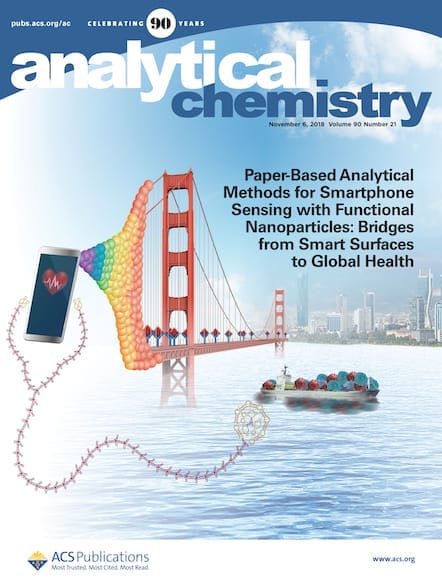
One project I’m especially proud of is the Analytical Chemistry Diversity & Inclusion Cover Art Series. I helped guide this initiative from its earliest concept through full implementation, working closely with Editors—including Analytical Chemistry Executive Editor Prof. Christy Haynes, who first proposed the idea—along with authors and commissioned artists. Our goal was to ensure the series authentically reflected the journal’s mission and values.
The final result not only celebrated the diversity within the analytical chemistry community but also created a meaningful platform for scientists whose stories are often underrepresented. Its success resonated across ACS Publications and ultimately inspired similar programs in several other journals, helping drive a broader cultural shift in how we visually acknowledge and elevate inclusion and belonging in our scientific community.
Another impactful project was my role in establishing one of our newest journals, ACS Electrochemistry. What began as a shared idea between my colleague, Dr. Rhea Williams, and me evolved into a full journal launch. We developed a comprehensive proposal that included a strategic business case, competitive landscape analysis, and growth projections. Seeing the journal now embraced by the electrochemistry community has been incredibly rewarding.
Both initiatives reflect the value of thoughtful editorial innovation paired with strong cross‑functional collaboration. They also illustrate how strategic, mission‑driven projects can generate lasting impact for authors, readers, and the broader scientific ecosystem.
What do you like most about working at ACS Publications?
What I like most about working at ACS Publications is the strong sense of purpose behind the work we do. Every day, I’m contributing to a mission that supports the global scientific community—ensuring high‑quality research is communicated clearly, rigorously, and with integrity. It’s incredibly rewarding to know that the efforts of our teams directly help researchers advance their fields.
I also appreciate the highly collaborative environment. I work with talented colleagues across multiple teams, as well as outstanding Editors who are leaders in their disciplines. Everyone brings a different expertise and perspective, and that collective strength allows us to innovate and continually improve the publishing experience.
Finally, I value the opportunities for growth that ACS provides. Whether it’s learning new areas of chemistry, contributing to cross‑portfolio initiatives, or working on strategic projects, I’m constantly challenged in ways that keep the work exciting and meaningful. It’s a place where you can build a long‑term career while making a real impact on scientific publishing.