
Ecuador is strengthening its scientific ecosystem through research, education, international collaboration, and industry engagement.
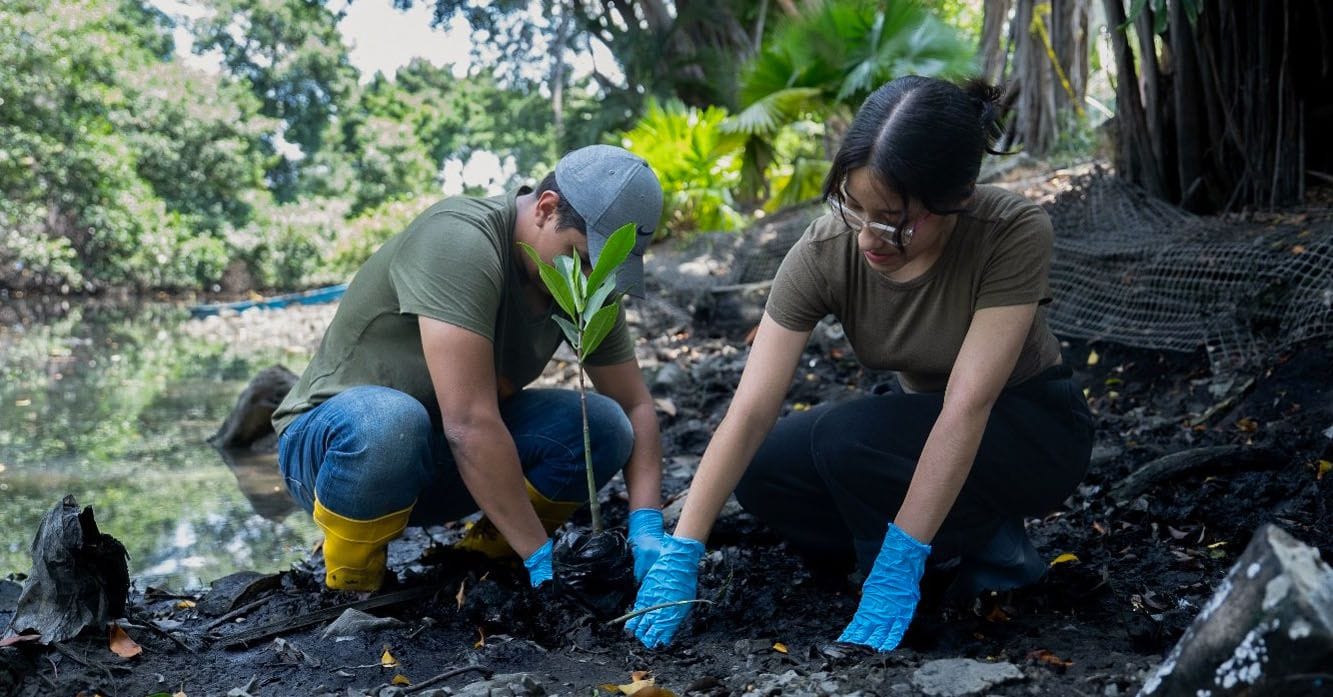
Researchers restore mangrove habitat along the Estero Salado in Guayaquil, Ecuador, supporting water quality improvement and biodiversity recovery through a sustainability initiative led by Universidad ECOTEC. Source: Universidad ECOTEC, Guayaquil, Ecuador.
As part of our commitment to increasing the visibility and impact of research in Latin America, ACS Publications is proud to support Ecuador by strengthening scientific communication, expanding awareness of ACS resources and opportunities, and fostering collaboration across academic and corporate communities. Through publishing, professional development, and engagement with researchers and institutions, ACS is helping amplify Ecuadorian research and industry across STEM and related scientific fields.
With more than 200 higher education institutions distributed across the country, Ecuador's higher education system includes universities, polytechnic schools, and technological institutes. The system is overseen by the Ministry of Education, with institutions represented by the CES (Consejo de Educación Superior) and quality assurance guided by the CACES (Consejo de Aseguramiento de la Calidad de la Educación Superior). Within this evolving research landscape, publication output, citation impact, and international collaboration are becoming increasingly important indicators of academic excellence, institutional development, and global research visibility.
In This Article:
ACS, ECOTEC, and Yachay Tech Partner to Expand the Global Reach, Impact, and Visibility of Ecuadorian Research
Connecting Ecuadorian Researchers with the Global Scientific Community
A Bridge Between Research, Industry, and Society
Looking Ahead
ACS, ECOTEC, and Yachay Tech Partner to Expand the Global Reach, Impact, and Visibility of Ecuadorian Research
As highlighted by ACS Publications LATAM Regional Manager Regiane Bracchi Savage,
"Ecuador is making important investments in science, education, and innovation, and ACS Publications is committed to being a long-term partner in supporting the country's scientific development. Our greatest strength is our ability to help researchers increase the global visibility and impact of their research through right quality publishing and access to most trusted scientific advances.
Through our read & publish agreements, we want to create new opportunities for Ecuadorian researchers to share their scientific discoveries; based on the impressive results we have seen in countries which expanded access to ACS R&P opportunities, such as Brazil and Colombia, we are confident these partnerships will help increase publication output and elevate the international visibility of science in Ecuador."
We are proud to announce ACS Publications’ first read and publish agreements in Ecuador through partnerships with ECOTEC and Yachay Tech University. These collaborations provide researchers with access to ACS’s trusted scientific content while removing barriers to publishing in ACS journals. Through these unlimited publishing agreements, authors from ECOTEC and Yachay Tech can publish in all ACS hybrid and fully open access journals without paying article publishing charges (APCs).
As Dr. Coralia Osorio Roa, Deputy Editor of ACS Food Science & Technology, notes, “Research funding is difficult to secure in Latin America, and exchange rates make APCs less affordable.” By helping researchers share discoveries globally, agreements help to enhance the visibility, reach, and impact of research developed at both institutions. These agreements represent an important step in supporting Ecuador's growing research ecosystem and reinforcing a shared commitment to scientific excellence, innovation, and global collaboration.
Connecting Ecuadorian Researchers with the Global Scientific Community
The global program ACS on Campus is coming to Ecuador with in-person events hosted at Universidad UTE, Universidad San Francisco de Quito (USFQ) in Quito, and Universidad ECOTEC in Guayaquil. Designed for students, researchers, educators, and professionals in STEM and related fields, these free events provide practical guidance from ACS Publications editors and publishing experts on scientific writing, publishing, and research communication. As ECOTEC Academic Vice-Rector Nory Pinela explains, “Students, faculty, and researchers can develop concrete skills to research, publish, and communicate science.”
Among the distinguished speakers are Dr. Coralia Osorio Roa, Deputy Editor of ACS Food Science & Technology, and Dr. Rubén Morones-Ramírez, Associate Editor of ACS ES&T Water. Their work in food science, environmental sciences, biotechnology, nanotechnology, and water research reflects the scientific excellence driving innovation across Latin America. Participants will gain insights into resources and best practices to increase the visibility and impact of their research while connecting with the broader scientific community. The events are open to all, regardless of institutional affiliation, with registration encouraged before each event.
As Ecuador strengthens its presence in STEM research and innovation, the ACS Ecuador International Chemical Sciences Chapter and ACS International Student Chapters at Universidad Central del Ecuador, Universidad San Francisco de Quito, Pontificia Universidad Católica del Ecuador, and Yachay Tech are becoming important drivers of engagement and professional development. According to Paula Andrea Henao Ruiz, Vice Rector for International Relations, UEES Universidad Espíritu Santo, Ecuador, “Collaborations with leading scientific organizations like ACS are a strategic part of university internationalization. They provide access to top-tier scientific content, prestigious publishing opportunities, and a global research community.”
These groups help foster outreach, networking, scholarships, exchanges, leadership, and collaboration with the global chemistry community while building a vibrant culture and expanding opportunities for students and researchers globally.
Professor Thibault Terencio, Faculty Advisor of Yachay Tech University’s ACS student chapter, explains, “From organizing scientific events and making fire bubbles to joining global conferences, our chapter has become a cornerstone of local academic life. As ACS pioneers in Ecuador, our students plant the seeds of passion for chemistry inside and outside the classroom”. His words reflect the transformative role ACS student chapters can play, sparking a passion for science, strengthening academic communities, and connecting students to a global network of peers and professionals.
A Bridge Between Research, Industry, and Society
The analysis of Ecuadorian ACS research output from 2021 to 2026 identified key areas of research strength and their potential for industry collaboration, with strong activity in multidisciplinary sciences, agriculture and food sciences, physical and computational sciences, materials science, environmental sciences, pharmaceutical sciences, and polymer and macromolecular research (Qlik, 2026). Together, these areas highlight opportunities to connect scientific expertise with national priorities and corporate needs, particularly through technology development and practical applications across key economic sectors.
As Cecilia Paredes, Rector of ESPOL, emphasizes, “Maintaining that competitiveness requires the continuous integration of science, technology, and innovation.”
Beyond its academic research strengths, Ecuador also holds significant potential for science-driven R&D across strategic sectors such as agriculture and food, energy and natural resources, including oil and gas and renewables, and environmental technologies. Public research institutes such as INIAP, INABIO, IIGE, and INOCAR are already advancing applied work in areas ranging from agricultural biotechnology and genetic resources to biodiversity, energy, geology, and marine sciences. Together, these capabilities create opportunities for stronger collaboration between government, industry, and research institutions, helping translate scientific knowledge into technologies, processes, and evidence-based solutions with practical impact for industry and society.
Looking Ahead
As these efforts continue to expand, ACS looks forward to building even stronger connections across Ecuador and supporting the people, ideas, and discoveries that will drive scientific progress and innovation for years to come.