Fungi are increasingly revealing unexpected ways to solve modern global problems, as four recent studies published in ACS journals highlight.
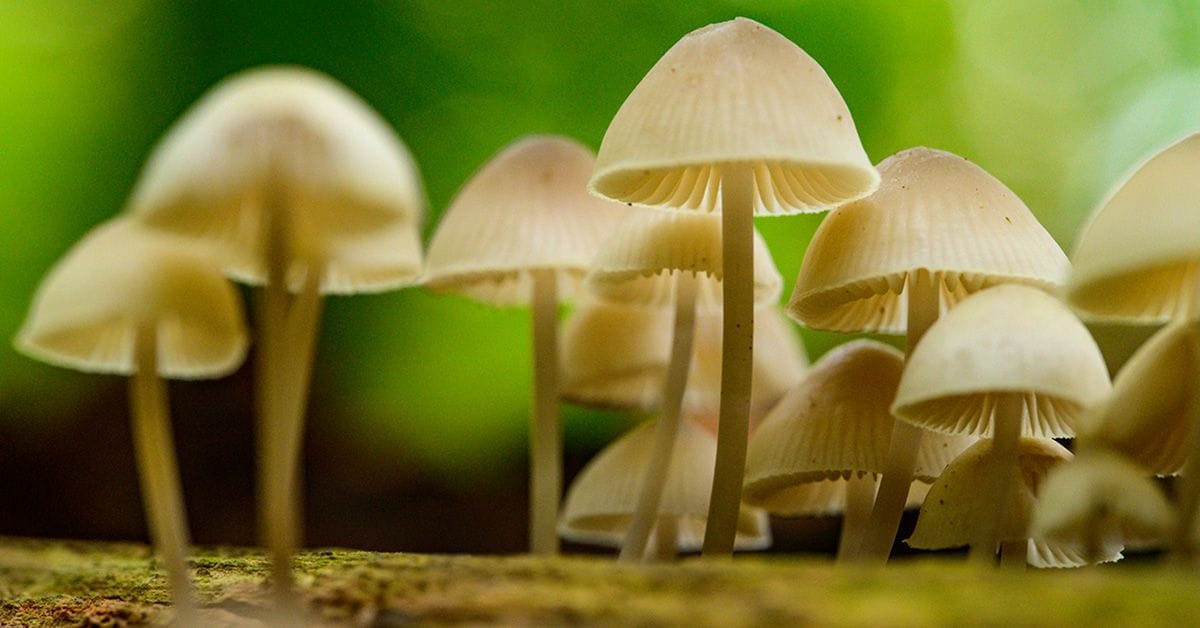
We encounter them almost every day – from mushrooms to molds and yeasts – in forms that may be beneficial or harmful to humans. Yet, overall, fungi play an overwhelmingly positive role in sustaining ecosystems and maintaining planetary health.
Dynamic and remarkably versatile, fungi are increasingly revealing unexpected ways to solve modern global problems, as these recent studies published in ACS journals highlight.
A Fungus that Reduces Microplastics in Seawater
Scientists in Israel investigating the potential of fungi to remove and degrade microplastics in seawater identified a particularly efficacious fungus. They observed a 96% reduction in polystyrene microplastic concentrations within hours when exposed to Alternaria alternata, a fungus native to the Mediterranean Sea. Their findings, reported in ACS ES&T Water, suggest a non-disruptive and ecologically safe approach to mitigating microplastic contamination in marine environments.
Read the Full Article
Microplastic Removal and Biodegradation by Native Mediterranean Fungus Alternaria alternata
Yarden Schindler and Ines Zucker*
DOI: 10.1021/acsestwater.5c00299
DOI: 10.1021/acsestwater.5c00299
A Fungus-Grown Coating that Could Replace Plastic Wraps
Fungi may also curb plastic pollution by offering a replacement for pervasive single-use plastics. In a study published in Langmuir, researchers combined plant fiber with a coating grown from edible mushrooms that they applied to various paper and textile materials. They found that the novel layer provided a robust barrier against water, oxygen, oil, and grease, positioning grown coatings as a scalable, bio-friendly alternative to conventional plastic packaging.
Related science release: An edible fungus could make paper, fabric liquid-proof
Related blog post: Edible Fungus Offers a Sustainable Solution for Waterproofing Paper and Textiles
Read the Full Article
Growing Sustainable Barrier Coatings from Edible Fungal Mycelia
Sandro Zier, Liza R. White, Dalton Johnstone, Zechariah Hoeft, Maryam El Hajam, Patrick Kurtz, David Wendell, Mehdi Tajvidi, Douglas Bousfield, and Caitlin Howell*
DOI: 10.1021/acs.langmuir.5c03185
DOI: 10.1021/acs.langmuir.5c03185
Fungal Strains that Produce Tasty Proteins from Alternative Sources
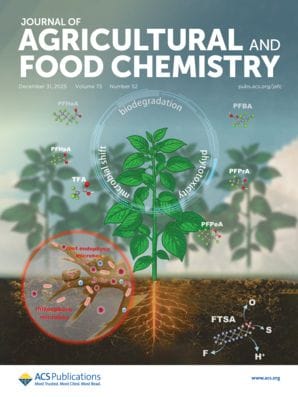
As the trend toward vegetarian and vegan lifestyles grows, fungi might be the missing ingredient in the sustainable generation of nutrition sources. Researchers in Germany explored fungal strains for their ability to ferment carrot-processing byproducts and produce a viable source of protein. In the Journal of Agricultural and Food Chemistry, they reported that the new protein, when incorporated into vegan patties and sausages, outperformed plant-based proteins in sensory tests.
Related science release: Feeding fungi plant remnants produces tasty protein to fortify vegan, vegetarian diets
Read the Full Article
Pleurotus djamor Mycelium: Sustainable Production of a Promising Protein Source from Carrot Side Streams
Leonie Cora Juhrich, Iris Lammersdorf, Pascal Schmitt, Lars Tasto, Falk Speer, Denise Salzig, Kai Reineke, Holger Zorn, and Martin Gand*
DOI: 10.1021/acs.jafc.5c11223
DOI: 10.1021/acs.jafc.5c11223
A Marine Fungus that Could Control a Deadly Global Pest
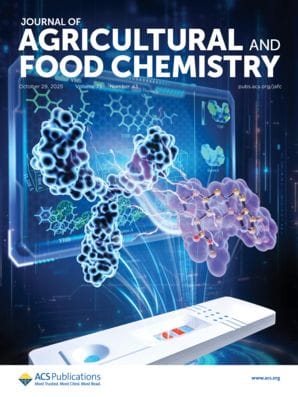
Another recent study published in the Journal of Agricultural and Food Chemistry highlighted the potential of fungi in agricultural pest control. Scientists in China isolated compounds from a marine fungus to test against Root Knot Nematodes, a crop pest so destructive that it is responsible for over $100 billion in crop losses globally. Laboratory tests showed that the fungal compounds inhibited Root Knot Nematode activity by 73%, making them a promising new candidate for nematode control.
Read the Full Article
Discovery of Eupenicillmarine A from the Marine Fungus Eupenicillium sp. HJ002 as a Natural Nematicide Candidate
Saniye Akyıl Öztürk, Deniz Damla Altan Kamer*, Ali Can Karaca, and Omer Said Toker
DOI: 10.1021/acs.jafc.5c09898
DOI: 10.1021/acs.jafc.5c09898

ACS 150th Anniversary
Celebrating ACS150: Chemistry is Everything
Throughout 2026, ACS will mark 150 years of advancing chemistry — a historic milestone built on discovery, innovation, and community.