
The contributions of many women to Chemical Research in Toxicology are motivated by a combined passion for science and commitment to making scientific discoveries that impact a sustainable future of humans and the environment through science-driven policies for chemical safety. In celebration of Women's History Month and in recognition of the contributions of women to toxicology and allied areas, we are pleased to highlight a special collection of recent papers published in the journal by authors who identify as women.
The highlighted authors are at various stages of their scientific careers, from doctoral students to established leaders, working around the world at different types of institutions.
Read on to hear from each of these inspiring women in their own words and catch up on the entire series below.
Women in Toxicology: Interviews (Part 1)
Women in Toxicology: Interviews (Part 2)
Women in Toxicology: Interviews (Part 3)
Women in Toxicology: Interviews (Part 4)
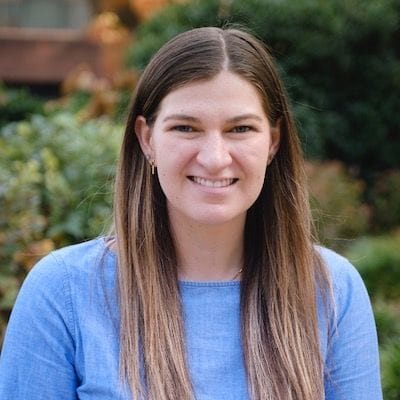
Jessica Collins, Graduate Student, Vanderbilt University, United States
Share about your entry into chemical toxicology and your path to your current area?
I was first introduced to chemical toxicology as a senior undergraduate researcher at Indiana University where I studied how the conformational dynamics of human cytochrome P450 2C9 influences its substrate selectivity during catalysis. My undergraduate studies with P450s motivated me to pursue more rigorous scientific training to become better equipped to research the outstanding questions in the chemical toxicology field. Now, I am a 4th year graduate student in Biochemistry at Vanderbilt University, and my research focuses on characterizing the actions of natural products, environmental chemicals, and therapeutic agents against human and bacterial type II topoisomerases.
How do you want to contribute to the advancement of the field?
I aspire to contribute to the chemical toxicology field by elucidating the mechanisms by which natural and environmental poisons interact with their cellular targets in humans and bacteria. An enhanced mechanistic understanding of chemical-target interactions will aid in our ability to discern short and long-term adverse health outcomes in humans and to identify therapeutic agents against microbial infections. An additional goal is to educate fellow scientists and the public regarding the practical applications of chemical toxicology knowledge in everyday life. This basic, yet essential, comprehension is central to protecting human and environmental health today and in the future.
What inspired you to do the research in the article we are highlighting?
This project was inspired by the “Jekyll and Hyde” nature of type II topoisomerases, such that they are necessary for cell survival but threaten genomic integrity by generating a double-stranded DNA break every time they act. Due to their dual persona, these enzymes are the primary targets of a variety of anticancer and antibacterial drugs that increase levels of DNA cleavage and are known as topoisomerase poisons. Many quinone- and polyphenol-containing natural products (e.g., thymoquinone) and environmental chemicals (e.g., 1,4-benzoquinone) act as poisons of human type II topoisomerases. Even though naphthoquinones, quinone-derived metabolites of naphthalene, display both chemoprotective and carcinogenic properties in humans, few studies have explored the interactions of these compounds with type II topoisomerases in vitro.
What is something that has impacted you in a positive manner?
My training career has been most positively impacted by the support from my loved ones. Working toward a Ph.D. is a rigorous endeavor, and at times, extended periods of experimental failure have made me question my decision to pursue this degree. In moments of doubt, my family and friends' encouragement has helped me move past my failures and focus on my successes. They have been a boundless source of positivity throughout my graduate studies, and I am immensely grateful for them.
What was your training circle like?
My training circle includes a core group of mentors, both formal and informal, who I depend on for scientific, professional, and personal wisdom and advice. Because of the increased accessibility to podcasts and webinars, some of my most trusted professional mentors are individuals who I have never met. Whether it is through podcasts, in-person interactions, or team-based environments, listening to and applying expert advice has helped me create new avenues for scientific exploration and professional training beyond my geographical location and established networks.

Josephine M. Brown-Leung, Graduate Student, Purdue University, United States
Share about your entry into chemical toxicology and your path to your current area?
I first entered the field of chemical toxicology as an undergraduate student at Northern Kentucky University working in the neurotoxicology laboratory of Dr. Christine Perdan Curran. I was drawn to toxicology because of the focus on identifying mechanisms of chemical toxicity to prevent exposure and subsequent disease in people. Dr. Curran was not only my first mentor, but a strong female toxicologist who led by example and helped make me into to researcher I am today. I was mentored by a second strong woman in toxicology, Dr. Mary Beth Genter during my Master’s degree at the University of Cincinnati. My experience with Dr. Genter helped teach me how to work independently and how to creatively solve research design challenges. Through these women, I discovered my passion for finding the chemical causes of neurological disease and discovering chemicals that can treat neurodegenerative disease.
How do you want to contribute to the advancement of the field?
I want to discover chemical causes of neurological disease to prevent exposure to these chemicals in the future. I am particularly interested in studying aspects of neurological disease that are overlooked. My undergraduate research evaluated chemical exposures during adolescent/early adulthood, which are the last stages of brain maturation and an understudied exposure window of developmental toxicology. Likewise, I studied the olfactory system in my master's work, which is one of the earliest affected systems in Alzheimer’s and Parkinson’s diseases, another area that is largely under researched. My current research is looking at how chronic exposure per- and polyfluoroalkyl substances (PFAS) are contributing to neurotoxicity. Most of the PFAS neurotoxicity research focuses on early development.
What inspired you to do the research in the article we are highlighting?
After joining Dr. Jason Cannon’s lab at Purdue University, I was inspired to do research on PFAS because of my personal experience with this group of chemicals. I grew up in northern Kentucky, which was reported to have elevated PFAS in the drinking water throughout my entire childhood. While studying at Cincinnati, I learned of Dr. Susan Pinney’s work that demonstrated that girls in Northern Kentucky had some of the highest levels of one PFAS, PFOA. I personally knew half a dozen women who developed thyroid cancer in my community while I was growing up in northern Kentucky. Since I am a neurotoxicologist working on my PhD, I wanted to research what was known about the neurological effects of PFAS, particularly on neurotransmission.
What is something that has impacted you in a positive manner?
After earning my undergraduate degrees, I did not get into graduate school, so I took a gap year. I was initially disheartened by this. During my gap year, I worked as a contractor at the U.S. EPA as a data toxicologist in computational toxicology. Not only did I gain extensive knowledge about EPA guideline toxicity testing, but I also met my future husband! I guess another happy accident was that I am a trained artist and have a BA in studio art. When I do histology, I credit my painting classes for helping me mount tissue on slides and photography for giving me skills to take photos of the tissue.
What was your training circle like?
I am a third year PhD student at Purdue University in Dr. Jason Cannon’s lab. I am fortunate to have had many mentors throughout my career so far. My research training at NKU was unique because our entire lab was undergraduates, so I gained experience training undergraduates as an undergraduate. During my Master’s at University of Cincinnati, I was in a small lab and trained another master’s student, an undergraduate student, and many rotation students. I also had the opportunity to TA for three statistics classes. While at Purdue University, I have had the opportunity to learn new techniques and work alongside talented post-docs and PhD students. Since undergraduate, I have been presenting my research at regional and national conferences, which is one of my favorite parts of research.
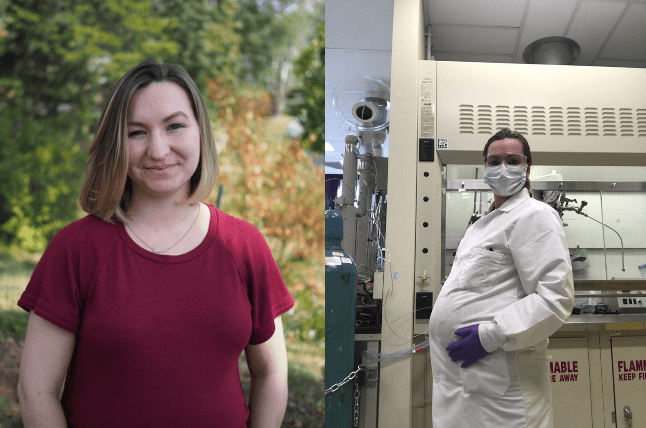
Mary Kate Mitchell Lane, Ph.D. Candidate, Yale University, United States
Share about your entry into chemical toxicology and your path to your current area?
I am a 5th year PhD candidate in the Department of Chemical and Environmental Engineering in Yale’s School of Engineering and Applied Sciences. Prior to graduate school, I gained experience in a diverse set of industry and research roles (from an intern in oil refining and natural gas distribution to a student researcher on ultracapacitor development, biofuel synthesis, and water treatment) while earning my Bachelor’s in Chemical Engineering from Michigan Technological University that motivated me to pursue a research career focused on sustainability and the environment. I investigate the use of green solvents as process alternatives for both nanomaterial synthesis and the integrated biorefinery in Dr. Julie Zimmerman’s lab as part of the Center for Green Chemistry and Green Engineering at Yale. While working towards my PhD, I became pregnant, and this led to our article.
How do you want to contribute to the advancement of the field?
Broadly, I would love to see safety prioritized over all aspects of chemistry and green chemistry and engineering implemented system-wide. Specifically, my hope is that this review empowers pregnant researchers with the information they need to assess their risks of working in a chemical lab and make decisions that they feel confident in.
What inspired you to do the research in the article we are highlighting?
The initial idea for the project came from Dr. Paul Anastas and Dr. Julie Zimmerman, both leaders in the field of Green Chemistry and Green Engineering, who invited me and my fellow researcher, Dr. Mahlet Garedew, to investigate what was out there in terms of what unique risks exist for pregnant researchers in chemical labs and corresponding recommendations and resources. Both Mahlet and I were pregnant at the time and expecting our first babies and we were in the process of trying to navigate a safe work plan for ourselves in lab and having trouble finding useful or cohesive information. By diving into current resources and the academic literature, we found good information, but it was scattered in many areas, too general (e.g., “try to avoid exposure when pregnant”), or too specific relating to a specific industry (like healthcare), so decided to write a review specifically for pregnant researchers in chemical labs. That was the big motivation behind this review - to provide a single, comprehensive resource that can be used by pregnant researchers as well as institutions (academic and other research institutions) that highlights and assesses risks for pregnant researchers in chemical labs.
What is something that has impacted you in a positive manner?
Support from my mentors and help from other researchers who were or had been pregnant.
What was your training circle like?
At Michigan Tech, Chemical Engineering is often referred to as “FemEng” (as opposed to “ChemEng”) because of the relative abundance of women in the major, but my graduating class was still less than 30% female. My experience in industry was even more male-dominated: as an intern at two research and development companies, NanoMAG and FastCAP Systems, I was the only female in the entire engineering department. This experience, as well as my desire to understand the drivers behind the leaks, has drawn me to apply green chemistry to diversity and inclusion in addition to scientific research.
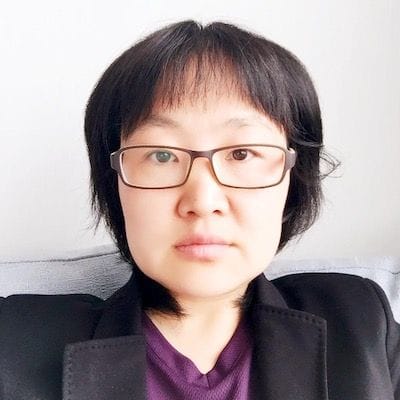
Lei Guo, Professor, Academy of Military Medical Sciences, China
Share about your entry into chemical toxicology and your path to your current area?
Prof. Guo began as an analytical chemist during her Ph.D. candidate and now she has achieved more than 20 years of professional expertise in toxicological analysis. The entry into chemical toxicology is natural since she always tries to invent some new analytical methods or tools to address toxicological issues such as interesting effects or mechanisms.
How do you want to contribute to the advancement of the field?
The most impressive thing in this field to Prof. Guo is the bright perspective that the advanced chemical techniques will pave a powerful way to unveil unclear or complicated biological outcomes. She will continue to develop more structural or effect-directed mass spectrometric and interaction-based biosensing methods on various chemical toxicants, aiming to provide more confident information on exposure biomonitoring, hazard assessment, and even threat precaution.
What inspired you to do the research in the article we are highlighting?
The research in article tells a story of effect evaluation via a panel of DNA damage biomarkers, which has never been considered as a whole, index structurally similar chemical toxicants and their cytotoxicity. The most key point is the choice of eight effect markers from several aspects including five endogenous DNA damage effect markers (oxidative damage; lipid peroxidation; inflammation; and endogenous alkylation), and three epigenetic modifications. After Kexin Li (first author, a Ph.D. candidate) discovered the dose-dependent relationship and analyzed it via chemometrics, she realized that this panel has the potential for cytotoxicity evaluation and benefited the connection between cytotoxicity and certain damage effects. A lot of successive work can go on, the combined panels of protein damage effect biomarkers, the conjunctive relationship between endogenous DNA damage effect markers and covalently adducts of nitrogen mustard and DNA, examinations of different toxicants, and on animal models.
What is something that has impacted you in a positive manner?
The curiosity about the majority and relevant sci-tech field, the ambition to do some useful research to tackle practical problems, and the hard work.
What was your training circle like?
Prof. Guo has experienced a typical training circle like academy (M.Sc. and Ph.D. in China), university institute (postdoc in Germany), and academy (Asst. Prof., Asso. Prof., and Prof. in China). The professional background in analytical chemistry in the early stage in her career really help her to learn toxicology from a chemical view, that is, focus on the changes of structures and the number of chemical substances in the toxicological circumstance matrix. It also promotes her to employ and develop more advanced analytical techniques and methods to serve chemical toxicology. Chemical insight into the toxicology event is the top priority for her and her team.
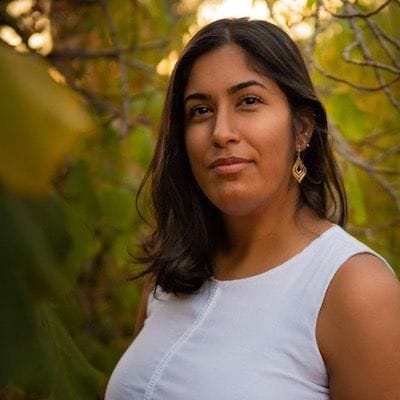
Roxana Coreas, Postdoc, UC Berkeley, United States
Share about your entry into chemical toxicology and your path to your current area?
I was introduced to the field of toxicology as an undergraduate and became fascinated with this branch of interdisciplinary science. As a graduate student, I became interested in understanding the biological impacts induced by nanomaterials, which serve as platforms for several biological applications, through an analytical chemistry lens. More specifically, I was interested in understanding the nanomaterial-biomolecule interface: nanomaterials can succumb to a biological coating, through the spontaneous adsorption of lipids, proteins, and other biomolecules, forming what is known as the biocorona. As a scientist, I am fascinated by the way that the biocorona can govern nanomaterial toxicity and my goal is to leverage the biocorona to enhance the efficacies of nanotechnologies.
How do you want to contribute to the advancement of the field?
I am highly passionate about mentorship because of how truly impactful it has been in my academic and professional career. My mentors have had a huge influence on my training and research development. I aspire to be as analytical and creative as they are. Moreover, because of their belief in me, and their support in my academic and research endeavors, I have flourished into the scientist I am today. My goal is to offer the same mentorship I received to future scientists and help guide them to achieve their academic and career goals.
What inspired you to do the research in the article we are highlighting?
I was inspired to study the impact of the surface chemistry of graphene-based nanomaterials because these materials are utilized for in several industries and have been shown to be useful in the field of nanomedicine, for example to deliver chemotherapeutics or to as platforms for photothermal therapies to treat breast cancer. In this study we aimed to understand how the surface chemistry of reduced graphene oxide nanosheets modulates their biological response in mammary epithelial cells. Our hypothesis was that by exposing the surface of graphene-based nanosheets in solution through surfactant removal, greater events of protein adsorption would be observed. Interestingly, through the characterization of the biocorona, we correlated the adsorbed protein profile to the measured biological impacts. Overall, these findings support the importance of identifying the biocorona constituents to understand the complete toxicity of nanomaterials.
What is something that has impacted you in a positive manner?
Research can be daunting because experiments do not go as planned. However, when experiments do work, and the data collected can prove concepts or ideas that were once unknown or not well understood, I am overcome with joy, and I feel a deep sense of gratification. It is very satisfying being able to study and discover things that were once unknown.
What was your training circle like?
I am fortunate to have had a training circle of exceptional scientists, many of whom were amazing women. As an undergraduate, I was a NIH RISE trainee, mentored by Dr. Paula Fischhaber. Both she and Dr. Maria Elena Zavala were instrumental in my pursuit of higher education. In graduate school, I was advised by Dr. Wenwan Zhong, a leading analytical chemist. Currently, I am a postdoc sponsored by Dr. Markita Landry. Each of these women, as scientists, have supported me by teaching me valuable research skills, providing me with professional development, and inspiring me to be inquisitive and creative.
Want More from This Journal?
Stay Connected
Sign up today for email updates on the latest research, issues, and other content from Chemical Research in Toxicology.
