Are you driven by application, theory, observation, or collaboration? Explore the work and perspectives of four legendary chemists—and take our in-booth quiz at ACS Fall 2026 to find your scientific match!
Chemistry has always been shaped by bold thinkers whose curiosity and persistence have changed the way we understand the world, and these legendary figures each had their own unique way of thinking, experimenting, and solving problems.
At ACS Fall 2026, taking place August 23-27 in Chicago, IL and online, ACS Publications invites you to join us in celebrating the diverse scientific personalities that have shaped the field as we know it today. Stop by the ACS Booth to take our interactive quiz, “Which Influential Chemist Are You?”, and find out which historical scientific icon mirrors your mindset. You can learn more about each of the featured chemists below.
While our quiz celebrates influential chemists throughout history, ACS Fall 2026 also offers an opportunity to hear from leading scientists whose discoveries are shaping the field today. On Tuesday, August 25, hear from some of the most influential scientific voices of our time as pioneering researchers, journal editors, and members of the scientific community come together for a morning of discovery and discussion surrounding chemistry’s impact across disciplines and its role in shaping the future of science. Hear from Nobel Laureates Prof. Carolyn Bertozzi on bioorthogonal chemistry, Prof. Stefan Hell on super-resolution fluorescence microscopy, Prof. Jack W. Szostak on the origins of genetic information, and Prof. Stanley Whittingham on the future of lithium battery chemistry.
Space is limited, so be sure to add this exclusive event to your ACS Fall 2026 registration.
Which Influential Chemist Are You?
Alice Ball
Lise Meitner
C.V. Raman
Friedrich Wöhler
Alice Ball: The Applied Problem‑Solver
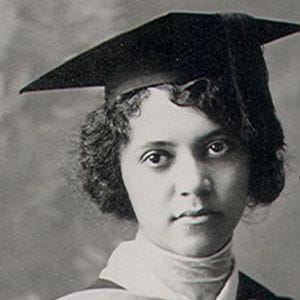
Alice Ball was trained as a chemist, but her work sat at the intersection of chemistry, medicine, and public health. While working in Hawaiʻi in the 1910s, she developed a chemical modification of chaulmoogra oil that made it injectable and effective against leprosy. Her method became the standard of care worldwide until antibiotics emerged decades later.
Ball’s work reflects a practical approach to chemistry that remains relevant today. Challenges related to solubility, formulation, and patient use continue to shape pharmaceutical research, making Ball’s contribution an early example of chemistry focused on real‑world impact rather than theory alone.
Lise Meitner: The Collaborative Theorist
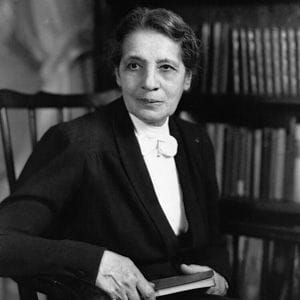
Lise Meitner played a central role in explaining the process of nuclear fission, co-authoring the theoretical framework that described how atomic nuclei could split and release vast amounts of energy. Working with her nephew Otto Frisch, she interpreted experimental results from Otto Hahn and Fritz Strassmann—work that would later underpin nuclear power and medicine.
Meitner’s approach was deeply collaborative and interdisciplinary, bridging physics and chemistry at a time when both fields were rapidly evolving. Though she was overlooked for the Nobel Prize, her contributions are now widely recognized, including through recent honors such as the ACS Division of the History of Chemistry (HIST) 2023 Citation for Chemical Breakthrough Award.
C.V. Raman: The Spectral Explorer
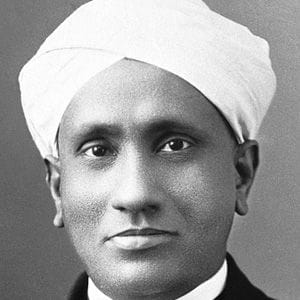
C.V. Raman’s discovery of inelastic light scattering—now known as the Raman Effect—opened a new window into the molecular world. His work showed that light could interact with matter in ways that revealed vibrational energy levels, giving chemists a powerful tool to identify and study substances without altering them.
Raman’s approach was rooted in curiosity about the natural world, but his discovery became foundational to analytical chemistry, materials science, and biomedical imaging. His legacy is honored annually in India on National Science Day, a celebration of scientific progress held on the anniversary of his discovery of the Raman Effect. Today, Raman spectroscopy is used to probe everything from pollutants in water to protein folding in cells.
Friedrich Wöhler: The Boundary Breaker
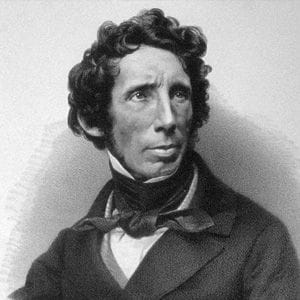
Friedrich Wöhler is best known for a single experiment that changed how chemists understood life and matter. In 1828, he synthesized urea, an organic compound associated with living systems, from inorganic starting materials. At the time, this result challenged the widely held belief that organic substances could only be produced by living organisms, a concept known as vitalism. Wöhler’s work showed that the same chemical rules applied to both living and nonliving matter.
That insight helped establish organic chemistry as a discipline grounded in laboratory synthesis rather than biological origin. Today, the ability to design and build complex molecules rests on the same principle his work helped make clear: chemistry operates according to universal laws, regardless of context.

ACS 150th Anniversary
Celebrating ACS150: Chemistry is Everything
Throughout 2026, ACS will mark 150 years of advancing chemistry — a historic milestone built on discovery, innovation, and community.