In celebration of International Women's Day 2023, we bring to you a collection of interviews from women in India who serve as Editors and on the Editorial Advisory Boards of various ACS journals.
March 8, 2023 is International Women’s Day—this year, we are reminded of the powerful words by the Ghanaian scholar Dr. James Emmanuel Kwegyir-Aggrey: "If you educate a woman, you educate a nation." History stands testament to the fact that women have gone from strength to strength, especially over the last few decades.
We are pleased to introduce three prolific women researchers in India who serve as Editors and on the Editorial Advisory Boards of various ACS journals, and who have made significant contributions to chemistry and allied sciences.
These influential women are just a few examples of the incredible talent and dedication that women bring to the field of research. They have not only made significant contributions to their respective fields but have also inspired countless others to pursue careers in science, technology, engineering, and mathematics.
Let us celebrate the achievements of these remarkable women and countless others who are making a difference in the world of science. Let us also commit ourselves to creating a more equitable and inclusive world, where all women can thrive and succeed.
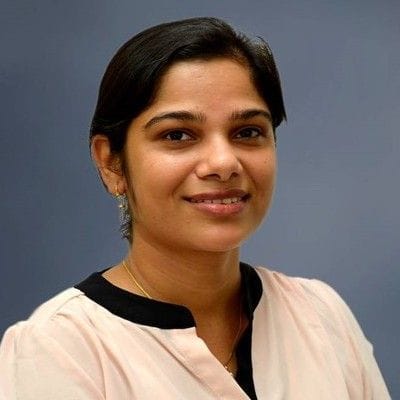
Dr. Dipti Gupta
Associate Editor, ACS Applied Electronic Materials
Dr. Dipti Gupta works as an Associate Professor at Metallurgical Engineering and Material Science (MEMS) Department, IIT Bombay, India. Her main research area is flexible electronics. She is also associated with the Tata Centre for Technology and Design, the National Center for Photovoltaic Research and Education, the Center of Excellence in Nanoelectronics, and the Wadhwani Research Center for Bioengineering located at IIT Bombay.
Dr. Gupta currently serves as an Associate Editor at the journal ACS Applied Electronic Materials.
How do you think the field of chemistry has changed for women over the course of your career?
I work in the area of Flexible electronic materials and devices for healthcare and energy applications. The research area is at the interface of Materials Science and Semiconductor electronics. Historically, both these areas of materials and electronics has been male-dominated, with fewer women pursuing careers in these areas due to various reasons such as societal and cultural biases, lack of role models, and insufficient opportunities for training and mentorship. However, over the past few decades, there has been a noticeable increase in the number of women pursuing careers in these fields, including materials science, electronics, and nanotechnology. There have been lots of efforts by academic and industry organizations to support women in these fields by creating programs and initiatives that offer opportunities for professional development, networking, mentorship, and leadership training. Moreover, there have been efforts to implement diversity and inclusion programs that aim to recruit, retain, and advance women in the field of materials and electronics. From Indian Government side there were many programs launched like SERB Power, IGSTC – WISER, DST – Women Scientists, KIRAN etc that are providing women with break in career, grant and networking opportunities, training, mentoring sand other benefits that help to support women in their scientific careers. Overall, while there is still progress to be made, the field of materials and electronics is becoming more inclusive and supportive of women.
What are some changes you'd like to see to improve the field for women?
There are several changes that could be made in the materials and electronics field to improve opportunities and outcomes for women. Here are a few changes that I would like to see:
- More role-models as scientists, professionals, entrepreneurs, and at leadership roles in various scientific organizations, academia, corporates etc.
- A more accommodative and inclusive workplace culture
- More skilling, training, networking programs
- Grant, mobility opportunity
- Support system, mentoring
What are your top tips for women considering a career in materials and allied sciences?
- Obtain the necessary education and training to build a strong foundation. Look for programs that provide a broad and interdisciplinary curriculum that covers topics like materials, chemistry, physics, and engineering.
- Connect with experienced professionals who can offer guidance, advice, and support.
- In order to excel, develop strong technical skills in the area by taking courses (online/offline) or workshops etc.
- Keep up-to-date with the latest advancements and developments by reading scientific journals, attending conferences, and participating in professional organizations.
- Build a professional network by attending conferences and joining professional organizations.
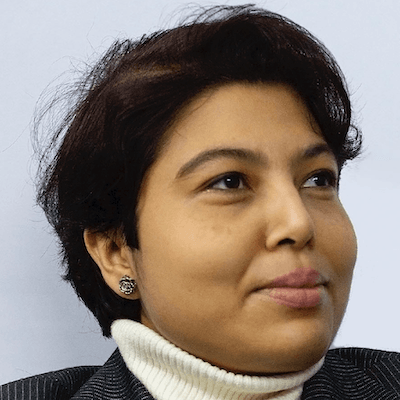
Dr. Debashree Ghosh
Editorial Advisory Board Member, Journal of Chemical Theory and Computation and The Journal of Physical Chemistry A
Dr. Debashree Ghosh is a physical chemist, trained in electronic structure theory. She is a Professor at Indian Association for the Cultivation of Science [IACS] Kolkata. She works on developing computationally affordable quantum mechanical methods to understand light-matter interaction. Her love for programming and strongly correlated systems is well reflected in her research work.
Dr. Ghosh has a long-standing history with ACS as an author, reviewer, and reader. She is also part of the esteemed Editorial Advisory Board of Journal of Chemical Theory and Computation and The Journal of Physical Chemistry A.
How do you think the field of chemistry has changed for women over the course of your career?
Even in the early 2000s when I was doing my undergraduate studies, the number of women students in chemistry was around 10-15%. This percentage has increased significantly to near equity levels. The number of female graduate students in chemistry has also increased significantly. Female graduate students at our institutes expressed that they had support from their families. Sometimes the support might be lukewarm and a tad bit reluctant, but at least it is there. This is one of the main positive changes I have noticed over the span of only a couple of decades.
What are some changes you'd like to see to improve the field (chemistry or your sub-field) for women?
The leaky pipeline for female chemistry graduates is still very much a reality. While there is support for studies, social pressures seem to mount when it comes to career options. It forces women to abandon competitive and time-consuming career paths for some less demanding job descriptions. I would like to see these career paths come with more family-friendly services and policies. Gender-based stereotypes still exist in some experimental and mathematically oriented branches of chemistry. Sensitization about such unconscious biases may go a long way toward correcting the imbalance.
What are your top tips for women considering a career in chemistry and allied sciences?
The suggestion I have for women considering a career in chemistry is to look inward and find their own strongest points. Instead of trying to fit in, understand how your uniqueness can be best utilized and not be ashamed to portray it as such. I believe that in order to survive a career in chemistry, women need to come together and share their experiences, and their survival strategies. They need to find mentors and friends from whom to ask for help when needed. And finally, instead of being wracked by self-doubt, be kind to yourself.

Dr. Moumita Majumdar
Editorial Advisory Board Member, Inorganic Chemistry
Dr. Moumita Majumdar is an Associate Professor in the Department of Chemistry, at the Indian Institute of Science Education Research (IISER) Pune, India. Her research interest is in Main Group Chemistry. Her research focusses on expanding the chemical functionalities of heavier Group 14 and 15 compounds for state-of-the-art applications in catalysis and energy-related materials.
She is one of the distinguished Editorial Advisory Board Members at the ACS journal Inorganic Chemistry.
How do you think the field of chemistry has changed for women over the course of your career?
In India, I have noticed a significant increase in the number of female faculty representations across all premier institutes (IIT and IISERs, specifically) in Chemistry. I am mentioning for the period from my PhD career until now. For example, the Chemistry Department @IISER Pune has 13% female faculty representation. The statistics of course reflects an improvement, nonetheless a long way to go. Most of the institutes (not all) are aware of the infrastructural supports to be provided to mothers in academia such as maternity/career break management policies, day-care facility, feeding rooms in office premises etc and are being developed accordingly. The government has been pro-active in opening women-centric schemes for supporting their research and also recognizing their achievements.
What are some changes you'd like to see to improve the field (chemistry or your sub-field) for women?
We must aim for more inclusivity and mitigate gender discrimination or any kind of discrimination. The following are the specific points in my opinion:
- Structured plans for hiring more women students/post-docs and faculty members.
- ‘Workplace harassment’ needs particular attention besides sexual harassment.
- Delay due to maternity or related medical leaves are normal and hence these should not negatively impact on promotions
- Equal share of child care leaves for both parents (if the case be).
- Financial and infrastructural support for day-care facility at the conferences/institutes.
- Welcoming dual career options, if found suitable
What are your top tips for women considering a career in chemistry and allied sciences?
Currently, I am chairing the Women in Science Committee @IISER Pune. We have a mentoring program particularly focussing on our female students. We encourage young aspiring minds to pursue their career in academia. My personal tip would be:
- Allow your passion to fuel your interest in pursuing science
- Celebrate motherhood and career break.
- Mothers in academia: Develop supportive structures both in your profession and families
- Science/academia is a fulfilling career for creative minds. Don’t miss it!
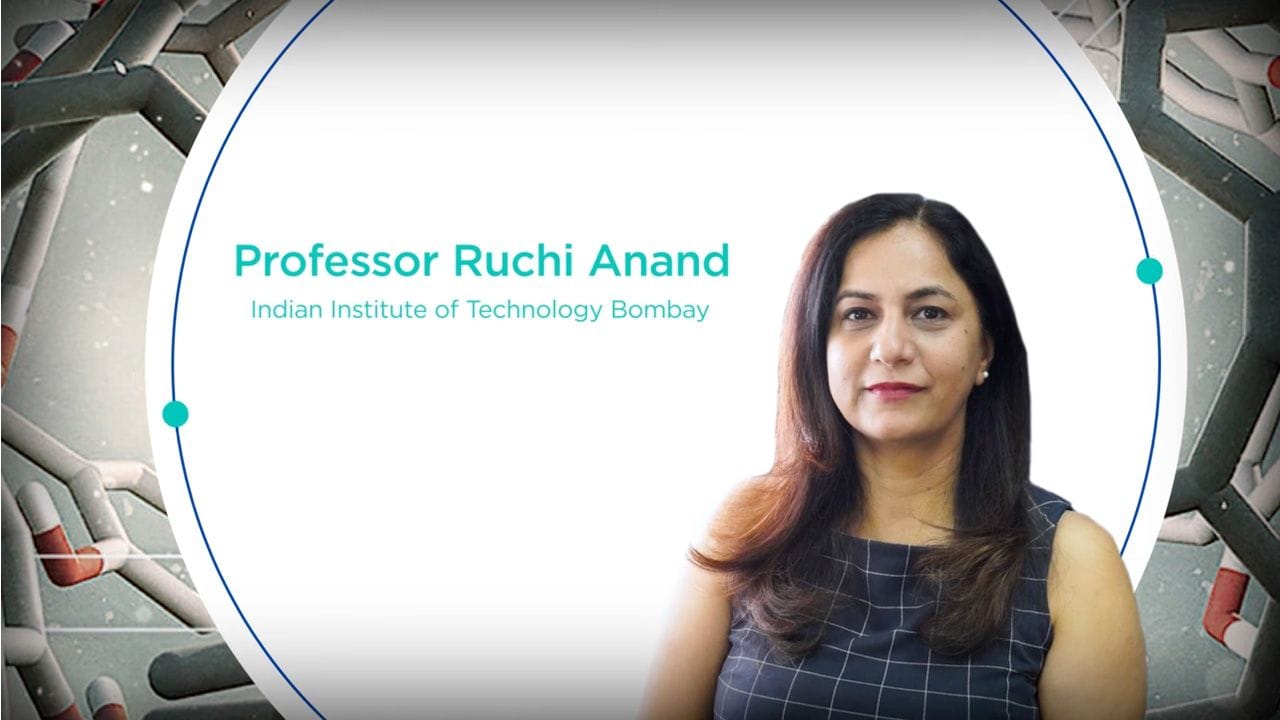
Professor Ruchi Anand
Editorial Advisory Board Member, ACS Sensors (Video)
In this interview, Journal of the American Chemical Society (JACS) Editor-in-Chief Professor Erick Carreira speaks with Professor Ruchi Anand of the Indian Institute of Technology, Bombay. Professor Anand leads a research group working on structural insight into protein regulation, focusing on the origins of antibiotic resistance, understanding regulatory switches and biosensing applications. She is also on the Editorial Advisory Board of ACS Sensors.
Watch the video below to learn about Professor Anand’s career, the opportunities she has enjoyed and challenges she has faced, and her experience as a woman working in the scientific research community. Find out more about her research interests, who she considers to be her heroes and mentors in chemistry, and her advice for those starting out in their own research careers.
Explore More Content from ACS Publications
Collections and Special Issues
Women in Toxicology from Chemical Research in Toxicology
Advancing Women in Chemistry: A Special Issue from Journal of Chemical Information and Modeling
2022 Pioneers in Energy Research: Jinhua Ye from Energy & Fuels