Get to know the 2025 winners, read their winning articles, and learn about their plans for building upon their existing research.

Each year, ACS Catalysis has the pleasure of honoring recent and significant contributions to the field of catalysis by an individual or a team with the ACS Catalysis Lectureship for the Advancement of Catalytic Science award. In partnership with the ACS Division of Catalysis Science and Technology (CATL) and the ACS Division of Organic Chemistry (ORGN), this year’s awards tie directly to a ground-breaking publication in ACS Catalysis.
In recognition of the large scope of catalysis covered by ACS Catalysis, the 2025 awards have been given in each of the three areas of catalysis covered by the journal: biocatalysis or enzymology, heterogeneous catalysis, and homogeneous catalysis. The awards honor recent and significant contributions to the field, which appeared as a publication in ACS Catalysis within the last 36 months preceding the nomination deadline (2022, 2023 or 2024).
It is our pleasure to announce the 2025 awardees:
- Biocatalysis: Prof. Debasis Das, Institute of Science, Bangalore, India
- Heterogeneous Catalysis: Prof. Lifang Jiao, Nankai University, China
- Homogeneous Catalysis: Prof. Rui Shang, University of Tokyo, Japan
Learn more about each of the winners below.
Prof. Debasis Das
Winning Article: Unraveling the Conversion of Fatty Acids into Terminal Alkenes by an Integral Membrane Enzyme, UndB
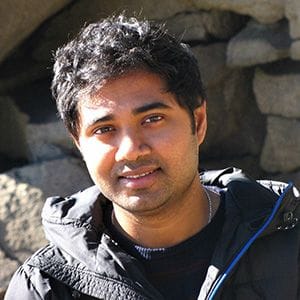
Prof. Das was born and raised in eastern India. He earned his B.Sc. from Ramakrishna Mission Residential College in NarenProfapur and his M.S. from the Indian Institute of Science in Bangalore, where he worked with Prof. G. Mugesh. In 2014, Prof. Das completed his Ph.D. in Chemistry (Chemical Biology) at the University of Michigan, Ann Arbor, working with Prof. Neil Marsh. After his postdoctoral research with Prof. Barbara Imperiali at MIT, USA, he joined the Indian Institute of Science, Bangalore, as an Assistant Professor in 2019.
His research is highly interdisciplinary, bridging the fields of chemistry and biology. His group focuses on gaining a mechanistic understanding of metalloenzymes and exploring their applications. By leveraging a combination of chemistry, biochemistry, molecular biology, and microbiology techniques, his team investigates the function, kinetics, mechanisms, and reaction intermediates of several poorly understood enzymes. The long-term goal of their work is to engineer and apply these enzymes in green energy solutions and therapeutic interventions. He has been recognized as an EMBO Global Investigator in 2023. He has received the Excellence in Research Award from the University of Michigan (2013), the Excellence in Research Award (2024), and the Excellence in Teaching Award (2024) from IISc Bangalore, as well as the Gramie-Hanson Early Career Researcher Award (2024) from the Society for Biological Inorganic Chemistry.
Prof. Das will be honored for his winning research at an upcoming award Symposium to be announced at a later date.
Can you give us a short overview of the research you are currently undertaking?
Enzymes are Nature’s most powerful tools, enabling chemical reactions with extraordinary speed and precision. Our group is dedicated to understanding and harnessing some of Nature’s most complex and underexplored enzymes for applications in bioenergy and therapeutics. One of our key research areas involves membrane-bound metalloenzymes that facilitate the sustainable biosynthesis of alkenes and their derivatives—valuable molecules used across the chemical and energy industries. We are developing pathways to produce these molecules from fatty acids, which are naturally highly abundant and low-cost feedstock. Our long-term goal is to leverage these enzymatic systems to generate green commodity chemicals and 'Profop-in' biofuels as viable alternatives to petroleum-based products.
In a parallel direction, we are investigating novel microbial enzymes derived from mammalian habitats to combat biofilm-associated infections. Biofilms serve as a formidable bacterial defense and pose a significant challenge in clinical settings by resisting antibiotics and immune systems. We aim to develop biocompatible strategies using biofilm-degrading enzymes to prevent and treat these persistent infections. Ultimately, our vision includes engineering enzyme-coated medical gauze and devices to prevent and treat infections linked to biofilms.
What inspired you to pursue your area of research?
I am deeply fascinated by the elegance of Nature—especially the remarkable ways enzymes are used to carry out complex chemistries that often surpass our imagination. Drawing inspiration from these natural processes, our work focuses on enzymes that are not only mechanistically intriguing but also hold significant promise for real-world applications that can benefit society. I firmly believe that solving today’s pressing challenges requires a multidisciplinary approach. That’s why our research bridges multiple fields—including chemistry, biochemistry, molecular biology, and microbiology—to tackle critical issues at the intersection of chemistry and biology.
What does winning this award mean to you?
It’s an incredible honor to receive this award as an early-career researcher. More importantly, it serves as a wonderful recognition of the hard work, passion, and creativity of the students in our lab. They embraced significant challenges and took bold risks in pursuing research on highly complex integral membrane enzymes, fully aware of the uncertainties involved.
We hope this award not only shines a light on our efforts but also helps connect our work with a broader scientific audience—and inspires fellow researchers in the biocatalysis community around the world to continue pushing boundaries.
What advances are you hoping to see in your field in the next decade?
Our research is closely aligned with the global vision of transitioning to sustainable energy and advancing innovative solutions for human health. I believe biocatalysis will be at the forefront of this movement, offering environmentally friendly and efficient pathways for both green energy and therapeutic development. With rapid advancements in protein structure prediction and molecular biology techniques, the future of biocatalysis is exceptionally promising. I’m confident it will continue to grow as a transformative force—capable of making a meaningful, lasting impact on society.
What’s one piece of advice you’d give to someone just entering the field?
Don’t be afraid to take risks in your work—bold ideas often lead to the most meaningful breakthroughs. Always keep a long-term vision in mind, one that aims to create a positive impact on society. And never hesitate to think beyond the boundaries of your expertise; innovation often begins where conventional knowledge ends.
Prof. Lifang Jiao
Winning Article: Interfacial Engineering of Ni3N/Mo2N Heterojunctions for Urea-Assisted Hydrogen Evolution Reaction
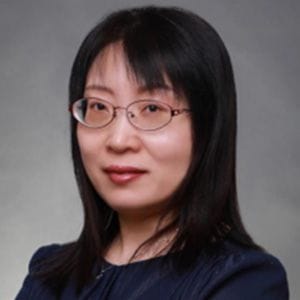
Prof. Jiao was born in Hebei Province, China. She began her academic journey in 1995 at Hebei Normal University, where she obtained both her bachelor’s and master’s degrees in chemistry. Continuing her pursuit of scientific excellence, she completed her Ph.D. in inorganic chemistry at Nankai University in 2005 and subsequently became a faculty member there. Between 2013 and 2014, she further enriched her expertise as a visiting fellow at the University of Wollongong in Australia. She is currently a full professor in the college of Chemistry at Nankai University, China, and has received significant recognition for her contributions to energy science. Notably, she was awarded the National Science Fund for Distinguished Young Scholars in 2020 and the 18th China Young Women Scientist Award in 2022.
As the Chief Scientist of the National Key Research and Development Program of China, Prof. Jiao leads cutting-edge research in advanced energy materials and electrocatalysis. Her current research interests are focused on energy storage and conversion of advanced materials, including sodium secondary batteries, dendrite-free sodium metal anode, sodium-based solid-state electrolyte, and electrocatalytic hydrogen evolution such as proton exchange membrane water electrolysis and hydrogen production coupled with electrochemical oxidation of small molecules.
Prof. Jiao will be honored during the ACS-Nankai University Catalysis Forum: Multidisciplinary Frontiers in Catalysis Science, co-organized by Nankai University and ACS Publications on August 20-21, 2025, at Nankai University, Tianjin, China.
Can you give us a short overview of the research you are currently undertaking?
The escalating environmental and energy crises pose significant challenges to modern societal development, fueling an urgent need for clean and renewable energy solutions. However, primary renewable energy sources, such as solar, wind, and tidal energy, are inherently intermittent and geographically limited. Consequently, a critical research focus lies in the efficient conversion and storage of these renewable energies. Our group is dedicated to investigating the structure-property relationships of materials utilized in electrochemical energy conversion and storage technologies. Specifically, we explore how the composition, microstructure, and surface/interface characteristics of nanostructured electrode materials influence their energy storage performance and electrocatalytic activity.
What inspired you to pursue your area of research?
My academic journey began with uncertainty about the future. Growing up in a rural village, my initial ambition was to transcend the challenges of agricultural labor. When I decided to study chemistry, my parents humorously said, “Perhaps you’ll develop a more effective pesticide!”—a remark that sparked my early interest in organic chemistry. However, a transformative moment arose with the advent of mobile technology. Devices like the mobile phone, which enabled wireless communication and overcame the limitations of landline telephones, fascinated me. During a physical chemistry course, I learned about mechanisms by which batteries in these devices convert chemical energy into electrical energy. This insight captivated me: science could transform abstract principles into technologies that fundamentally change everyday life.
Yet mere inspiration was insufficient. I have always believed that research must contribute to societal progress. Given the emergence of energy conversion and storage as a critical national and global priority, my work is now propelled by a profound sense of responsibility to address humanity's urgent energy challenges and to foster sustainable solutions for our future energy needs.
What does winning this award mean to you?
This award is far more than a personal honor, that is a reflection of the dedication and hard work of the outstanding students in our group, whose efforts propel our research forward on a daily basis. It also honors the invaluable support of mentors, collaborators, and peers who have guided and encouraged us throughout our research journey. The award serves as a potent motivation for our team to continue advancing the frontiers of innovation in the energy field.
What advances are you hoping to see in your field in the next decade?
I would like to see next-generation energy conversion and storage technologies, such as water electrolysis for hydrogen production and high-energy-density batteries, seamlessly integrated with smart grids to achieve real-time balancing of renewable energy supply and demand.Additionally, the application of artificial intelligence and machine learning to accelerate materials discovery and optimize catalytic processes will be crucial for advancing this field, offering both excitement and significant potential.
What’s one piece of advice you’d give to someone just entering the field?
Pursue your research with a clear sense of purpose and an open, adaptable mindset. Scientific discovery often requires years or even decades of persistent effort, however, it is within this journey that growth and insight are cultivated. Develop resilience to confront setbacks and maintain composure when faced with challenges. Stay curious, and engage in open collaboration.
Prof. Rui Shang
Winning Article: Arenethiolate as a Dual Function Catalyst for Photocatalytic Defluoroalkylation and Hydrodefluorination of Trifluoromethyls
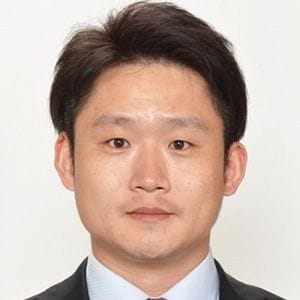
Prof. Shang received his bachelor's degree from the University of Science and Technology of China (USTC) in 2009 and obtained his Ph.D. from the same university in 2014 working on developing catalytic decarboxylative cross-couplings. From 2012 to 2014, he conducted joint doctoral research at the University of Tokyo in Japan under the supervision of Prof. Eiichi Nakamura, working on iron-catalyzed C-H activation. Upon completing his Ph.D., he was awarded a postdoctoral fellowship by the Japan Society for the Promotion of Science (JSPS) and continued his research at the University of Tokyo. In November 2016, he was appointed as a Lecturer at the Faculty of Science, the University of Tokyo—an appointment that bypassed the conventional Assistant Professor stage in the Japanese academic system—and was subsequently promoted to Associate Professor in 2020. In 2024, he was further promoted to Project Professor at the same institution.
Prof. Shang will join Westlake University as a full-time faculty member in October 2025, where he will establish the Laboratory of Sustainable Catalysis and Functional Molecules. Prof. Shang’s research focuses on novel catalytic reactions, green organic synthesis, and functional conjugated molecules. He has made a series of seminal contributions to the fields of base metal catalysis, visible-light photocatalysis, and organic functional materials. In 2022, he was selected as a member of the Early Career Advisory Board of Science of Synthesis (SoS), and as a JSP Fellow of the Bürgenstock Conference. He is also the recipient of the Banyu Chemist Award 2022 from Banyu Merck-Japan, the Chemical Society of Japan Award for Young Chemists 2022, and the Thieme Chemistry Journals Award 2023.
Prof. Shang will be honored during an ACS Division of Organic Chemistry symposium at ACS Fall 2025 in Washington, D.C, between August 17-21.
Can you give us a short overview of the research you are currently undertaking?
My current research focuses on developing sustainable catalytic methods for organic synthesis by harnessing the organometallic reactivity of base metals and the energy of visible light. A key objective is to apply these methods to the synthesis of functional molecules for use in organic electronic materials. My research group aims to explore new catalytic reactivities, design innovative functional molecules, and develop high-performance electronic materials. These research directions are closely interconnected, forming a synergistic framework that fosters innovation across catalysis, molecular design, and materials science.
What inspired you to pursue your area of research?
Currently, my research centers on sustainable catalysis, with a focus on conjugated molecules that can function as organic electronic materials. I have been particularly drawn to base metal catalysis—especially iron and chromium—due to their challenging and often unpredictable reactivity, which defies straightforward rational design for practical catalytic applications. Upon my appointment as a lecturer at the University of Tokyo, I was encouraged by Professor Eiichi Nakamura to shift my research direction entirely—from synthetic methodology to materials development for perovskite solar cells—a transition I pursued for three years. I soon became fascinated by the structural novelty and intriguing properties of conjugated molecules. When I resumed my research on iron catalysis three years later, I redirected my efforts toward developing iron-catalyzed methodologies for synthesizing molecules applicable to electronic materials. This new direction was inspired by a fusion of my experience in materials science and the unique reactivity I had previously uncovered in iron catalysis. Fortunately, we discovered several reactions that are uniquely and efficiently catalyzed by iron, enabling the synthesis of diverse molecular libraries. These molecules have attracted interest from materials scientists, and some compounds—accessible only through our iron-catalyzed methods—have shown promising performance in electronic device applications.
What are you currently working on?
I am currently developing iron-catalyzed polymerization methodologies for the synthesis of conjugated conductive polymers, as well as iron-catalyzed C–H annulation strategies. I have followed a relatively unique career path, working both in Japan and remotely supervising a small research group at my alma mater, the University of Science and Technology of China, for many years after my relocating to Tokyo. Research is an endless pursuit—once begun, it continually evolves, often guided by serendipity. My sustained interest in decarboxylative couplings led me into the field of photocatalysis and developing cost-effective photocatalytic systems, where I found simple iodide salts, phenolates, and thiolates, serve as photocatalysts. Some of my discoveries in photocatalysis were inspired by insights into charge separation and transfer processes that I gained while studying electronic materials. I believe that my past research experiences and the constant pursuit of originality have shaped my current research interests and directions. The way I approach my work has been deeply inspired by the words of wisdom written by the late Professor Teruaki Mukaiyama in Angew. Chem. Int. Ed. 2004, 43, 5590.
What does winning this award mean to you?
This award is a significant encouragement for me to continue exploring homogeneous catalysis. The work published in ACS Catalysis was conducted under challenging circumstances during the COVID-19 pandemic, in a lab at USTC that operated with limited resources at the time. Despite these challenges, I deeply value the experience and education I received there. On a very personal level, I see it as a reward for my perseverance in overcoming challenges—a quality essential for my future career in scientific research.
What advances are you hoping to see in your field in the next decade?
Sustainable catalytic methodologies that rely solely on abundant, inexpensive resources and benign energy sources will revolutionize chemical synthesis both conceptually and practically. They will serve as key enablers in advancing materials science, and their impact will be increasingly appreciated by researchers across diverse areas of chemistry, particularly in the context of homogeneous catalysis in organic synthesis.
What’s one piece of advice you’d give to someone just entering the field?
As chemists working in the field of homogeneous catalysis, we must cultivate core expertise while broadening our perspective to ensure our work resonates with researchers in other disciplines. Guided by the vision of becoming indispensable, we should embrace originality and strive for simplicity rather than increasing complexity in developing new methodologies.