
This year, we bring you a collection of insightful conversations with thought leaders from India's scientific community, as well as a curated selection of ACS journal articles highlighting research based on the pioneering discoveries of Sir C. V. Raman.
National Science Day is celebrated each year in India on February 28. This date marks the anniversary of the discovery of the Raman Effect by Sir C. V. Raman in 1928. The day is dedicated to promoting scientific awareness, fostering scientific temper, and honoring the contributions of scientists towards society. This serves as a reminder of the nation's rich scientific heritage and ongoing contributions to global research.
This year, the theme of National Science Day is “Indigenous Technologies for Viksit Bharat.” As science and technology continues to play a crucial role in the development of a nation, it reinforces the importance of investing in research and development, encouraging the government and private sectors to allocate resources towards scientific initiatives.
Science in all the ages has been critical in leading the transformation in society, whether it be through the fundamental discovery of an atom or exploration in space. This day also gives us an opportunity to remember some of the historical moments for Indian science in 2023—in particular the Indian Space Research Organization [ISRO] programs Chandrayaan-3, the lunar exploration mission, and Aditya-L1, India’s first mission to the Sun. As India continues to position itself as a global hub for research and innovation, its young population promises hope and stands formidable to undertake bigger challenges in science, technology and innovation.
This year, we are excited to feature a collection of research highlights as well as insightful conversations with three thought leaders from India's scientific community. Their perspectives shed light on the current state of scientific endeavors in India, emphasize the importance of government support and funding for continued progress, and offer invaluable advice for aspiring researchers and students.
Additionally, we invite you to browse a curated selection of leading-edge research articles published in ACS journals featuring various Raman technologies and applications.
Dr. Arnab Dutta

Dr. Arnab Dutta identifies himself as a bio-inspired catalyst designer, and he learned the basics of this field from Prof. Anne K. Jones and Dr. Wendy Shaw. Currently, Arnab is pursuing his independent career as an associate professor at the Indian Institute of Technology Bombay (IITB) and designing bio-mimetic catalysts for green hydrogen production, CO2 abatement, O2 reduction, and water oxidation. The research group led by Arnab is attempting to unravel sustainable solutions for establishing a carbon-neutral energy infrastructure. Arnab is co-convenor of the National Center of Excellence in Carbon Capture and Utilization and a co-founder of the clean energy start-up UrjanovaC Pvt. Ltd.
Will you share a brief overview of your current research and its potential impact on addressing real-world challenges, especially in the context of National Science Day?
Our group is actively pursuing for sustainable solutions for decarbonization and green hydrogen production. A significant share of the global energy requirement is satisfied by fossil fuels, leading to the generation of copious amounts of CO2 and subsequent climate change effects. Hence, we need to either shift to a carbon-neutral energy landscape or decarbonize our existing energy infrastructure. To address these issues, our group is developing synthetic catalysts that can (i) support renewable energy-driven hydrogen generation from water and (ii) capture CO2 from industrial exhausts and convert it to commercially viable products to create a circular economy.
Can you recount a particularly significant discovery or breakthrough in your field that you believe is worth highlighting on National Science Day?
Natural enzyme architecture always remains a source of inspiration for synthetic chemists to design catalysts for driving energy-relevant chemical conversions. Despite the immaculate replication of the natural active sites by the synthetic models, they have rarely matched the impeccable enzymatic performance. The research groups led by Daniel DuBois and Wendy Shaw identified the absence of the protein scaffold as one of the prime reasons for the difference. They rationally incorporated artificial outer coordination sphere features to improve the catalytic performance of synthetic models and expanded the horizon of biomimetic catalyst design strategy.
How has government support and funding impacted your research initiatives, and how crucial is this support for the overall growth of scientific research in India?
Currently, the government has formulated a multi-step funding strategy that supports research initiatives in various stages, including idea inception, proof-of-concept, devise development and translational research. The leading and exciting outputs are also encouraged for rapid movement through the technology readiness level (TRL) ladder with appropriate industrial collaboration. The high-risk high-gain investigations are also supported, where the scientific community can leap forward to uncharted research territories. India is rapidly becoming the hotbed for emerging technologies and associated start-up activities. This paradigm shift in research direction is endorsed by multiple government bodies with generous support while creating an ideal environment for such growth.
What advice would you give to aspiring researchers and scientists, especially on National Science Day, to inspire encourage them to pursue their passion for scientific inquiry?
The intellect of the researchers can be best realized when they follow their curiosity and natural instinct. Thus, the researchers should actively pursue their unconventional ideas with zeal no matter how crazy it sounds. I am sure the new generation of young minds will evolve and enjoy while they embark their journey to the unknown.
Sneha Sandeep Lavate
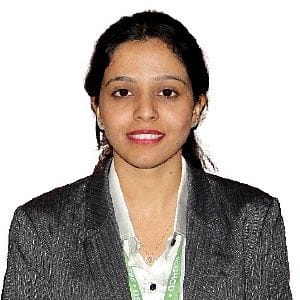
Sneha Sandeep Lavate is a Senior Research fellow working on a Shell Energy Pvt. Ltd. funded project as well as pursuing her Ph.D. under the guidance of Dr. Rohit Srivastava at the Department of Petroleum Engineering, Pandit Deendayal Energy University (PDEU), Gandhinagar, Gujarat. She received her integrated degree in B.Sc.-M.Sc. Nano Science & Technology from the School of Nano Science and Technology, Shivaji University, Kolhapur, Maharashtra. Her thesis work is focused on the design and development of advanced nanohybrids for photo/electro-chemical green hydrogen generation and CO2 reduction into green fuels. She is an active ACS Member and is the current President of ACS International Student Chapter at PDEU.
Will you share a brief overview of your current research and its potential impact on addressing real-world challenges, especially in the context of National Science Day?
I thank the American Chemical Society for providing me with this opportunity on occasion of the National Science Day. I am a researcher working in the field of Green Energy and Net-Zero working to develop develop highly efficient catalysts for green hydrogen generation as well as CO2 reduction to hydrocarbons. My work aims to address the challenge global warming and its adverse effects on human health and the environment.
Can you recount a particularly significant discovery or breakthrough in your field that you believe is worth highlighting on National Science Day?
In my belief, the seminal work done by Fujishima and Honda in the area of water splitting into hydrogen and oxygen in 1972 is a particularly impressive breakthrough which led to the rise of an innovative approach towards zero carbon footprint. Researchers are still working on the development of low-cost and novel catalysts for efficient hydrogen generation through water electrolysis.
(ACS Energy Letters Editor-in-Chief Prof. Prashant Kamat shared his conversation with Prof. Akira Fujishima during the 21st Topical Meeting of the International Society for Electrochemistry, Szeged, Hungary in a paper—read it here.)
How has government support and funding impacted your research initiatives, and how crucial is this support for the overall growth of scientific research in India?
I would like to acknowledge the support and funding provided by the Indian Government as it has played a pivotal role in shaping my research initiatives. Specifically, the financial assistance provided by the government has enabled me to access necessary resources, equipment, and research materials. Additionally, it has facilitated collaborations with other institutions and researchers, fostering a vibrant scientific community. The government support has been crucial for the overall growth of scientific research in India, as it has fueled innovation, attracted talent, and advanced discoveries in various fields, contributing to the nation's scientific progress and development.
What advice would you give to aspiring researchers and scientists, especially on National Science Day, to inspire encourage them to pursue their passion for scientific inquiry?
National Science Day is celebrated in memory of Sir C. V. Raman for his remarkable discovery of Raman effect. On National Science Day, I would advise aspiring researchers and scientists to persistently follow their curiosity, seek mentorship, embrace collaboration, and contribute to society. In this endeavour, let us all stay updated, foster a love for learning, and embrace interdisciplinary approaches. With enthusiasm, resilience, and a commitment to making a positive impact, we can embark on a fulfilling journey of scientific inquiry that pushes the boundaries of knowledge and benefits humanity.
Dr. Anuya Nisal
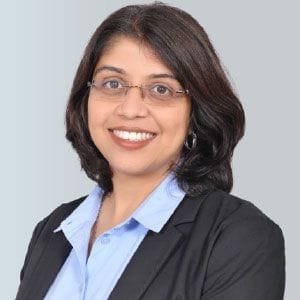
Dr. Anuya Nisal is the Founder and CEO of Serigen Mediproducts, an innovation-driven tissue regeneration products company. She received her Ph.D. in Chemical Engineering from Indian Institute of Technology, Mumbai, and her master's in Materials Science and Engineering from the University of Delaware, USA. She has prior experience as a Scientist in the GE Plastics John F. Welch Technology Center. More recently, she was a Principal Scientist at the Polymer Engineering and Science department at CSIR-National Chemical Laboratory (NCL).
Dr. Nisal has more than 10 years of experience working in the field of polymers as biomaterials for tissue engineering and regeneration, and her work has resulted in 27 peer reviewed journal publications and eight patent families. She has been recognized through several awards including the Indian National Academy of Engineering—Young Entrepreneur Award 2020, Leaders in Innovation Fellowship from Royal Academy of Engineering, UK, 2019, VASVIK award 2021, and a TIE-BIRAC-WiNER award for Women in Entrepreneurial Research in 2019.
Please share a brief overview of your current research and its potential impact on addressing real-world challenges, especially in the context of National Science Day?
My ongoing research delves into the materials science of natural silk proteins, exploring their potential applications in ground-breaking tissue regeneration technology. Tissue regeneration involves the strategic implantation of biomaterial scaffolds at the site of injury or disease within a patient's body. These scaffolds recruit cells from nearby healthy tissues and provide them with the necessary chemical, structural, and biological signals to generate new, healthy tissue. Consequently, the scaffold assumes a pivotal role in the restoration and renewal of damaged tissues or organs. This endeavor is currently being developed for commercialization by Serigen Mediproducts, a spin-off company of the CSIR-National Chemical Laboratory and an incubatee of Venture Center, Pune.
Can you recount a particularly significant discovery or breakthrough in your field that you believe is worth highlighting on National Science Day?
Throughout my scientific journey, numerous breakthroughs have fuelled my inspiration, such as advancements in electric vehicles, hydrogen fuel cell technology powering buses, and India's remarkable achievements in space exploration. Yet, the recent milestone in the development and widespread adoption of an indigenous vaccine amidst the COVID-19 pandemic stands out as particularly noteworthy. It symbolizes the triumph of visionary leadership by Indian scientists, underscored by years of focused effort. This achievement not only showcases the profound impact of scientific discovery on societal, economic, and political dimensions but also serves as a testament to the resilience and ingenuity of the scientific community in times of crisis.
How has government support and funding impacted your research initiatives, and how crucial is this support for the overall growth of scientific research in India?
I've been fortunate to receive significant funding support for my research at CSIR-NCL through various government grants from DST-SERB, CSIR, and DBT. This funding has empowered me to acquire and establish state-of-the-art equipment in my laboratory, attract and train deserving students through fellowships, and sustain daily operational expenses. Additionally, translational funding from DBT-BIRAC in the form of BIG, SBIRI, and BIPP grants has played a crucial role in bridging the gap between laboratory discoveries and market implementation. Consequently, government funding for both fundamental and translational research is essential for fostering the comprehensive advancement of scientific research in India.
What advice would you give to aspiring researchers and scientists, especially on National Science Day, to inspire encourage them to pursue their passion for scientific inquiry?
My advice to aspiring researchers and scientists is to discover your passion for scientific inquiry. It's crucial to discern what ignites your curiosity and motivates you, and then align your research endeavors accordingly. When defining significant scientific questions, it's insufficient to solely rely on literature review; engaging with key stakeholders in the field is paramount. This includes discussions with researchers from diverse disciplines, industry professionals, policymakers, customers, and others. From my own experience, I've found that translating technology to enhance the quality of life for patients and surgeons has been immensely gratifying. Collaborating with biologists, engineers, regulatory experts, surgeons, and patients has been instrumental in the development of impactful technologies.
Research Highlights from ACS Journals
Hydrogen Peroxide Electrosynthesis in a Strong Acidic Environment Using Cationic Surfactants
Zachary Adler, Xiao Zhang, Guangxia Feng, Yaping Shi, Peng Zhu, Yang Xia, Xiaonan Shan*, and Haotian Wang*
DOI: 10.1021/prechem.3c00096
Spatially Uniform and Quantitative Surface-Enhanced Raman Scattering under Modal Ultrastrong Coupling Beyond Nanostructure Homogeneity Limits
Yoshiki Suganami, Tomoya Oshikiri, Hideyuki Mitomo, Keiji Sasaki, Yen-En Liu, Xu Shi, Yasutaka Matsuo, Kuniharu Ijiro, and Hiroaki Misawa*
DOI: 10.1021/acsnano.3c10959
3D Superclusters with Hybrid Bioinks for Early Detection in Breast Cancer
Thanh Mien Nguyen, SinSung Jeong, Seok Kyung Kang, Seung-Wook Han, Thu M. T. Nguyen, Seungju Lee, Youn Joo Jung, You Hwan Kim, Sunwoo Park, Gyeong-Ha Bak, Young-Chai Ko, Eun-Jung Choi*, Hyun Yul Kim*, and Jin-Woo Oh*
DOI: 10.1021/acssensors.3c01938
Microstructural Insights into the Transformation of Cubic, Low-Temperature, Disordered Cu2ZnSnS4 into the Tetragonal Form
S. Bette*, E. Isotta*, B. Mukherjee*, A. Schulz, Z. Dallos, U. Kolb, Robert E. Dinnebier, and P. Scardi
DOI: 10.1021/acs.jpcc.3c07085
Clearing Up Discrepancies in 2D and 3D Nickel Molybdate Hydrate Structures
Robin N. Dürr, Pierfrancesco Maltoni, Shihui Feng, Sagar Ghorai, Petter Ström, Cheuk-Wai Tai, Rafael B. Araujo, and Tomas Edvinsson*
DOI: 10.1021/acs.inorgchem.3c03261
Self-Organized SERS Substrates with Efficient Analyte Enrichment in the Hot Spots
Volodymyr Dzhagan*, Nazar Mazur, Olga Kapush, Mykola Skoryk, Yaroslav Pirko, Alla Yemets, Vladyslav Dzhahan, Petro Shepeliavyi, Mykhailo Valakh, and Volodymyr Yukhymchuk
DOI: 10.1021/acsomega.3c08393
Design of MXene-Based Multiporous Nanosheet Stacking Structures Integrating Multiple Synergistic SERS Enhancements for Ultrasensitive Detection of Chloramphenicol
Yusi Peng, Lili Yang, Yanyan Li, Weida Zhang, Meimei Xu, Chenglong Lin, Jianjun Liu, Zhengren Huang*, and Yong Yang*
DOI: 10.1021/jacsau.3c00758
Pressure and Composition Effects on a Common Nanoparticle Ligand–Solvent Pair
Samuel Salas Sanabria and Lindsey A. Hanson*
DOI: 10.1021/acs.jpcb.3c06234
Join ACS on Campus in India!

Join ACS in Mumbai, Manipal, or Bengaluru from February 26 - March 1 for a series of engaging half-day events. Get to know ACS Editors and learn their Top Tips for Scholarly Publishing and Effective Writing. Plus, find out more about Cultivating Your Scientific Presentation Skills and the latest ACS Resources you can use to grow your career.
All events are FREE and open to all students and researchers studying the sciences—not just chemistry! Attendees will receive a personalized participation certificate after the event.
- February 26: Tata Institute of Fundamental Research
This program is designed exclusively for TIFR. Please register with your TIFR email address. - February 28: Manipal Academy of Higher Education
- March 1: Jawaharlal Nehru Centre for Advanced Scientific Research
This program is designed exclusively for JNCASR students and faculty. Please register with your JNCASR email address.