
This year, we are excited to present a curated selection of interviews, research articles, and insights that highlight India's remarkable achievements in science and technology.

As India celebrates National Technological Day 2025 on May 11, the country’s key progress in science and technology throughout the past year offers much to reflect on—and even more to look forward to. This is also a reminder and tribute to global innovations, technological trends, collaboration, knowledge sharing and contributions to tech-related initiatives, fostering a culture of learning and innovation.
India marked major technological milestones in 2024, reinforcing its status as a global innovation hub. The focus area covered developments in Quantum Advancements, Artificial Intelligence (AI), Semiconductors, Clean energy, Water technology initiates, Space and Bioeconomy. Strategic partnerships, like the one with Nvidia for custom AI chip development, highlighted India's AI ambitions. The expansion of 5G networks and the launch of 6G research at IIT Madras showcased telecom leadership. Growth in semiconductor manufacturing under the Scheme for Promotion of Manufacturing of Electronic Components and Semiconductors (SPECS), with projects generating newer jobs opportunities, emphasized India’s push for technological self-reliance.
These accomplishments collectively underscore India's ascent as a global technology leader—driven by a commitment to innovation, sustainability, self-reliance, and digital empowerment.
To mark this occasion, we present a curated selection of interviews, research articles, and other insights that underscore the pivotal role of basic sciences in driving technological advancement.
Perspectives from Scientific Leaders in India
In these short interviews, researchers and educators talk about the various aspects of dynamic research and technological impact in the country. These interviews help foster greater communication among the scientific community.
Prof. Suman Chakraborty
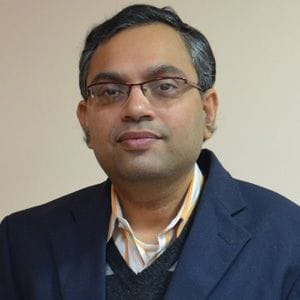
Prof. Suman Chakraborty, Institute Chair Professor at IIT Kharagpur’s Mechanical Engineering Department and a Sir J. C. Bose National Fellow, is renowned for his pioneering work in micro/nanofluidics and biomedical applications. His accolades include the Infosys Prize, Santi Swaroop Bhatnagar Prize, UNESCO-TWAS Award, and National Award for Teachers. He is a Fellow of APS, RSC, ASME, and all major Indian science academies. With 560+ publications and 17,000+ citations, his research ranks among Asia’s top 100. Prof. Chakraborty is also recognized for innovations in affordable healthcare technologies and holds numerous patents, reflecting his commitment to science for societal benefit.
What is your assessment of the current landscape of technology research in India, and which sectors are witnessing the most rapid advancements?
India’s technology research is rapidly advancing, driven by strong government initiatives, academic excellence, and a vibrant startup ecosystem. Key sectors witnessing growth include artificial intelligence, biotechnology and affordable healthcare, space tech, and quantum computing. AI is transforming healthcare and agriculture, while biotech sees innovations in genomics and vaccines. ISRO and private players are expanding India’s space ambitions. Quantum research is gaining momentum with national support. Semiconductors, green energy, and cybersecurity are also emerging as critical areas. With significant investments and global collaborations, India is becoming a hub for scalable, affordable tech solutions aimed at addressing both domestic challenges and global innovation demands.
Can you highlight any recent groundbreaking discoveries or innovations in your field that promise exciting future developments?
Recent advances in microfluidics and nanofluidics are transforming healthcare through precise diagnostics and targeted therapies. Innovations include organs-on-chips for realistic disease modeling, paper-based point-of-care devices, and nanofluidic tools for single-cell analysis and liquid biopsies. Smart drug delivery systems enable controlled, responsive treatment, while wearable biosensors offer non-invasive monitoring of glucose and other biomarkers. AI integration further enhances fluidic control and diagnostics. These breakthroughs promise personalized medicine, real-time health tracking, and efficient drug development, pushing micro/nanofluidics from research labs to clinical and consumer healthcare applications, with immense potential for improving diagnosis, treatment, and personalized disease management.
What are the primary obstacles slowing technological innovation in India, and what strategies can be implemented to overcome them?
India's technological innovation faces key challenges such as low R&D investment from the Industry, weak industry-academia collaboration, skill gaps, bureaucratic delays, and a risk-averse culture. R&D funding in Public-Private partnership mode must increase, with improved incentives for startups and researchers. Strengthening university-industry partnerships and promoting breakthrough research as against incremental advancements, upgrading skill development in deep-tech, and streamlining regulations can accelerate progress. Enhanced infrastructure, like incubators and advanced labs, is essential. Promoting a culture of innovation through funding, mentorship, and acceptance of failure will further drive breakthroughs. With strategic reforms, India is poised to unlock its full innovation potential and become a global leader in science and technology.
How crucial is the synergy between academia, industry, and government in driving technological progress, and what are the best practices for fostering such collaboration?
Synergy between academia, industry, and government is vital for technological progress. Academia drives research and talent, industry transforms innovation into practical solutions, and government provides funding and policy support. This collaboration accelerates the journey from lab to market, ensures efficient resource use, and aligns innovation with national goals. Best practices include joint research centers, collaborative grants, industry internships for students and faculty, startup incubation within universities, and streamlined intellectual property frameworks. Regular dialogue between all three sectors and alignment of education with industry needs are key. Such integrated efforts create a robust innovation ecosystem and fuel sustainable advancement.
Prof. Mayank Shrivastava

Prof. Mayank Shrivastava is a Full Professor at the Indian Institute of Science, Bangalore, co-founder of AGNIT Semiconductors Pvt. Ltd., and Investigator for setting up Gallium Nitride prototyping Fab worth $50M. For his Ph.D. work, he received Excellence in Research award and the Industrial Impact award from IIT Bombay in the year 2010. Prior to joining IISc in 2013, he held positions in Infineon Technologies, Germany & USA; IBM Microelectronics, USA and Intel Corp, USA and Germany.
Prof Shrivastava’s work has resulted in over 270 peer-reviewed international publications of high repute and over 60 patents. Most of these patents are either licensed by semiconductor companies or/and are in use in their products. He has trained over 40 PhD students, 12 postdocs and 100+ master’s & research staffs. He is among the first recipients of the Indian section of the American TR35 award (2010) and the first Indian to receive IEEE EDS Early Career Award (2015). He is an Editor of several IEEE Journals and has served on the technical and executive committees of more than a dozen international conferences around the world. Besides, he is an IEEE EDS Distinguished Lecturer and an elected member of the IEEE EDS Board of Governors. Overall, he is a recipient of over 25 national and international awards, recognitions, and honors of high repute including DST Swarnajayanti Fellowship, VASVIK Award, Abdul Kalam Technology Innovation Award and all young scientist awards from Indian academies.
What is your assessment of the current landscape of technology research in India, and which sectors are witnessing the most rapid advancements?
India is experiencing a remarkable transformation in its technology landscape, driven by substantial investments in semiconductor technologies, quantum computing, renewable energy, artificial intelligence, and healthcare, with research and innovation following industry demands—albeit at a slower pace. Particularly, semiconductor and quantum technologies have witnessed accelerated investments due to national initiatives like the India Semiconductor Mission, significantly boosting domestic capabilities, and the Quantum Mission aimed at entering the global quantum race. Additionally, India is striving to advance rapidly in artificial intelligence and machine learning applications across sectors like agriculture, finance, and healthcare to significantly enhance productivity and efficiency. These strategic sectors will position India as a pivotal global technology hub, provided concerted efforts are made across research, innovation, talent development, and industry ecosystem building.
Can you highlight any recent groundbreaking discoveries or innovations in your field that promise exciting future developments?
Globally, semiconductor technology has seen transformative advancements such as the innovations in ever-shrinking advanced technology nodes, heterogeneous integration of diverse chip components, wide bandgap semiconductors such as GaN and SiC for high-power electronics, 2D materials such as graphene and MoS2 for next-generation transistors, and quantum technologies—each pushing performance limits and enabling new applications. As far as research in my group is concerned, our contributions have significantly advanced the reliability, robustness, and performance metrics of GaN-based HEMTs, profoundly impacting power electronics and RF technologies. We have pioneered innovations in 2D semiconductor materials, developing novel device architectures and fabrication techniques that markedly improve electronic properties and reliability, thereby paving the way for next-generation nanoelectronics, quantum devices, and energy-efficient systems. Besides, my group has also made significant advances in Silicon technologies for SoC and automotive applications.
What are the primary obstacles slowing technological innovation in India, and what strategies can be implemented to overcome them?
The primary barriers to technological innovation in India include limited access to advanced research infrastructure, insufficient industry-academia synergy, delays in funding and approvals, inadequate funding, and a critical shortage of specialized R&D talent in emerging technology domains. Additionally, there exists a significant gap in translating fundamental scientific research (typically at Technology Readiness Level 3 or 4) into commercially viable technology (TRL 7 to 9) due to the absence of adequate translational facilities and infrastructures. To overcome these challenges, targeted investments in state-of-the-art research facilities and translation centers are essential. Strengthening industry-academia partnerships through structured collaborations, incentivizing industrial R&D, and creating specialized technology translation hubs can substantially enhance innovation. Hiring specialized faculty under special initiatives in top institutions, streamlining regulatory processes, ensuring timely and substantial research funding, and drastically reducing administrative overheads for researchers and deep-tech startups are critical steps toward accelerating India's technological progress.
How crucial is the synergy between academia, industry, and government in driving technological progress, and what are the best practices for fostering such collaboration?
The synergy between academia, industry, and government is crucial for accelerating technological innovation and translating research into impactful commercial products and solutions. Effective collaboration requires establishing dedicated innovation hubs, technology translation centers, and collaborative consortia that facilitate seamless joint R&D efforts. Promoting shared research facilities, clear policies on intellectual property management, and efficient commercialization pathways significantly enhance collaborative efficiency. Best practices also include providing financial incentives, creating flexible regulatory frameworks to minimize hurdles, and enabling cross-sectoral mobility for researchers between academia and industry. Such structured and proactive engagement fosters robust knowledge exchange, rapid innovation, and sustainable technological growth, ultimately enhancing national technological capabilities and global competitiveness.
Dr. Nusrat Sanghamitra

Dr. Nusrat Sanghamitra is a scientist turned entrepreneur committed to make a meaningful difference in people's life by her endeavors. As Founder & CEO of CyGenica and inventor of GEENIE—a first-in-class protein nanoneedle with a novel drug delivery mechanism—she is tackling some of the hardest challenges intracellular delivery. Recognized among the 75 Women in Chemistry by the Royal Society of Chemistry and the Principal Scientific Advisor’s Office, she has secured global patents, fundings, major pharma partnerships, and awards including the National Technology Startup Award. Dr. Sanghamitra is advancing India’s leadership in deeptech biotech and inspiring future innovators worldwide.
*Disclaimer: Maybe others have a different experience. I answer based on my experience.
What are the major challenges limiting technological innovation among science-based startups in India? What strategies can help overcome these barriers?
India’s deep science startups are fighting with one hand tied. Funding dries up at seed stage, IP laws strangle innovation, and academia often questions the credibility of startup-led science. We’re training world-class Ph.D.s—only to export them—while startups starve for skilled minds. Mentorship capable of taking innovations from lab to market remains alarmingly rare. This status quo is unacceptable. India must act: unlock patient capital, overhaul IP norms, build affordable hubs equipped for deep science based innovation, and force academia-industry-startup alignment. The next global breakthroughs can—and should—come from India. But without systemic reform, we’ll keep losing our best science to ecosystems that move faster and believe more.
How critical is collaboration between startups, academia, industry, and the government in driving technological growth? What are some effective practices for building and sustaining such partnerships?
True innovation doesn’t happen in silos. For science-based startups to thrive, collaboration across startups, academia, industry, and government is foundational. It de-risks early R&D, accelerates translation, and unlocks critical infrastructure. India has strong early-stage efforts like BIRAC and TDB, but post-ideation support is lacking. The U.S. leads with DARPA, ARPA-H, and SBIR—panels of experts guiding multi-million-dollar equity-free funding to bold science. India must emulate this with a national panel of visionary technocrats to shape IP policy and funding architecture. We need systems that unleash our scientific potential—not slow it down—if we want to lead the global biotech future.
Based on your experience, how has the landscape of science, technology, and innovation evolved for startups in India over the years?
India’s science and innovation ecosystem has come a long way—but we’re still playing too safe. A decade ago, deep-tech startups were dismissed. Today, thanks to BIRAC and a recent but narrow surge of VC interest, we’re seeing sparks—from gene therapy to climate tech. Yet the journey from lab to market is still a battle. Our top institutions have world-class infrastructure, but outdated mindsets and restrictive IP rules lock startups out. This is self-sabotage. India must urgently build bold capital pipelines, scale startup-first translational hubs, and mandate early collaboration with the generic pharma sector. If we don’t create clear pathways for proof-of-concept and commercial validation, we risk turning our scientific talent into spectators in the global biotech race.
How does India’s entrepreneurial ecosystem for science-based startups compare with global ecosystems, and what influence does this have on their growth and impact?
India’s science-based startup ecosystem is rising fast—but we’re still far from where global leaders like Boston, Tel Aviv, or Cambridge stand. We lag in translational funding, IP monetization, and deep-tech acceleration. Our VC depth is thin, regulatory clarity remains patchy, and corporate R&D partnerships are the exception, not the norm. But India’s advantage is undeniable: unmatched scientific talent, frugal innovation DNA, and a vast emerging market hungry for solutions. With bold reforms, serious global partnerships, and fearless investment in deep tech, Indian startups can leapfrog legacy systems—and redefine global health and sustainability on their own terms.
Finally I don’t believe in “following global innovation”—we need to “lead it”.
Explore Key Articles Published in ACS Journals
A Biohydrogel-Enabled Microneedle Sensor for In Situ Monitoring of Reactive Oxygen Species in Plants
Nawab Singh, Qinming Zhang, Weihui Xu, Steven A. Whitham, and Liang Dong*
DOI: 10.1021/acssensors.4c02645
Read the blog post highlighting this research.
Tailoring Alkyl Side Chains of Ionizable Amino-Polyesters for Enhanced In Vivo mRNA Delivery
Aida López Espinar, Lianne M. Mulder, Mohamed Elkhashab, Zahra Khan, Mariusz Czarnocki-Cieciura, Maria R. Aburto, Sonja Vucen, and Piotr S. Kowalski*
DOI: 10.1021/acsabm.5c00116
Gaseous and Particulate Emissions from a Small Business Jet Using Conventional Jet A-1 and a 30% SAF Blend
Lukas Durdina*, Zachary C. J. Decker, Jacinta Edebeli, Curdin Spirig, Tobias Frischknecht, Julien G. Anet, Benjamin T. Brem, Frithjof Siegerist, and Theo Rindlisbacher
DOI: 10.1021/acsestair.5c00053
Regulating Biocondensates within Synthetic Cells via Segregative Phase Separation
Chang Chen, Caroline M. Love, Christopher F. Carnahan, Ketan A. Ganar, Atul N. Parikh, and Siddharth Deshpande*
DOI: 10.1021/acsnano.4c18971
Functionalized Glass Fibers in Reversible Networks─A Cross-Road to Dimensional Stability and Facile Recycling of Cross-Linked Elastomers
Karla Garfias, Inger Odnevall, Minna Hakkarainen, and Karin Odelius*
DOI: 10.1021/acssuschemeng.5c01615
Quantification of Maillard Reaction Products in Doce de Leite
Natalia Casas Mesa, Caroline Barroso dos Anjos Pinto, Uwe Schwarzenbolz, Anke Förster, Thomas Henle, Alan Frederick Wolfschoon-Pombo, Juliana de Carvalho da Costa, Ítalo Tuler Perrone, and Rodrigo Stephani*
DOI: 10.1021/acsfoodscitech.4c00959
Fast Scanning Calorimetry of Semicrystalline Polymers: From Fundamental Research to Industrial Applications
Rui Zhang*, Mengxue Du, Katalee Jariyavidyanont, René Androsch*, Evgeny Zhuravlev, and Christoph Schick*
DOI: 10.1021/accountsmr.5c00031
Microfluidics-Based Electrochemical Detection of Antimicrobial-Resistant DNA Sequence in Lysed Escherichia coli Medium
Hiu Mun Man, Choayb Omar, Martina Freisa, David Bouville, Téo Baptiste, Anne-Marie Haghiri-Gosnet, Hervé Jacquier, Isabelle Le Potier, and Jean Gamby*
DOI: 10.1021/acselectrochem.4c00203
View Last Year's Celebratory Content

National Technology Day 2024: Celebrating India's Impact in Science, Technology & Innovation
Each year on May 11, India observes National Technology Day to commemorate India's achievements and advancement in science and technology. To celebrate, ACS Publications presents exclusive interviews and research collections highlighting India's tremendous impact in science and technology.