
Each year on May 11, India observes National Technology Day to commemorate India's achievements and advancement in science and technology. To celebrate, ACS Publications presents exclusive interviews, research collections, and more highlighting India's tremendous impact in chemistry and beyond.

Each year on May 11 India celebrates National Technology Day to commemorate India's achievements and advancement in science and technology. The idea is to spread awareness about the importance of technology in our daily lives and encourage the spirit of innovation. As a result of National Technology Day, Indian technology has evolved significantly.
Today, India is a leading player in the global scientific & technological community, with a strong tradition of research in fields such as engineering, health care, space technology, artificial intelligence (AI), and information technology (IT).
Let us celebrate the achievements of remarkable scientists, engineers and countless others who are making a difference in the world of science and technology with exclusive interviews from leaders in the field and collections of recent, noteworthy research from Indian authors.
Perspectives from Innovators in India
In these short interviews, researchers and educators talk about the various aspects of dynamic research and technological impact in the country. These interviews help foster greater communication among the scientific community.
Professor T. Govindaraju
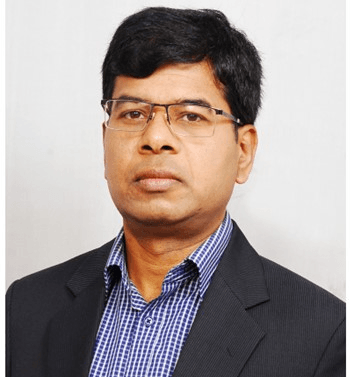
T. Govindaraju is a professor at the Bioorganic Chemistry Laboratory in the New Chemistry Unit and serves as Chair of the Education Technology Unit at JNCASR in Bengaluru, India. He received MSc from Bangalore University and Ph.D. from the National Chemical Laboratory and University of Pune, Pune. He then pursued postdoctoral research at the University of Wisconsin-Madison, USA and Max Planck Institute of Molecular Physiology, Dortmund, Germany. Prof. Govindaraju’s research interests lie at the intersection of chemistry, biology, and biomaterials science with focus on solving challenging problems related to human health and society. He has over 150 papers, 35 patents, and four books to his credit. He has received numerous awards and honors. He is the founder of VNIR Biotechnologies Pvt. Ltd. His group has developed a diagnostic platform and discovered a novel drug candidate with potential for diagnosing and treating Alzheimer’s disease. Prof. Govindaraju is deeply passionate about science education and actively participates in delivering popular science talks, demonstrations, and organizing programs for school children and teachers.
Could you reflect on your journey in alignment with India's science and technological advancements over time?
Since the beginning of my independent research career 15 years ago, India has advanced significantly in science and technology (S&T). The Government of India has implemented policies to promote India as a global leader in these fields. Initiatives such as Make In India, Start Up India, and Atmanirbhar Bharat encourage the development and application of advanced S&T. As a result, India is now ranked among the most attractive destinations for technology innovations worldwide. Universities, institutes, and funding agencies are working with these initiatives to nurture growth in STEM and address societal needs. The S&T community is recognizing the importance of translating STEM inventions into practical applications. Sustainability is also a major focus.
What challenges arise when translating fundamental knowledge into technology?
Translating fundamental knowledge into technology presents challenges ensuring that the technology accurately reflects the fundamental knowledge, and accessible and usable by its intended audience. To address these challenges, it is important to choose relevant research topics and approach them with disruptive thinking. A fundamental shift in mindset is required to believe that S&T-based inventions can provide solutions to societal needs. This is a transition period for S&T practitioners and institutions in translating their inventions through licensing or entrepreneurship. Understanding local requirements and providing tailor-made solutions through advanced S&T invention and translation is crucial. Procedural problems may arise but can be overcome. Assessing the value of fundamental knowledge and its translation can be challenging without supportive investors who understand the S&T landscape.
What advice do you have for our younger generation on National Technology Day?
Fundamental science inventions can lead to transformative technology solutions. Pursuing cutting-edge S&T with out-of-the-box thinking can provide solutions to societal problems. We must strive to become job providers and develop science-based technologies that meet local needs. The 21st century should be driven by sustainable research and development. Translation can be achieved through licensing or entrepreneurship. Successful translation requires good science, mentorship, market analysis, and a never-give-up attitude. The National Education Policy (NEP) and various government-initiatives will guide current and future generations in this direction.
What are three science and technology key trends going forward that will be impacting the Future of India?
S&T trends that will impact India’s future are:
- The development of technologies to enhance health & wellbeing, including mental health.
- Energy, agriculture, and food security using efficient, sustainable, and affordable technologies.
- Progress in the fields of neuroscience and neuromorphic technologies, including artificial intelligence.
Professor C. Subramaniam
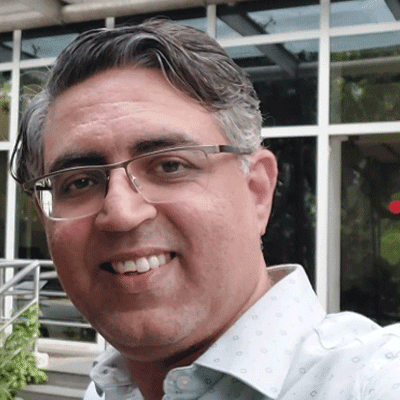
C. Subramaniam is currently an Associate professor at the Department of Chemistry, Indian Institute of Technology Bombay. His doctoral thesis, from IIT Madras, dealt with correlating the electrical transport properties and vibrational signatures of one-dimensional materials such as carbon nanotubes. The subsequent postdoctoral stint at the National Institute of Advanced Industrial Science & Technology (AIST), Japan dealt with the development of functional nanocomposites for applications in semiconductor industries. Currently, his research activities focus on application-oriented fundamental research to understand photon-phonon energy conversion pathways and thereby develop innovative materials for solar-thermal conversion, development of electrochemical energy storage systems and sensors for wearable electronics, with special emphasis on developing operando techniques for experimental understanding of heterogeneous electrified interfaces related to energy conversion, harvesting, and storage.
Could you reflect on your journey in alignment with India's science and technological advancements over time?
I joined the Department of Chemistry at Indian Institute of Technology Bombay in 2014 and since then, have been involved in solving fundamental questions that carry impact for translational research activities. My prior training has played a huge role in overcoming the disconnect between lab-scale science and translatable technology. To this end, my research group not only seeks out societally and technologically demanding challenges but also identifies scientific gaps in such challenges that when solved can help in building technologies. This evinces greater interest from the doctoral and undergraduate students and motivates them.
Driven by our motto “problem is the hero”, we realize that we need to arm ourselves with the right tools to solve the problem. Often, this means that we step out of our comfort zone and learn concepts without being restricted to the artificial boundaries of chemistry, physics, mathematics, or engineering. Thus, our efforts are directed at providing wholesome solutions that form a strong basis for translatable deep-tech solutions. In this continuing journey, I have realized that Indian society can benefit a lot from science and vice versa. For example, our work in developing portable, on-field environmental sensors was synergistically integrated into the “Soil health card” scheme of the Government of India. Similarly, our current research interests in solar-thermal energy conversion is well-aligned with the current mandate of the government to reduce the CO2 footprint and bring about energy security for India.
What challenges arise when translating fundamental knowledge into technology?
Today’s fundamental knowledge is the technology of tomorrow. I have faced huge barriers in convincing the industries on this aspect. While certain technologies can be taken up in a start-up mode (that we are currently working on), certain other technological interventions are only possible at an industrial scale. When it comes to the latter, Indian industries are often not risk-takers and prefer to wait for industrial-scale solutions to be developed outside India. In short, they prefer to import technologies without realizing that our scientific labs have similar solutions to offer. This must change for India to emerge as a technological superpower.
Further, the timescales associated with deep-tech startups are longer compared to others. Therefore, a conviction in one’s decision and confidence in the solution being offered is of paramount importance while incubating a start-up. In this direction, I believe that Corporate Scientific Responsibility, if implemented, would play an emerging role to create value in homegrown technologies and support their maturity. Further, given that 0.6-0.8 % of Indian GDP is devoted towards scientific R&D, providing appropriate subsidiaries and devising R&D-specific financial guidelines would be game-changers to promote risk-taking ability in both the start-up and industrial ecosystems.
What advice do you have for our younger generation on National Technology Day?
Science and technology do not know any boundaries. In fact, it is difficult to even distinguish between science and technology. Therefore, young minds should be open to absorbing concepts and ideas, rather than try to classify them into conventional disciplines and artificial boundaries.
Time has become more valuable than money. So, the available time has to be focused and utilized in a manner that yields maximum output. This often calls for smart work, rather than hard work. So, our minds should get tuned to this.
Assertiveness and humility should go hand-in-hand. While the former is important for clarity of thought, the latter help in constant learning and upgrading our knowledge.
What are three science and technology key trends going forward that will be impacting the Future of India?
In my opinion, three technologies that can benefit India are:
- Energy storage in batteries and supercapacitors
- Processes such as solar-thermal that seek to reduce the CO2 footprint
- Recycling and recovery of critical metals for energy security.
Browse 10 Recent, Noteworthy Articles Published in ACS Journals
High-Performance Kinetic Hydrate Inhibition with Poly(N-isopropyl methacrylamide) and Triisopentylamine Oxide─Surprising Concentration-Dependent Results
Radhakanta Ghosh, Janronel Pomicpic, and Malcolm A. Kelland*
DOI: 10.1021/acs.energyfuels.2c03963
Climate Informed Engineering: An Essential Pillar of Industry 4.0 Transformation
Nima Shokri*, Bjorn Stevens, Kaveh Madani, Jürgen Grabe, Michael Schlüter, and Irina Smirnova
DOI: 10.1021/acsengineeringau.2c00037
A Review on the Challenges and Choices for Food Waste Valorization: Environmental and Economic Impacts
Poritosh Roy, Amar K. Mohanty*, Phil Dick, and Manjusri Misra*
DOI: 10.1021/acsenvironau.2c00050
Landfill Codisposal of On-Site Vegetation and Coal Combustion Residuals: Implications for Gas Management
Florentino De la Cruz*, Melissa Setz, Morton Barlaz, and Jesse Varsho
DOI: 10.1021/acsestengg.2c00332
Improved Homogeneous–Heterogeneous Kinetic Mechanism Using a Langmuir–Hinshelwood-Based Microkinetic Model for High-Pressure Oxidative Coupling of Methane
Yuhang Yu, Sean-Thomas B. Lundin, Keisuke Obata, S. Mani Sarathy, and Kazuhiro Takanabe*
DOI: 10.1021/acs.iecr.2c04678
A Review of Molecular Models for Gas Adsorption in Shale Nanopores and Experimental Characterization of Shale Properties
Yufan Zhang, Dexiang Li*, Gongming Xin, and Shaoran Ren
DOI: 10.1021/acsomega.3c01036
Experimental and Computational Fluid Dynamics Investigation of Mechanisms of Enhanced Oil Recovery via Nanoparticle-Surfactant Solutions
Nurudeen Yekeen, Ali Masoud Ali Elakkari, Javed Akbar Khan, Muhammad Ali*, Ahmed Al-Yaseri, and Hussein Hoteit
DOI: 10.1021/acs.energyfuels.3c00136
Graphene Coating of Nafion Membranes for Enhanced Fuel Cell Performance
Jasper Ruhkopf, Ulrich Plachetka, Michael Moeller, Oliver Pasdag, Ivan Radev, Volker Peinecke, Marco Hepp, Christian Wiktor, Martin R. Lohe, Xinliang Feng, Benjamin Butz, and Max C. Lemme*
DOI: 10.1021/acsaenm.2c00234
A Systematic Methodology for the Synthesis of Advanced Reactive Distillation Technologies
Isabel Pazmiño-Mayorga*, Megan Jobson, and Anton A. Kiss*
DOI: 10.1021/acs.iecr.2c04540
Microalgae Can Promote Nitrification in Poultry-Processing Wastewater in the Presence and Absence of Antimicrobial Agents
Qichen Wang, Elizabeth Childree, Justin Box, Melissa López-Vela, Dillon Sprague, Jessa Cherones, and Brendan T. Higgins*
DOI: 10.1021/acsestengg.2c00360