
Celebrating the Nobel Prize-winning scientists whose discoveries inspired audiences across the ACS150 JACS Symposium Series.
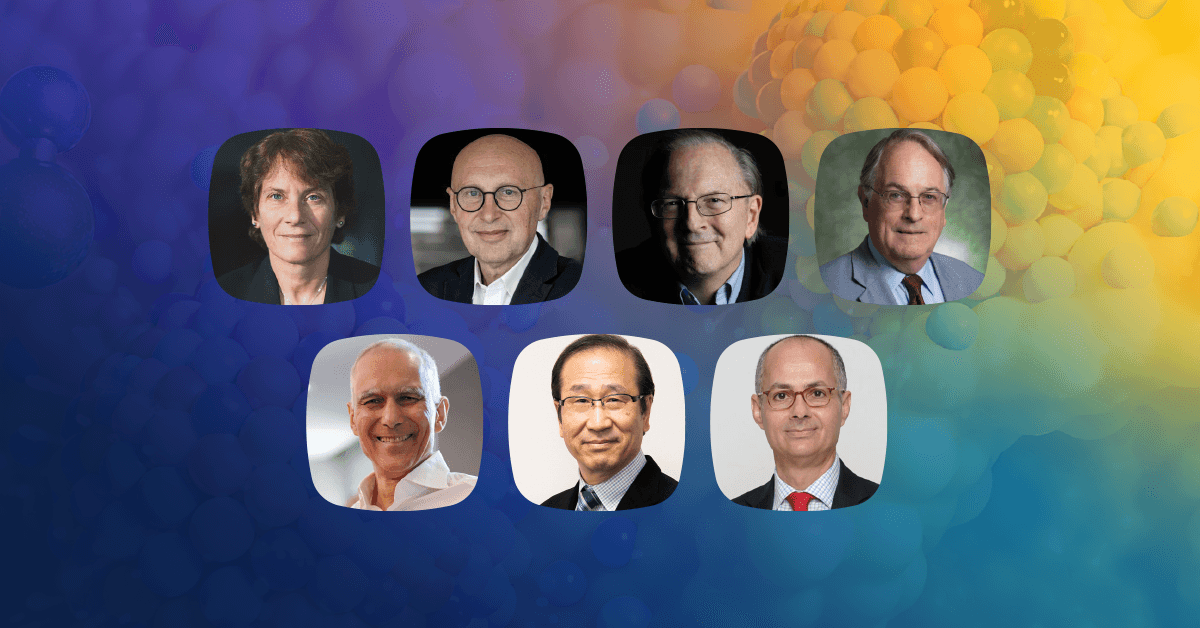
The ACS150 JACS Symposium Series brings together some of the world's most influential scientific minds for a global celebration of discovery, innovation, and the future of chemistry.
Spanning multiple continents and disciplines, the series showcases the transformative power of science through the work of Nobel Prize-winning researchers whose contributions have reshaped medicine, energy, materials science, imaging, and nanotechnology.
As we reflect on this landmark series, we celebrate not only the achievements of these remarkable scientists, but also the ideas, conversations, and collaborations that continue to inspire the next generation of researchers.
Discover insights from Nobel Prize-winning scientists, now available on demand.
Meet the Laureates:
Prof. Moungi Bawendi: Quantum Dots and the Nanoscale
Prof. Carolyn R. Bertozzi: Bioorthogonal Chemistry and Human Health
Prof. Stefan W. Hell: Super-Resolution Microscopy
Prof. Susumu Kitagawa: Metal-Organic Frameworks and Materials Design
Prof. Jack W. Szostak: The Origins of Life
Prof. M. Stanley Whittingham: Lithium-Ion Batteries and Clean Energy
Prof. Omar Yaghi: Reticular Chemistry and Global Challenges
A Celebration of Chemistry's Impact:
Reflections and On Demand Sessions
Harnessing the Potential of the Nanoscale with Prof. Moungi Bawendi
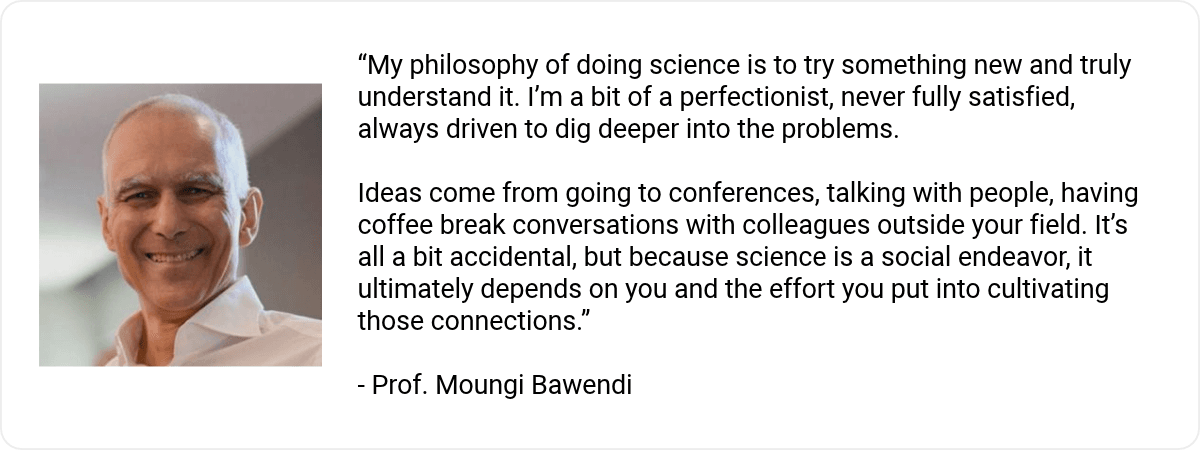
At the ETH Zürich symposium, attendees were taken into the world of quantum dots by Prof. Moungi Bawendi, whose pioneering work has transformed our understanding of nanoscale materials and their real-world applications.
Awarded the 2023 Nobel Prize in Chemistry, Prof. Bawendi helped establish quantum dots as a revolutionary class of materials now used in technologies ranging from next-generation displays and lighting to medical imaging. His career highlights how advances in fundamental chemistry can create lasting impact across industries and society.
A memorable theme throughout Prof. Bawendi’s session was the importance of collaboration, curiosity, and lifelong learning in scientific discovery:
“My philosophy of doing science is to try something new and truly understand it. I’m a bit of a perfectionist, never fully satisfied, always driven to dig deeper into the problems.
Ideas come from going to conferences, talking with people, having coffee break conversations with colleagues outside your field. It’s all a bit accidental, but because science is a social endeavor, it ultimately depends on you and the effort you put into cultivating those connections.”
Advancing Human Health Through Chemistry with Prof. Carolyn R. Bertozzi
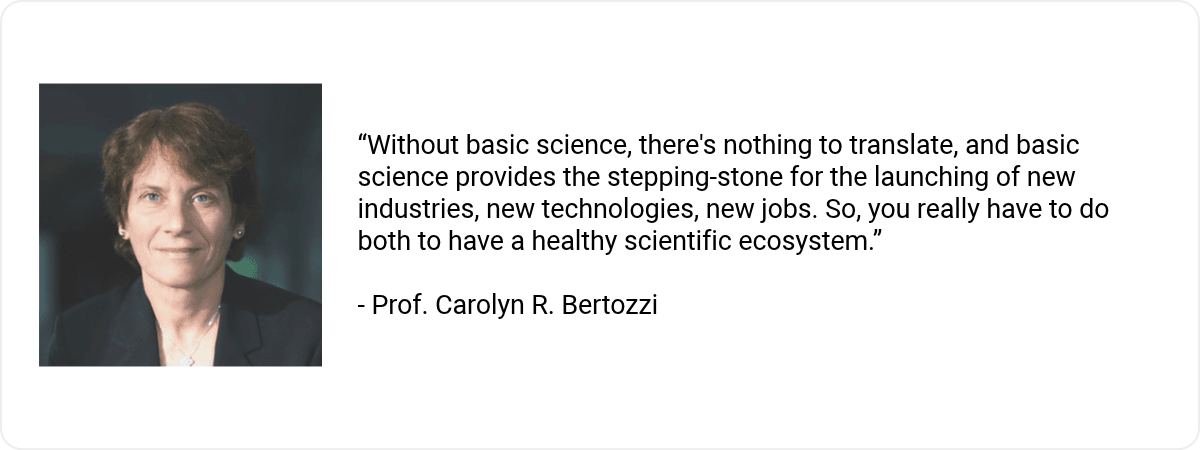
Few discoveries demonstrate the power of chemistry to transform medicine as clearly as the work of Prof. Carolyn R. Bertozzi. During ACS Fall 2026, she shared the story behind the development of bioorthogonal chemistry, a breakthrough that has reshaped how scientists study and interact with living systems.
By developing chemical reactions that can take place within living organisms without disrupting natural biological processes, Prof. Bertozzi opened new possibilities in molecular imaging, diagnostics, and therapeutic development. Her work stands as a powerful example of how curiosity-driven research can evolve into technologies that improve human health and deepen our understanding of biology.
One of the key messages from Prof. Bertozzi’s session was the indispensable role of fundamental research in driving innovation:
"Without basic science, there's nothing to translate, and basic science provides the stepping-stone for the launching of new industries, new technologies, new jobs. So, you really have to do both to have a healthy scientific ecosystem."
Revealing the Invisible with Prof. Stefan W. Hell
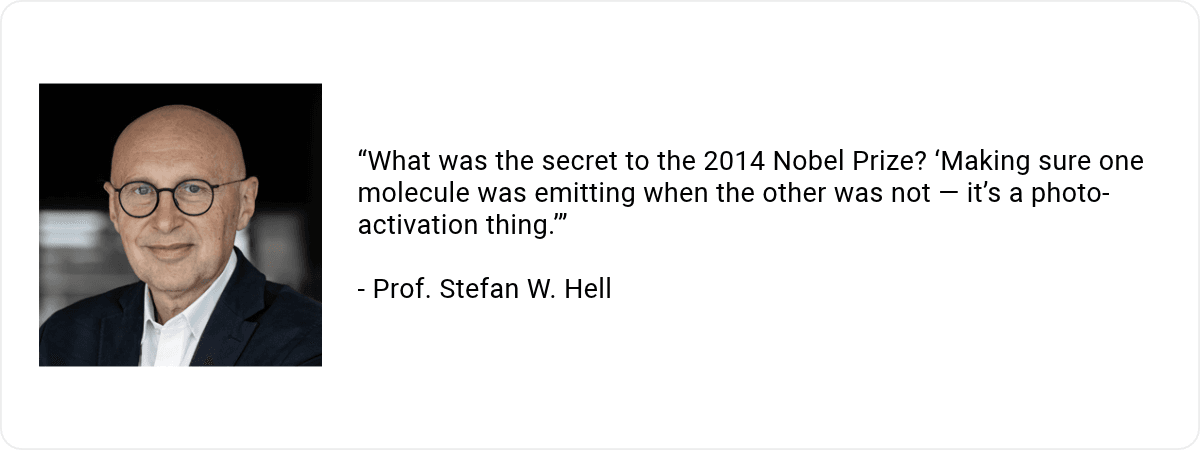
For generations, scientists believed there were fundamental limits to what microscopes could reveal. Prof. Stefan W. Hell challenged that assumption, developing technologies that transformed the way researchers observe the microscopic world.
Recipient of the 2014 Nobel Prize in Chemistry, Prof. Hell pioneered super-resolution fluorescence microscopy, overcoming long-standing barriers in optical imaging and enabling scientists to visualize biological structures at the nanoscale. Today, these methods continue to drive discoveries across chemistry, biology, and medicine.
Reflecting on the principle behind the work recognized by the 2014 Nobel Prize, Prof. Hell shared:
“What was the secret to the 2014 Nobel Prize? ‘Making sure one molecule was emitting when the other was not — it’s a photo-activation thing.’”
Redefining Materials Design with Prof. Susumu Kitagawa
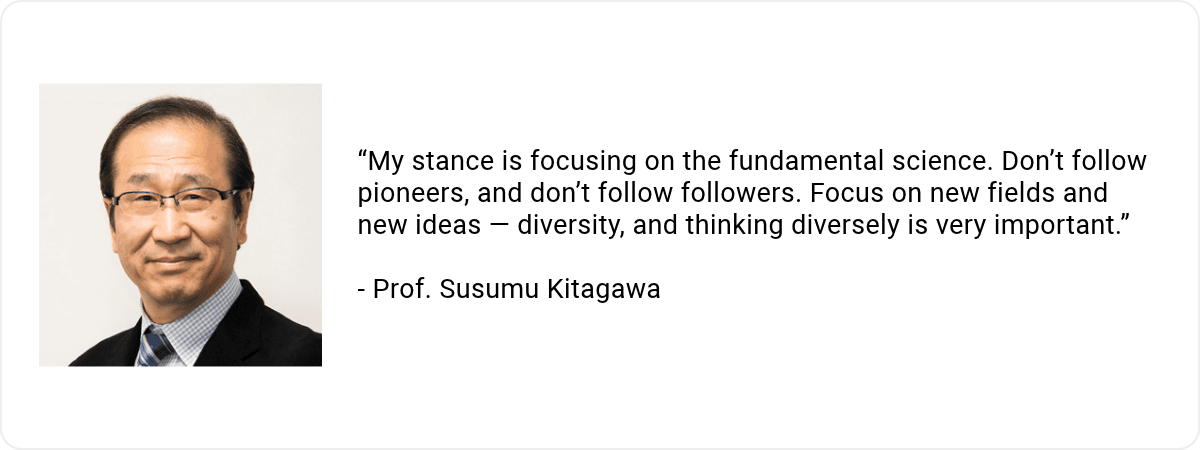
Decades before porous materials became a major focus of global research, Prof. Susumu Kitagawa was helping establish the foundations of the field. At the CCS Congress, he reflected on a scientific journey that has transformed materials chemistry and inspired generations of researchers.
As co-recipient of the 2025 Nobel Prize in Chemistry, Prof. Kitagawa's pioneering work on metal-organic frameworks (MOFs) helped create an entirely new class of materials with applications in gas storage, catalysis, molecular separation, and carbon capture. His achievements highlight the lasting value of pursuing fundamental scientific questions.
During the Q&A, Prof. Kitagawa highlighted the importance of pursuing original ideas and advancing fundamental science, encouraging researchers to embrace curiosity-driven research and contribute to discoveries with long-term impact:
“My stance is focusing on the fundamental science. Don’t follow pioneers, and don’t follow followers. Focus on new fields and new ideas — diversity, and thinking diversely is very important.”
Understanding the Origins of Life with Prof. Jack W. Szostak
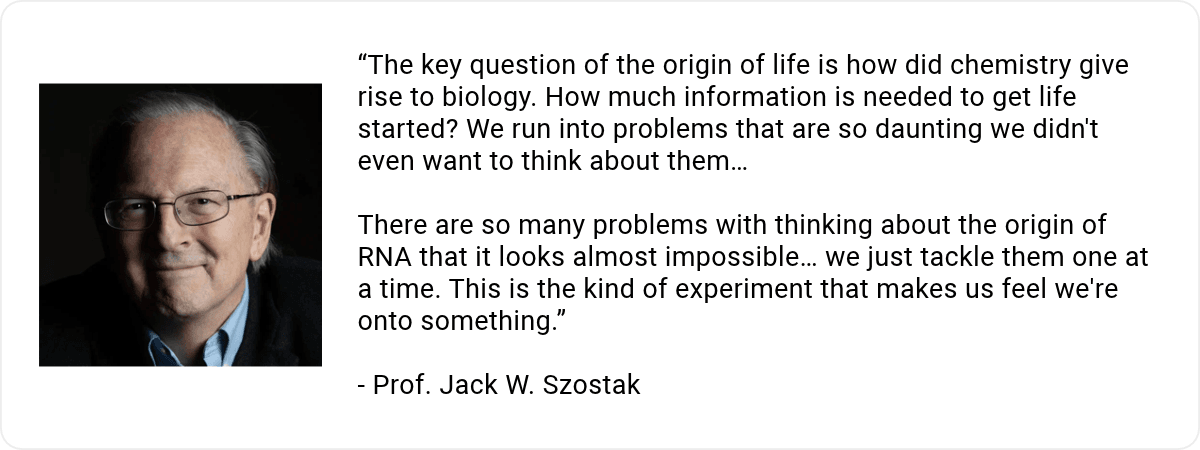
One of science's greatest mysteries is how life began. At ACS Fall 2026, Prof. Jack W. Szostak invited audiences into his ongoing search for answers, sharing insights from decades of groundbreaking research at the intersection of chemistry and biology.
Awarded the 2009 Nobel Prize in Physiology or Medicine for discoveries related to chromosome protection and telomerase, Prof. Szostak has since focused on understanding how simple chemical systems could have evolved into the first self-replicating forms of life. His work continues to shed light on molecular evolution, genetic information, and the chemical pathways that may have paved the way for life on Earth.
Prof. Szostak’s session was filled with thought-provoking insights on one of science’s biggest challenges: understanding how life began.
"The key question of the origin of life is how did chemistry give rise to biology. How much information is needed to get life started? We run into problems that are so daunting we didn't even want to think about them…
There are so many problems with thinking about the origin of RNA that it looks almost impossible… we just tackle them one at a time. This is the kind of experiment that makes us feel we're onto something."
Powering the Future with Prof. M. Stanley Whittingham
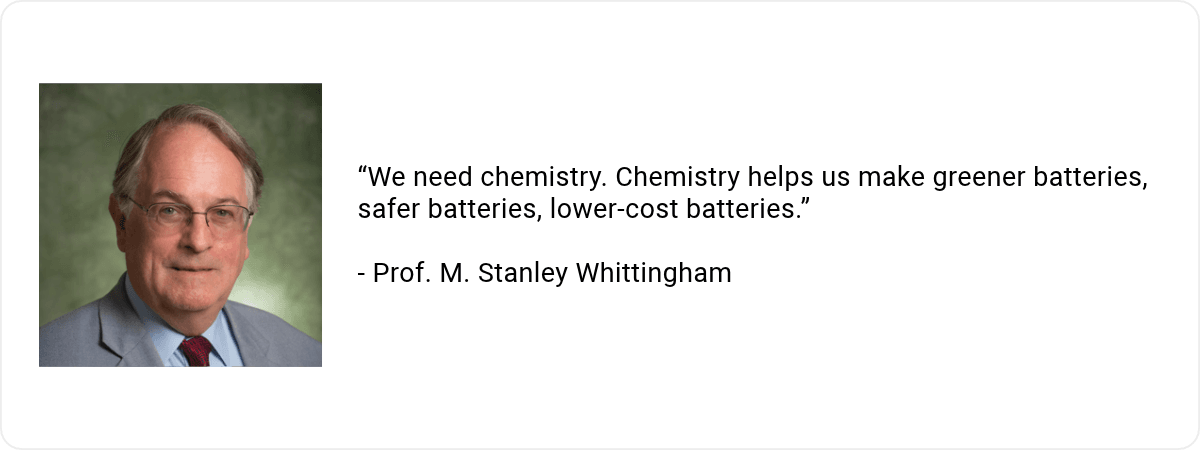
As the global transition toward clean energy accelerates, the importance of energy storage has never been greater. At ACS Fall 2026, Prof. M. Stanley Whittingham shared insights from a career that helped lay the groundwork for many of the technologies powering modern life.
Awarded the 2019 Nobel Prize in Chemistry for his role in the development of lithium-ion batteries, Prof. Whittingham's pioneering research continues to influence innovations in portable electronics, electric vehicles, and renewable energy systems. His work remains central to efforts aimed at building a more sustainable and electrified future.
Emphasizing the vital role of chemistry in addressing global energy challenges, Prof. Whittingham stated:
“We need chemistry. Chemistry helps us make greener batteries, safer batteries, lower-cost batteries.”
Chemistry’s Role in Solving Global Challenges with Prof. Omar Yaghi
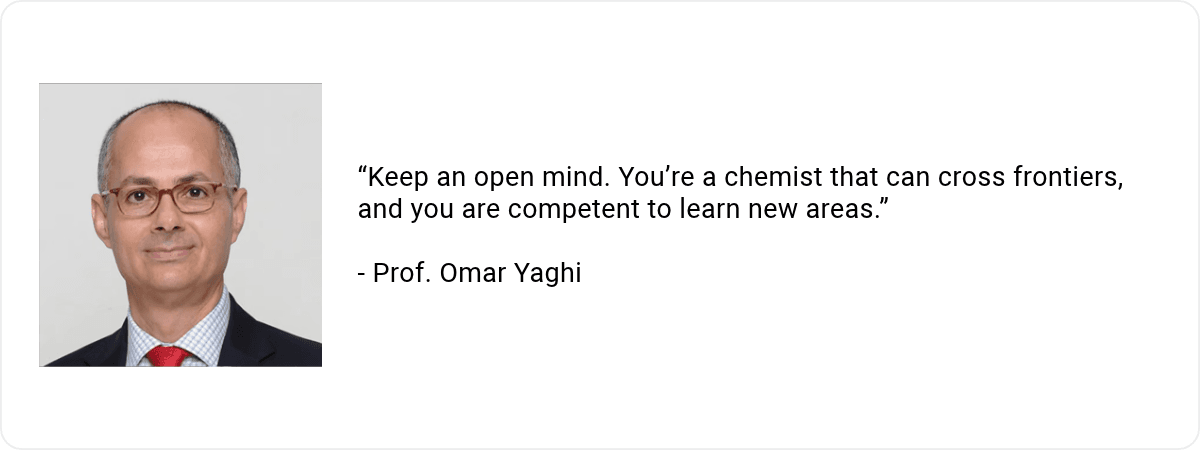
Throughout his career, Prof. Omar Yaghi, recipient of the 2025 Nobel Prize in Chemistry for the development of metal-organic frameworks (MOFs), has demonstrated how chemistry can help address some of the world's most pressing challenges. Speaking at the KCS General Meeting, he reflected on the development of reticular chemistry and its role in enabling new classes of highly ordered porous materials.
His pioneering work on metal-organic frameworks and covalent organic frameworks has led to advances in water harvesting, clean energy, carbon capture, and environmental sustainability. These innovations continue to showcase the far-reaching impact of chemistry in building a more sustainable future. The Nobel Committee recognized his contributions to the development of MOFs, materials with exceptionally useful applications ranging from carbon capture and hydrogen storage to water harvesting from desert air.
During his session, Prof. Yaghi inspired the audience with a message about curiosity and interdisciplinary learning:
"Keep an open mind. You’re a chemist that can cross frontiers, and you are competent to learn new areas."
A Celebration of Chemistry's Impact
Collectively, these Nobel Laureates represent an extraordinary breadth of scientific achievement. Their work spans chemical biology, advanced microscopy, origins-of-life research, energy storage, nanoscience, porous materials, and reticular chemistry. Each has fundamentally changed the trajectory of their field, while demonstrating the central role chemistry plays in advancing society.
As the scientific community looks toward the future, the discoveries celebrated throughout the series serve as a reminder that chemistry remains at the heart of solving global challenges and creating new possibilities for generations to come.
“150 years is an opportunity to look back at where we’ve been, but an even bigger opportunity to look where we will be together — over the next 150 years — because science is a cooperative endeavor and is stronger when we work across borders.”
- Prof. Rigoberto Hernandez, 2026 President of the American Chemical Society
“Face-to-face engagement with the JACS Symposium Series is priceless, important, and a meaningful opportunity to gather and exchange ideas.”
- Prof. Erick M. Carreira, Editor-in-Chief, JACS
Missed a session or want to revisit the insights shared by these Nobel Laureates?
