This annual award recognizes outstanding research work in the areas of agrochemicals and food chemistry. Learn more about this year's awardees and read their winning research articles.

The Journal of Agricultural and Food Chemistry (JAFC) and the ACS Divisions of Agrochemicals (AGRO) and Agricultural and Food Chemistry (AGFD) are delighted to announce the winners of the 2026 Journal of Agricultural and Food Chemistry Research Article of the Year Award. Launched in 2013, this award annually recognizes outstanding research work in the areas of food chemistry and agrochemicals.
We are excited to announce the 2026 winning papers and the authors who are accepting the awards on behalf of their teams:
- Winning Article, AGRO Division: Decoding the Penicillium italicum–Citrus Interaction: Untargeted Metabolomics Sheds Light on a Neglected Postharvest Pathogen
Award Recipient: Dr. Taicia Fill - Winning Article, AGFD Division: Metabolic Profiling of a Mediterranean-Inspired (Poly)phenol-Rich Mixture in the Brain: Perfusion Effect and In Vitro Blood–Brain Barrier Transport Validation
Award Recipient: Dr. Antonio González-Sarrías
Congratulations to this year’s award recipients, who were selected from around 80 nominated articles! The awards will be presented at ACS Fall 2026. Each award winner receives an honorarium, a plaque, and travel expenses to attend the ACS National Meeting to present their research.
Jump to Section:
- Winning Article: AGRO Division Research Article of the Year Award
- Interview: Dr. Taicia Fill, AGRO Division Research Article of the Year Award
- Winning Article: AGFD Division Research Article of the Year Award
- Interview: Dr. Antonio González-Sarrías, AGFD Division Research Article of the Year Award
- Learn About Last Year's Winners
- Information About Nominations and Winner Selections
Winning Article: AGRO Division Research Article of the Year Award
Read the Full Article
Decoding the Penicillium italicum–Citrus Interaction: Untargeted Metabolomics Sheds Light on a Neglected Postharvest Pathogen
Evandro Silva, Aline Midori Kanashiro, José Rodrigo Ferreira Maciel, Rodolfo Dantas Lima Junior, Maria Antonia Fraga Botelho, Alana Kelyene Pereira, Stephanie Nemesio da Silva, Jonas Henrique Costa, João Guilherme de Moraes Pontes, Amanda Ferreira da Silva, Igor Dias Jurberg, Roberto G. S. Berlinck*, and Taicia Pacheco Fill*
DOI: 10.1021/acs.jafc.5c07618
DOI: 10.1021/acs.jafc.5c07618
Global citrus production and quality are impacted by the major postharvest pathogen Penicillium italicum which causes citrus blue mold. This article reports the use of untargeted metabolomics to investigate the chemical exchanges occurring during infection of citrus fruits by Penicillium italicum. By mapping these metabolic changes, the study provides new insight into the pathogen’s behavior and potential intervention points, helping improve strategies to reduce spoilage in the citrus supply chain.
Accepting the AGRO Division Research Article of the Year Award on behalf of all co-authors: Dr. Taicia Fill

Dr. Fill is an Associate Professor at the Institute of Chemistry (IQ) of the University of Campinas (UNICAMP) and coordinates the Laboratory of Microbial Chemical Biology. She holds a B.Sc. in Chemistry (2006), as well as an M.Sc. (2009) and a Ph.D. (2014) in Organic Chemistry from the Federal University of São Carlos (UFSCar), including a sandwich period at the University of Cambridge under the supervision of Prof. Peter Leadlay.
In 2019, she was the winner in the Chemical Sciences category of the For Women in Science Award granted by L’Oréal–UNESCO–ABC. In 2022, she was elected an Affiliate Member of the Brazilian Academy of Sciences (2022–2025), and in 2025 she received the Otto Gottlieb Award 2025 in the Young Researcher category. She served as elected treasurer of the Campinas regional section of the Brazilian Chemical Society (SBQ) (2019–2021) and as secretary of the SBQ Campinas regional section (2022–2023). She was also secretary of the American Chemical Society (ACS) Brazilian Chapter (2019–2021).
She is currently the coordinator of the Women’s Committee from the Brazilian Society of Chemistry (2024–2026), a member of the Women’s Committee of the Chemistry Institute of UNICAMP, and vice head of the Department of Organic Chemistry at UNICAMP. Her research expertise lies in Natural Products Chemistry, with a focus on chemical ecology, pathogen–host interactions, discovery of antimicrobial compounds, and the biosynthesis of fungal secondary metabolites.
What inspired you to pursue your particular area of research?
I have always been fascinated by the mechanisms that nature has developed over millions of years of evolution. My research is driven by a desire to understand how microorganisms and plants interact with each other, particularly the strategies they use in biological competition, to communicate and survive in complex environments. Microbial–microbial and plant–host interactions are incredibly sophisticated, and many of these interactions are mediated by small molecules produced by the organisms themselves, many of which are known as secondary metabolites, or natural products.
Natural products are, in many ways, nature’s chemical language. They allow organisms in mechanisms of defense, to establish symbioses, colonize hosts, or inhibit competitors. What inspires me most is uncovering the chemistry hidden within these ecological strategies, discovering the molecules involved, understanding how they are biosynthesized, and revealing their biological roles.
By studying these systems, we not only gain a deeper understanding of how nature works, but we can also uncover new bioactive compounds and biochemical mechanisms that may inspire future applications in agriculture, medicine, and biotechnology.
What’s next for your research?
Building on the findings of our recent work (Decoding the Penicillium italicum–Citrus Interaction: Untargeted Metabolomics Sheds Light on a Neglected Postharvest Pathogen), the next step in our research is to translate molecular insights into practical strategies for plant disease management.
In this study, we showed that the citrus pathogen Penicillium italicum produces specialized metabolites during infection, including cyclic peptides such as brevianamide F, which may help the fungus to compete with other microorganisms in the fruit microbiome and facilitate colonization. By combining metabolomics, mass spectrometry imaging, and chemical synthesis, we were able to uncover how fungal natural products contribute to virulence and microbial interactions during infection.
Moving forward, our research aims to deepen the understanding of the chemical dialogue between plant hosts, pathogens, and associated microbiota. In particular, we are interested in identifying the biosynthetic pathways and ecological roles of fungal secondary metabolites involved in infection. These studies will help reveal molecular targets that can be exploited to disrupt pathogen colonization or to promote beneficial microbial interactions.
Ultimately, our goal is to use this knowledge to develop new and safer strategies to control fungal diseases in agriculture. Current control methods for postharvest pathogens such as P. italicum rely heavily on synthetic fungicides, which can lead to environmental contamination and the emergence of resistant strains. By understanding the chemistry underlying pathogen virulence and microbial competition, we hope to design alternative approaches—such as natural-product-based treatments, microbiome-informed biocontrol strategies, or targeted inhibitors—that are both effective and environmentally sustainable.
What do you consider to be the most important advances in your field in the past five years?
In the past five years, one of the most important advances in our field has been the integration of multi-omics approaches—particularly genomics, metabolomics, and molecular genetics—to uncover the functional roles of fungal secondary metabolites in plant–pathogen interactions. These tools now allow us to directly connect biosynthetic gene clusters with the metabolites they produce and with their biological roles during infection. As highlighted in our recent work published in the Journal of Agricultural and Food Chemistry, this integrated approach is transforming our understanding of fungal pathogenicity by revealing how secondary metabolism contributes to virulence and host colonization.
At the same time, advances in genome mining and gene manipulation have enabled the discovery and characterization of previously hidden natural products, demonstrating that fungal metabolites are key chemical mediators of ecological interactions rather than simple metabolic by-products.
Together, these developments are shifting the field toward a more mechanistic understanding of how chemical diversity drives plant–microbe interactions and are opening new opportunities to identify natural compounds and pathways that can inspire safer and more sustainable strategies for controlling fungal diseases in agriculture.
Winning Article: AGFD Division Research Article of the Year Award
Read the Full Article
Metabolic Profiling of a Mediterranean-Inspired (Poly)phenol-Rich Mixture in the Brain: Perfusion Effect and In Vitro Blood–Brain Barrier Transport Validation
María Ángeles Ávila-Gálvez*, Beatriz Garay-Mayol, Alicia Marín, María Alexandra Brito, Juan Antonio Giménez-Bastida, Juan Carlos Espín, and Antonio González-Sarrías*
DOI: 10.1021/acs.jafc.5c02288
DOI: 10.1021/acs.jafc.5c02288
The (poly)phenol-rich Mediterranean diet is associated with neuroprotective effects, but these effects likely depend on whether circulating phenolic metabolites can access the brain. This study investigates the pharmacokinetics and brain distribution of such metabolites in rats after consuming a Mediterranean-inspired (poly)phenol-rich extract at human equivalent doses, confirming their presence in both plasma and brain tissue, including perfused brains. It validates, using a human blood–brain barrier cell model, that these metabolites can cross the barrier, more efficiently when present as physiologically relevant mixtures, indicating that circulating phenolic metabolites derived from Mediterranean foods may contribute to neuroprotection.
Accepting the AGFD Division Research Article of the Year Award on behalf of all co-authors: Dr. Antonio González-Sarrías
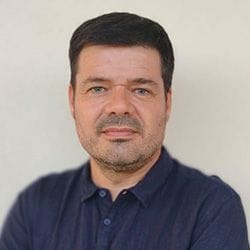
Dr. González-Sarrías is a Research Scientist at CEBAS-CSIC (Murcia, Spain). He is a biologist with a PhD with honors (2009) and received the HEFAME Foundation National Prize for the best PhD on ‘Functional Foods and Health’. His scientific career has focused on evaluating the anti-carcinogenic, anti-inflammatory, cardioprotective, and neuroprotective activities of different dietary polyphenols and their in vivo metabolites under physiological conditions in both preclinical (cell and animal models) and clinical studies. His research evaluates whether polyphenols contribute, at least in part, to the correlation between the consumption of diets rich in fruits and vegetables with a lower incidence of chronic diseases. The impact of his research led to his recognition as a highly cited researcher in 2020 and 2021 (Clarivate, Web of Science).
What inspired you to pursue your particular area of research?
Neurodegenerative diseases are among the most important public health challenges in developed countries, and their prevalence is expected to rise as life expectancy increases. Our interest in this field stems from a fundamental scientific question that our research group has been addressing for many years: whether the phenolic compounds (polyphenols) present in plant-based foods may partly explain the well-known association between diets rich in fruits and vegetables and a lower incidence of chronic diseases, including neurodegenerative disorders such as Alzheimer’s and Parkinson’s disease.
One particularly motivating challenge is that many polyphenols have low bioavailability and do not reach target tissues, such as the brain, in the same form in which they are present in foods. This has led us to focus on the role of circulating metabolites, which are generated after the consumption of polyphenols and may actually be responsible for the biological effects attributed to polyphenol-rich foods.
Our current research explores this question in the context of the Mediterranean diet. Specifically, we aim to determine whether metabolites derived from polyphenols in foods such as pomegranate, citrus fruits, grapes, and olives can reach the brain, cross the blood–brain barrier, and exert neuroprotective effects. To address this, we use multidisciplinary approaches combining analytical chemistry, molecular biology, and both cellular and animal models under physiologically relevant conditions.
Ultimately, what motivates this research is the possibility of establishing clear cause-and-effect relationships between diet and brain health, helping to better understand how dietary components may contribute to the prevention of neurodegenerative diseases.
What’s next for your research?
At this stage, our main focus is to continue advancing scientific knowledge on the relationship between dietary bioactive compounds, in this case polyphenols, and brain health.
In our current research, we are evaluating the neuroprotective activity of circulating phenolic metabolites that are able to reach the brain at physiologically relevant concentrations. Using cellular models that mimic neurodegenerative processes, we are investigating their biological activity and mechanisms of action. In parallel, representative mixtures of these circulating metabolites are being tested in animal models of neuroinflammation to assess their potential protective effects on markers of neuroinflammation and locomotor impairment. This will allow us to establish clear cause-and-effect relationships between circulating metabolites derived from dietary polyphenols and their potential neuroprotective effects.
Looking ahead, if our hypothesis is confirmed, these metabolites could represent promising candidates for the prevention or complementary management of neurodegenerative diseases and contribute to the development of new nutrition-based strategies to promote brain health and healthy aging. The future is very exciting.
What do you consider to be the most important advances in your field in the past five years?
Overall, the most important advances in the last five years involve the shift toward multi-target mechanistic understanding, the recognition of the gut–brain axis, the development of advanced delivery systems to enhance bioavailability, the discovery of new sustainable sources of bioactive compounds, and the integration of omics, machine learning, and artificial intelligence (AI) tools to accelerate the development of food bioactives-derived neuroprotective agents.
In particular, increasing evidence shows that dietary bioactives such as polyphenols and other phytochemicals can modulate interconnected pathways related to oxidative stress, neuroinflammation, and mitochondrial dysfunction, which are key processes involved in neurodegenerative disorders. At the same time, advances in metabolomics, transcriptomics, and microbiome research have enabled a more comprehensive understanding of how these compounds interact with host metabolism and the gut microbiota to influence brain health. In addition, the development of nano-encapsulation and other delivery technologies has helped to overcome major limitations related to stability, bioavailability, and blood-brain barrier permeability of food bioactives.
Together, these advances are contributing to a more integrative and translational approach in the field, facilitating the design of personalized nutrition strategies aimed at preventing or slowing neurodegeneration.
Learn About Last Year's Winners

Journal of Agricultural and Food Chemistry Research Article of the Year Award 2025
Learn more about the 2025 awardees and read their winning research articles.
Information About Nominations and Winner Selections
Nominations for these awards may be made by AGRO Division members, AGFD Division members, and members of the Editorial Board and Editorial Advisory Board of the Journal of Agricultural and Food Chemistry. Nominations can be sent to the Managing Editor of the Journal of Agricultural and Food Chemistry with a short statement of justification, and close on January 31. To be eligible, articles must have been published in an issue of the Journal of Agricultural and Food Chemistry in the calendar year directly preceding the award. Self-nominations are not eligible, nor are papers authored by Editors of the Journal of Agricultural and Food Chemistry.
Selection of the winners is made by Award Committees consisting of the journal Editor-in-Chief, two journal Associate Editors, the Division Chair, and 1-2 additional representatives from the Divisions. The Award Committee members select the winners based on criteria such as the impact of the work, its potential to shape future research, the elegance of the experimental design, and the interest to the Divisions’ memberships and journal readership.
Get e-Alerts
Stay Connected With Journal of Agricultural and Food Chemistry
Never miss an issue again! Sign up now for email updates on future calls for papers, the latest articles, and other content from Journal of Agricultural and Food Chemistry.