
This International Women’s Day, we bring to you the journeys, insights, and inspirations of the women leading India’s next wave of scientific breakthroughs.

Across India’s scientific landscape from research labs and university campuses to deep‑tech startups and national innovation centers, women scientists continue to push boundaries, ask bold questions, and redefine what is possible. This International Women’s Day, ACS Publications is proud to celebrate their leadership, resilience, and vision through a special feature highlighting conversations with remarkable women who are shaping the future of Indian science.
This collection brings together a diverse group of voices: established academicians leading cutting‑edge research, founders driving science-based entrepreneurship, and women at the forefront of interdisciplinary discovery. Their journeys reflect not only scientific excellence but also the power of mentorship, community, and determination in creating a more inclusive STEM ecosystem.
In these interviews, the scientists share what first sparked their curiosity, the people who inspired and guided them, and the moments that defined their careers. They offer thoughtful reflections on overcoming challenges, navigating evolving scientific landscapes, and carrying forward a sense of purpose rooted in discovery. Most importantly, they speak directly to early-career women and young girls aspiring to enter STEM, encouraging them to stay curious, seek mentorship, embrace creativity, and pursue science with confidence.
We invite you to explore these stories and celebrate the women who continue to strengthen India’s scientific future. Their perspectives remind us that progress in science is fueled not only by breakthroughs in the lab, but also by the diverse voices, lived experiences, and unwavering dedication of those who lead the way.
In this Article:
Read Interviews From Women Scientists in India
- Dr. Sivapriya Kirubakaran
- Dr. Veda Krishnan
- Dr. Janhavi Raut
Browse Research Highlights in ACS Journals
Read Interviews From Women Scientists in India
Dr. Sivapriya Kirubakaran
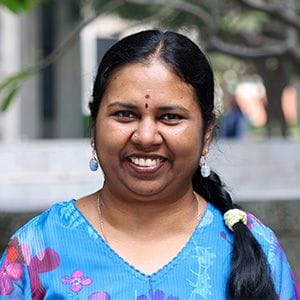
Dr. Sivapriya Kirubakaran is Professor of Chemistry and the Kankuben Bakshirambhai Gelot Chair at Indian Institute of Technology Gandhinagar. She earned her Ph.D. in Organic Chemistry from Indian Institute of Science (2007) under Prof. S. Chandrasekaran, and completed postdoctoral research at DFCI, Harvard Medical School and the Whitehead Institute for Biomedical Research, MIT. With over 20 years of experience in organic chemistry and targeted drug discovery, her research focuses on DDR kinase mechanisms and Helicobacter pylori survival pathways to develop novel and affordable therapeutics for cancer and infection. She has authored over 60 publications and holds around 20 patents, including 6 granted Indian and 2 granted U.S. patents.
Her honors include the Alumni Excellence Award (2024) from Ethiraj College for Women and the Dr. R. Gopalan Endowment Prize (2022). She is a BIG-BIRAC awardee, prestigious Ramanujan Fellow (2013–2018), Council Member of the Chemical Research Society of India (2023-2029) and has been named a “Future Leader” in Chemical Biology by the Royal Society of Chemistry (since 2023). She is featured in India’s Science Geniuses among the top 25 scientists from India and she is also the co-founder and the Chairperson of Procyl Therapeutics, an innovative solution for therapeutics.
What first sparked your interest in science, and how has that inspiration evolved throughout your professional and personal journey?
My fascination with science, especially Mathematics, and also with Tamil literature, began in school, nurtured by both my teachers and my father, who encouraged me to solve simple problems around me. I recall actively participating in quiz competitions not only in science but even in literature and it gave me a broader perspective to connect disciplines. An example I found is in Thirukural, old Tamil Couplets which explain and emphasize the balance of nutrients and science. By the time I reached high school, I found myself drawn to chemistry, especially organic chemistry. I began to explore science beyond textbooks. Reading biographies has immensely helped me to grow as a person and sparked a deeper appreciation for science. A defining influence was Prof K.S. Viswanathan, whom I met during a summer internship at Indira Gandhi Centre for Atomic Research, Kalpakkam while pursuing my master’s degree. He introduced me to the works and lectures of Prof Richard Feynman, encouraging me to approach research with curiosity and intellectual openness.
Could you share about mentors, role models, or scientists (past or present), who had a defining influence on your career?
I have been fortunate to learn from several inspiring mentors throughout my academic journey. Foremost, at IISc, Prof Chandrasekaran, my PhD supervisor, helped me to develop confidence to think independently and was there to support me at any stage. I am deeply grateful to my postdoctoral mentors Prof. Hedstrom and Prof. Cuny for their tremendous training followed by Prof. Gray and Prof. Sabatini for their unconditional support to take risks and explore unconventional research paths. From our founding Director at IIT Gandhinagar Prof. Jain, I learnt the emphasis on empathetic leadership. Dear Dr. Abdul Kalam has been a big source of inspiration and simplicity. I fondly remember his words from his book - Wings of Fire, “We are all born with a divine fire in us. Our efforts should be to give wings to this fire and fill the world with the glow of its goodness.”
How do you see the landscape for women in Indian science evolving, especially with growing opportunities in research, startups, and innovation ecosystems?
The past 15 years have seen remarkable progress for women in science in India. Today, opportunities in research, startups, and innovation ecosystems are far more abundant and encouraging. For me, IIT Gandhinagar has been instrumental in fostering an environment where women researchers feel supported and valued. I had tremendous workload and pressure to perform as Dean of Student Affairs for last 5 years, but I had great support from administration and staff which made me take up the leadership role without much hesitation. I received encouragement, resources, and confidence needed to advance in my field. Wonderful colleagues with encouraging ecosystem enabled me to take the important step of launching our startup Procyl Therapeutics while balancing my research and administrative responsibilities. Eventually the culture of an institute is very important to support an individual’s growth. Walking along with others as a team is the path to succeed in whatever we do.
What advice would you give to young girls or early-career women aspiring to pursue STEM fields today?
Rosalind Franklin once said, “Science for me gives a partial explanation of life.” For me as well, science is driven by a deep curiosity about the world at a molecular level. This curiosity never ceased to inspire me and continues to shape my journey as a researcher. To young girls and women entering STEM, my advice is to embrace this natural curiosity in them and pursue it fearlessly. Simple inquiries, such as “Why does sugar taste sweet?” or “What makes cooking salt salty?” may seem basic, but they often drive important scientific exploration. Whether one explores them through basic chemical structure of sugar and salt or interesting biology of receptors, or any another field, it is in these questions that the true excitement of discovery begins. The opportunities are plenty, be aware of them and be thankful for every opportunity. I will conclude quoting Richard Feynman’s words: “I think my life is fuller because I realize that I don’t know what I’m doing.” This curiosity of not knowing is the driving force to pursue science.
Dr. Veda Krishnan
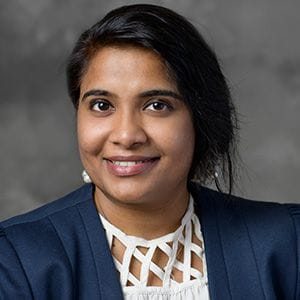
Dr. Veda Krishnan is a senior scientist in nutritional biochemistry at the Division of Biochemistry, ICAR–Indian Agricultural Research Institute (IARI), New Delhi. With over 13 years of research experience, her work focuses on functional foods, low glycemic index (GI) phenotyping, bioactive compounds, and the development of predictive models for metabolic health. She leads the Food Matrix Lab, where her team integrates food chemistry, in vitro digestion models, clinical validation, and data-driven approaches to develop nutrient-dense and health-promoting food systems. Her research places particular emphasis on minor cereals, millets, and indigenous bioresources for sustainable and resilient nutrition strategies.
Dr. Krishnan has contributed significantly to interdisciplinary collaborations, including international partnerships, and actively works at the interface of science, policy, and translational research. She has been an International Research Exchange Fellow at Nanyang Technological University, Singapore, and a Fulbright-Nehru Postdoctoral Fellow at Purdue University, USA. Her work focuses on innovation-driven research, resulting in 85+ publications, a granted patent, a copyright, and four commercialized products. Dr. Krishnan has established global collaborations, including the IBERS, University of Aberystwyth, and University of Manitoba, through BBSRC institutional partnership, Joy Welch grant and ISPF Indo-UK-Ethiopia collaborations. She is actively engaged in science leadership, serving as an Executive Committee Member of the Global Young Academy, former Secretary of INYAS, Fulbright ambassador of exchange, INSA young associate, INSA women associate, Plantae Fellow, and received Dr. H.K Jain Memorial Award for outstanding young scientist in Biochemistry.
What first sparked your interest in science, and how has that inspiration evolved throughout your professional and personal journey?
I think my journey into science began with simple curiosity. I was always drawn to the unknown, constantly asking questions about how things worked. In many ways, science felt like it was genetically passed on to me—my mother was a chemistry teacher, and our home was filled with conversations about experiments, elements, and the logic behind nature. That early exposure quietly shaped my thinking. However, the real turning point came during high school when I was selected for the Kerala State “Promotion of Excellence among Gifted Children” programme. It was a talent-based selection, and only a small group of students were chosen. For the first time, science moved beyond textbooks. We visited laboratories, conducted experiments, and interacted with working scientists. I vividly remember the excitement of stepping into a research lab and realizing discovery was a living process. That experiential exposure transformed my curiosity into conviction and inspired me to pursue a career as a researcher/Scientist.
Could you share about mentors, role models, or scientists (past or present), who had a defining influence on your career?
I often say my parents are the biology and chemistry of my life. My mother, my first teacher, didn’t just teach science—she lived it, and that spirit quietly shaped me. My father, on the other hand, stood firmly behind me, respecting my decisions and giving me the freedom to evolve into who I am today. That balance of guidance and trust made all the difference. In school and college, I was fortunate to have teachers who were deeply nurturing—almost motherly in their care—and powerful guiding spirits in my formative years. Two remarkable mentors acted as real catalysts in my journey: the late Dr. Manoj Narayan, who inspired me to think like a biotechnologist, and Dr. Biju Dharmapalan, who taught me that being a scientist also means being a communicator and influencer. Later, interacting with inspiring leaders like Prof. Ashutosh Sharma further ignited in me the importance of inclusivity and interdisciplinary thinking in science.
How do you see the landscape for women in Indian science evolving, especially with growing opportunities in research, startups, and innovation ecosystems?
The curve is definitely moving upward—opportunities and awareness for women in science are growing steadily. I see more women willing to take risks, step beyond comfort zones, and make their mark across diverse verticals. As an INSA Woman Associate, I had the privilege of meeting an inspiring sisterhood—brilliant minds who navigated male-dominated, challenging spaces and still created their own unique identities. Their journeys were powerful reminders that resilience and excellence can coexist.
At the same time, there is still work to be done. We must evolve the social fabric that shapes expectations and opportunities. Equally important, women must nurture confidence and win the internal battles of self-doubt first. The playing field is not identical for both genders, and acknowledging that reality is essential.
Encouraging signs include:
- Greater visibility of women leaders
- Stronger peer networks and mentorship
- Increasing interdisciplinary opportunities
- Growing acceptance of flexible career pathways
Seeing many women consciously take up these challenges to fulfill their dreams is truly heartening.
What advice would you give to young girls or early-career women aspiring to pursue STEM fields today?
Shamelessly pursue your dreams. Do not shrink them to fit someone else’s comfort. Ask for help when you need it—support often comes from unexpected places, across genders and generations, if your passion is genuine and your intent is sincere. Never limit yourself by assumptions.
Remember, challenges are rarely roadblocks; they are disguised opportunities. Enjoy the journey instead of being obsessed with outcomes. Growth happens in the process. Build a sisterhood and a supportive ecosystem around you—collaboration almost always outperforms competition in the long run.
Make real-life connections. Mentors, peers, friends—each adds a piece to the puzzle of your life. Complete it in your own unique way, without comparing timelines or measuring your worth against someone else’s achievements.
Stay child-like in curiosity, fearless in learning, and passionate in action. Let integrity be your compass pointing north.
And above all:
- Invest in continuous learning
- Protect your mental well-being
- Celebrate small wins
- Lift others as you rise
Dr. Janhavi Raut
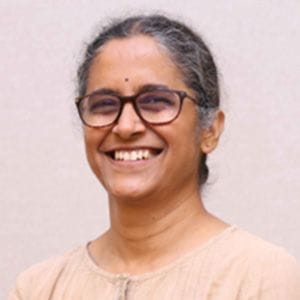
Dr. Janhavi Raut leads the Skin Cleansing Technology and Processing program at Unilever R&D. She is a Chemical Engineer by training with a B. Tech from IIT-Bombay and a PhD from Pennsylvania State University, USA. She has been with Unilever for 25+ years working on various aspects of Chemical Engineering & Materials Research. She delivered a wide range of product innovations with 30+ publications. Janhavi has been a visiting Professor at IIT-Bombay and MIT-Manipal and served on the Editorial Advisory Board of Industrial & Engineering Chemistry Research. She was elected fellow of the Indian National Academy of Engineers (INAE) in 2020.
What first sparked your interest in science, and how has that inspiration evolved throughout your professional and personal journey?
My mother was the youngest of ten siblings in a farming household, my father was the eldest and had to work to support his four younger siblings – both of them couldn’t study beyond matriculation. However, they were both passionate about education. My youngest uncle got admission to IIT-Bombay in 1971, and they got a chance to visit – this was before I was born. They saw the campus and decided that their child (boy or girl) would study in this place. So, my journey into science was decided even before I was born and with no consideration of gender. I grew up with a single-minded obsession of getting into IIT. Fortunately, that was well-aided by my love of numbers which I found extremely logical and pure with science being the natural progression. What that evolved into was the natural tendency to gravitate towards hard problems, to keep challenging myself and learning, and to keep a single-minded focus towards any goal.
Could you share about mentors, role models, or scientists (past or present), who had a defining influence on your career?
I had many people influence my scientific journey.
I completed my PhD at Penn State University in the US. My PhD guide was a woman (Prof. Kristen Fichthorn), and I was her first PhD student. She said to me once — “Research is like falling in love – you want to know everything about that subject and you keep digging for more” — words I appreciated much later in my life.
After my PhD, I joined Unilever R&D in India. A company that makes everyday products of use — soaps and skin creams and laundry detergents. The day I got confirmed — my R&D head (Dr. C. V. Natraj) called me to his office and said to me, “Janhavi – the products that you work on may be mundane but the science that goes into it does not have to be so” — have lived by that all my career.
How do you see the landscape for women in Indian science evolving, especially with growing opportunities in research, startups, and innovation ecosystems?
I see the landscape as very favourable — there are many role models in India and globally and women scientists have broken many barriers to create significant impact in various sectors and functions. The challenge, however, is the gap in opportunity for women in the underprivileged strata of society. This disparity highlights the need for continued efforts to ensure that all women, regardless of their background, have access to education and support to pursue careers in science. It is incumbent for women who have benefited from these opportunities to actively work towards creating pathways for others. By doing so, they can help nurture a growing community of empowered, open-minded women who are not shackled by their social or economic status and more importantly by their own lack of education and confidence.
What advice would you give to young girls or early-career women aspiring to pursue STEM fields today?
As Oscar Wilde said — “Be yourself, everyone else is already taken”
- Stand up for others — not everyone gets the same opportunity
- Irreverence is good — challenge the dogmas
- Never feel entitled — practice humility & gratitude
- Be kind to all — definitely to yourself
In recent times, a book that really spoke to me was Breaking Through: My Life in Science by Katalin Karikó, the 2023 Nobel Laureate in Physiology. I would strongly recommend it to all young girls and early-career women. The conviction of Katalin in the methodology and ethos of a scientific pursuit is inspiring. She personifies the mantra that there is no better way to lead a life than in the pursuit of scientific enquiry.
Browse Research Highlights From ACS Journals
In celebration of International Women's Day, we invite you to explore a curated collection of research articles published in ACS journals, featuring scientific advances led by women researchers in India.
Systematic Study via Controlling the Molecular Design for Reducing the Triplet Delayed Lifetime in Thermally Activated Delayed Fluorescence Emitters for Efficient OLEDs
Nisha Yadav, Annette Mariya Tedy, Shana Shirin M A, Thamodharan Viswanathan, Arun K Manna and Pachaiyappan Rajamalli
DOI: 10.1021/acsami.5c17734
Smart Silica Nanocomposites Activating Plant Defenses via Enhanced Biomolecule Deposition on Superhydrophobic Monocot Surfaces
Anju Sangwan, Nitish Kumar, Gurdeep Kaur and Neetu Singh
DOI: 10.1021/acs.jafc.5c06497
Keeping Up with the Q’s: Mechanistic Insights and Validation of Quinoline and Quinazoline Scaffolds as Potent Drugs against Tuberculosis
Anjali Negi, Summaya Perveen, Harpreet Kour, Parvinder Pal Singh and Rashmi Sharma
DOI: 10.1021/acs.jmedchem.4c02568
Enhancing Visible-Light Driven Photocatalytic Hydrogen Evolution through Carbazole-Benzothiadiazole Conjugates Integrated with Graphitic Carbon Nitride
Anita Kumari, Rajsekhar Roy, Supriyo Sil, Ujjal K Gautam, and Sanchita Sengupta
DOI: 10.1021/acsmaterialslett.5c00413
Isomorphous Cobalt Coordination Frameworks: Enhancing Electrocatalytic Oxygen Evolution Reaction through Coordinated Solvent Variations
Anjana Chanthapally, Anagha Yatheendran, and N. Sandhyarani
DOI: 10.1021/acs.cgd.4c00890
Radial Asymmetry in Quadrupole Mass Filters: Stability, Multipole Fields and Resolution Enhancement
Sukanya Jana, Snigdha Bose, Sayel Chakraborty, Pintu Mandal and Nabanita Deb
DOI: 10.1021/jasms.5c00288
Antibacterial and Antibiofilm Efficacy of Graphene Oxide Nanomaterials against Gram-Positive Bacteria: Mechanistic Approaches to Understand the Membrane Damage and Oxidative Stress in Cells
Anjali Singh, Soumyasri Nikhilesh Mahapatra, Sayani Mitra, Nisha Yadav, Bimlesh Lochab and Kasturi Mukhopadhyay
DOI: 10.1021/acs.langmuir.5c03508
Protease-Mediated Shedding and Intermittent Mobility of the SARS-CoV-2 Delta Variant
Manorama Dey, Poojitha Sai Potharaju, Khushika, Krishnan H. Harshan, Pritam Kumar Jana and Nagma Parveen
DOI: 10.1021/acs.jpclett.5c02783
The ACS150 JACS Symposium Series is Coming to IACS Kolkata!

ACS Publications, in partnership with the Indian Association for the Cultivation of Science (IACS), is delighted to bring the JACS Symposium Series to Kolkata on 1 July 2026 to celebrate the 150th Anniversaries of the American Chemical Society and IACS.
Join us for a full day of innovation and collaboration across the fields of polymer, materials, and physical chemistry. This inspiring in-person event will feature exclusive keynote lectures and dynamic panel discussions with leading researchers.
Spaces are limited and applications to attend are now being accepted.