
In celebration of National Science Day 2026 in India, hear from scientists across disciplines as they share perspectives on research, innovation, and the ideas shaping the country’s journey toward a developed, knowledge-driven economy.
India celebrates National Science Day each year on February 28, commemorating Sir C.V. Raman’s Nobel Prize-winning discovery of the Raman Effect. First celebrated in 1987, the observance and events associated with this day focus on promoting scientific temper and showcasing advancements in science and technology across educational/research institutions in India, towards encouraging scientific innovation and public appreciation of science.
India is also at a pivotal moment in its scientific journey with the Viksit Bharat (Developed India) initiative, the Government of India's vision to transform the nation into a fully developed country by 2047, marking the 100th anniversary of its independence. This ambitious mission positions India on a bold path toward becoming a developed, innovation-driven economy marked by technological leadership, sustainability, and inclusive growth. The national roadmap emphasizes holistic development spanning digital empowerment, sustainability, education reform, and a knowledge-based economy powered by research and entrepreneurship.
In this context, the voice of India’s scientific community becomes more important than ever. Scientists today work at the intersection of rapid technological advancement and societal need, shaping progress in areas such as AI, quantum technologies, biotechnology, renewable energy, and space exploration. The Viksit Bharat framework clearly identifies these domains as critical to India’s long-term global competitiveness and future readiness. It also underscores the need for world-class research ecosystems, modern infrastructure, and capacity building to unlock the full potential of India’s scientific talent.
This curated collection of interviews brings together diverse perspectives from researchers across disciplines, highlighting their aspirations, challenges, and insights at this transformative juncture. Their reflections not only illuminate the current scientific landscape but also offer a glimpse into the ideas and innovations that will define India’s journey to 2047. As the nation looks ahead with ambition and clarity of purpose, these voices remind us that India’s progress will be shaped by its scientists and their curiosity, resilience, and unwavering commitment to discovery.
In this Article:
Read Interviews From Scientists in India
- Dr. Dibyendu Das
- Dr. Sunanda Chatterjee
- Dr. Venkata Krishnan
- Dr. Ritika Gautam Singh
Browse Research Highlights in ACS Journals
Read Interviews From Scientists in India
Dr. Dibyendu Das
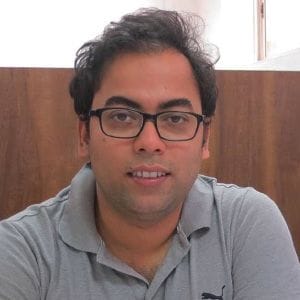
Dr. Das is a Professor of Chemistry at IISER Kolkata. He obtained his PhD from the Indian Association for the Cultivation of Science (IACS), India, and completed postdoctoral training at Emory University, USA. His research interests lie in systems chemistry, chemical evolution, and peptide nanotechnology, with a focus on non-equilibrium and life-like chemical systems. He is a recipient of the Shanti Swarup Bhatnagar Award in Chemistry (2025) and the Swarnajayanti Fellowship. He was featured in “75 under 50 scientists shaping today’s India” and has been elected Chair of the Gordon Research Conference on Systems Chemistry (2028) and Vice Chair (2026), alongside active international editorial and advisory roles.
From your lens as a researcher in India, how do you perceive the current trajectory of scientific research and innovation in the country? Particularly, what are some opportunities and strengths in the Indian research ecosystem that may be critical for accelerating scientific progress in the coming decade?
From my perspective as a researcher in India, the current trajectory of scientific research and innovation is highly encouraging. We are witnessing the emergence of a critical mass of young and intermediate independent laboratories that are publishing world-class work and proposing conceptually bold ideas. The IISER system, particularly all seven IISERs, has significantly strengthened the basic science ecosystem, complemented by strong contributions from established IITs and national laboratories. This convergence of talent, infrastructure, and ambition places India at a pivotal stage where researchers are increasingly poised to ask and address large, foundational scientific questions; an essential step for accelerating progress in the coming decade.
What are some of the key challenges that you encounter (infrastructural, regulatory, or collaborative) and how do these influence the pace or direction of your work?
While India’s research ecosystem has matured considerably, several challenges remain. Infrastructure funding, particularly for maintenance and upgradation of high-end facilities, needs sustained enhancement to compete at the highest global level. Institutions like IISER Kolkata have demonstrated excellence, including strong visibility in global indices (consistently ranking very high for example in Nature Index), but require consistent support to sustain this momentum. Regulatory frameworks are largely functional; however, exemption or rationalization of taxes on scientific instruments would significantly ease procurement burdens. On the collaborative front, opportunities are abundant, and with continued institutional support, interdisciplinary and inter-institutional collaborations can further accelerate the pace and impact of research.
India aspires to become a global leader in science and technology. What steps do you think are crucial to strengthening India’s position in international scientific collaborations, especially in emerging domains including, but not limited to, biotechnology, semiconductors, quantum technologies, AI/ML, space technology, and renewable energy?
India has made meaningful strides in fostering international scientific collaborations through programs supported by agencies such as the Department of Science and Technology; although off late the fund release has been slow and intermittent. These initiatives have enabled engagement across emerging and strategic domains, including biotechnology, quantum technologies, AI/ML, space science, semiconductors, renewable energy, and fundamental basic science. To strengthen India’s global leadership, sustained and predictable funding mechanisms are crucial, along with streamlined administrative processes. Expanding long-term bilateral and multilateral programs, encouraging researcher mobility, and investing in shared global facilities will further enhance India’s visibility, reliability, and influence within the international scientific community.
As we celebrate the legacy of C. V. Raman and the Raman Effect, could you share what scientific breakthroughs inspire your work today, and what impact do you hope your research will have on a national or global scale?
As we celebrate the legacy of C. V. Raman and the Raman Effect, the scientific breakthrough that most deeply inspires my work is Charles Darwin’s concept of evolution by natural selection. Its profound simplicity and explanatory power continue to shape how we think about living systems. This inspiration directly informs my research on life-like chemical systems, non-equilibrium matter, and the origins of life. I hope our work will contribute to understanding how complex, adaptive behavior can emerge from simple components, ultimately enabling the design of dynamic, active materials with transformative implications for science, technology, and society.
Dr. Sunanda Chatterjee

Dr. Chatterjee is an Associate Professor at the Department of Chemistry, Indian Institute of Technology, Guwahati. She is an organic and peptide chemist by training and currently pursuing medicinal chemistry and chemical biology in her independent research. Her research focuses on peptide-based antimicrobial peptides to combat antimicrobial resistance in infectious diseases. She is an Associate Editor of the Journal of Medicinal Chemistry, ACS Publications, one of the most revered journals in the field. Dr. Chatterjee loves teaching and delivering scientific lectures.
From your lens as a researcher in India, how do you perceive the current trajectory of scientific research and innovation in the country? Particularly, what are some opportunities and strengths in the Indian research ecosystem that may be critical for accelerating scientific progress in the coming decade?
I am confident that Indian science has been making good progress in recent years. We are witnessing a significant increase in publications from India in top-tier journals, and it’s exciting to see many esteemed journals featuring Indian scientists on their editorial boards. The government is actively introducing new funding opportunities through the recently launched ANRF, which is enhancing our research landscape. Project proposals are being reviewed more rigorously, and decisions are being made promptly. Additionally, the scholarships available for PhD scholars and postdoctoral researchers are competitive and encouraging, attracting some of the brightest minds in the country to pursue their research aspirations.
What are some of the key challenges that you encounter (infrastructural, regulatory, or collaborative) and how do these influence the pace or direction of your work?
I work at the Department of Chemistry at IIT Guwahati in the north-eastern part of the country. Although the region is developing rapidly, it still lacks sufficient research institutes, major chemical warehouses, and offices for instrument suppliers. This makes procuring specialty chemicals a lengthy process, and arranging for service engineers to visit takes time as well. The absence of nearby institutions with advanced equipment limits collaboration. Additionally, funding from research agencies is often reimbursed late in the financial year, creating a resource imbalance. Purchases must be completed quickly, which is especially challenging for large instruments ordered from foreign countries.
India aspires to become a global leader in science and technology. What steps do you think are crucial to strengthening India’s position in international scientific collaborations, especially in emerging domains including, but not limited to, biotechnology, semiconductors, quantum technologies, AI/ML, space technology, and renewable energy?
Enhancing India's standing in international scientific collaboration hinges on strengthening its research capabilities. For Indian science to truly excel, it must capture the interest of foreign partners. The interplay between science and technology and research funding is vital; thus, India should allocate larger budgets to these areas. It's crucial to ensure that research funding reaches a wider array of scientists across the nation. While emerging sectors require significant support, it is equally important to maintain investment in basic sciences, which serve as the cornerstone for the future of the scientific community. There is an urgent need to establish new institutions aimed at attracting talented scientists who are currently based abroad, addressing the challenge of brain drain. Furthermore, increasing the availability of international grants to facilitate seamless mobility for researchers is essential. Promoting closer collaboration between academia and industry, both nationally and internationally, would also represent a significant advancement.
As we celebrate the legacy of C. V. Raman and the Raman Effect, could you share what scientific breakthroughs inspire your work today, and what impact do you hope your research will have on a national or global scale?
I have been trained as a peptide chemist, a field greatly influenced by the ground-breaking work of Dr. Robert Merrifield, the father of modern Solid Phase Peptide Synthesis (SPPS), which revolutionised peptide research. I graduated from MBU at IISc, the very department founded by the esteemed Professor G. N. Ramachandran, whose Ramachandran map has taught the world how to analyse peptide conformations and structures. I have been particularly inspired by Professor P. Balaram, a prominent Indian biochemist known for his extensive work on peptides and peptidomimetics. The discoveries of peptide-based drugs such as Insulin, Oxytocin, Vasopressin, Gramicidin S, Polymyxin, and Leuprolide, first-generation medications used to treat diseases like diabetes, infections, and cancer, have motivated me to pursue my current research in the field of peptide therapeutics.
One of the most pressing challenges we face today is antimicrobial resistance. Existing antimicrobials are becoming inefficient for combating infections caused by superbugs that have developed resistance.We develop economically viable therapeutic alternatives, named CAMPs, that have very slow development/complete absence of antimicrobial resistance, being highly efficient in combating infections and biofilms, noncytotoxic, and protease-stable at the same time. We are hopeful that these molecules have strong potential to be translated into future therapeutics.
Dr. Venkata Krishnan

Prof. Dr. Venkata Krishnan earned his Ph.D. in Chemistry from the University of Stuttgart, Germany (2006) and pursued postdoctoral research at the University of Pennsylvania, U.S.A. (2006-2010) and at the National Institute for Materials Science, Japan (2010-2012). He joined IIT Mandi in 2012 and is now a full professor working in the field of green chemistry and heterogeneous catalysis for energy and environmental applications. He has guided several Ph.D. and M.Sc. students, published 200+ articles, holds 6 patents, and has an h-index of 65. He serves as Associate Editor of New Journal of Chemistry, Editorial Advisory Board member of ACS ES&T Engineering, and has received many prestigious awards.
From your lens as a researcher in India, how do you perceive the current trajectory of scientific research and innovation in the country? Particularly, what are some opportunities and strengths in the Indian research ecosystem that may be critical for accelerating scientific progress in the coming decade?
From my perspective as a researcher in India, working in the field of green chemistry and heterogeneous catalysis, scientific research in the country is steadily advancing toward sustainability-driven innovation. Increasing emphasis on renewable energy, biomass conversion, waste valorization, and pollution mitigation aligns with global sustainability goals. India’s strengths include a skilled or trainable scientific workforce and cost-effective research approaches. Expanding research infrastructure and interdisciplinary collaborations will support innovation. In the coming decade, higher quantum of funding, stronger academia-industry partnerships, and effective translation of laboratory research into scalable technologies can accelerate scientific progress and enhance India’s global research impact.
What are some of the key challenges that you encounter (infrastructural, regulatory, or collaborative) and how do these influence the pace or direction of your work?
In my view, some key challenges include:
- Limited access to advanced techniques, such as synchrotron-based methods and atomic-resolution microscopy for materials characterization, X-ray free electron lasers and other ultrafast spectroscopic methods to perform in operando studies to explore catalysts in action.
- Import restrictions, stringent financial regulations and strict purchase policies result in delays in procurement of required consumables and equipment that slows down or restricts the research progress.
- Infrastructural limitations and dependence on shared facilities also extend the timelines to achieve the research milestones.
- Collaborative challenges, such as limited industry-academia interactions and coordination between different institutions, affect technology translation and scaling efforts.
All these factors often influence both the pace and direction of research, requiring careful planning, adaptability, and optimization of available resources to successfully achieve the research goals. Despite these challenges, Indian research is doing very well.
India aspires to become a global leader in science and technology. What steps do you think are crucial to strengthening India’s position in international scientific collaborations, especially in emerging domains including, but not limited to, biotechnology, semiconductors, quantum technologies, AI/ML, space technology, and renewable energy?
India can strengthen its global scientific leadership by deepening mission-oriented projects through various ministries of the Government of India. In this regard, the recently established Anusandhan National Research Foundation (ANRF) is doing a very good job. In addition, India may formulate a national level strategy to promote focused research on Environmental, Social, and Governance (ESG) fields, including plastic waste upcycling and e-waste management, embedding UN SDGs and circular economy goals. Active participation in multilateral forums will provide an opportunity for India to shape global norms in sustainable technologies. Hosting international summits on circular materials, renewable energy, and digital sustainability can further enhance India’s visibility and influence.
As we celebrate the legacy of C. V. Raman and the Raman Effect, could you share what scientific breakthroughs inspire your work today, and what impact do you hope your research will have on a national or global scale?
As we honor C. V. Raman and the discovery of the Raman Effect, I admire the efforts of several scientists in India and abroad that had led to several breakthroughs over the years. I am awestruck by the role of catalysts in chemical reactions, especially their ability to make and break bonds between atoms. This can lead to the formation of different molecules, such as ammonia, that can benefit society in various ways. Specifically, in my research group, we design and develop intricate heterogeneous catalysts for energy and environmental applications, including plastic upcycling to platform chemicals, biomass valorization to fuels and valuable products, utilization of critical metals from e-waste for catalysts design, and degradation of persistent organic pollutants, mainly PFAS. The aim is to create closed-loop, waste-to-wealth technologies that reduce pollution, strengthen resource security, and enable low-carbon, sustainable chemical and environmental solutions at national and global scales.
Dr. Ritika Gautam Singh

Dr. Ritika Gautam Singh is an Associate Professor at the Indian Institute of Technology Kanpur, where she leads a research group in metals in medicine. She earned her PhD from The University of Arizona and completed postdoctoral training at The Scripps Research Institute. Since establishing her laboratory in 2019, she has advanced metal-based diagnostics and therapeutics integrating in vitro, in vivo, and in silico approaches. She is a recipient of the Thieme Chemistry Journals Award 2026 and the Merck Young Scientist Award 2025 (Runner-Up), and a Young Associate of the Indian Academy of Sciences. Her recognition includes RSC ChemComm Emerging Investigator and ACS Organic & Inorganic Au Rising Star (2023).
From your lens as a researcher in India, how do you perceive the current trajectory of scientific research and innovation in the country? Particularly, what are some opportunities and strengths in the Indian research ecosystem that may be critical for accelerating scientific progress in the coming decade?
I began my independent career in 2019 at the Indian Institute of Technology Kanpur, after nearly a decade of training abroad. This comparative perspective has allowed me to closely observe the evolution of India’s research landscape in past decade. While intellectual excellence has always been abundant, the past decade has witnessed a narrowing of the gap between fundamental discovery and translational implementation. Importantly, this momentum does not compromise basic science; rather, it recognizes that sustainable innovation must be anchored in rigorous foundational research. Institutionalizing this balance between curiosity-driven inquiry and application-oriented science will be pivotal to India’s global scientific leadership.
What are some of the key challenges that you encounter (infrastructural, regulatory, or collaborative) and how do these influence the pace or direction of your work?
Scientific research is inherently demanding, particularly in interdisciplinary fields such as metals in medicine, where discovery spans molecular design to preclinical validation. My work integrates synthetic chemistry of organic ligands, transition metal complexes and nanoaggregates, advanced characterization, in vitro, in cell and in vivo studies - requiring sophisticated instrumentation and animal facilities that depend heavily on strong institutional central infrastructure. Regulatory frameworks, especially ethical approvals for biological studies, often introduce significant timelines that influence project execution and funding cycles. Collaboration is therefore essential; effective partnerships accelerate innovation, whereas inefficiencies can impede progress. Ultimately, infrastructural, regulatory, and collaborative challenges do not hinder science but shape its rigor, direction, and translational impact.
India aspires to become a global leader in science and technology. What steps do you think are crucial to strengthening India’s position in international scientific collaborations, especially in emerging domains including, but not limited to, biotechnology, semiconductors, quantum technologies, AI/ML, space technology, and renewable energy?
India is steadily advancing toward global leadership in science and technology, supported by expanded infrastructure and access to advanced instrumentation. However, sustained competitiveness requires stronger integration between academia, industry, and policy. Innovation-driven biotechnology and pharmaceutical companies must expand R&D capacity to absorb highly trained PhDs and strengthen translational momentum. A critical priority is bridging the post-TRL-3 “valley of death,” where many advances in AI/ML, quantum technologies, semiconductors, renewable energy, and drug discovery stall before commercialization. Dedicated translational funding, regulatory streamlining, public–private partnerships, and strategic international co-development platforms will be essential for globally transformative impact.
As we celebrate the legacy of C. V. Raman and the Raman Effect, could you share what scientific breakthroughs inspire your work today, and what impact do you hope your research will have on a national or global scale?
As we celebrate Dr. C. V. Raman and the Raman Effect, I am reminded that transformative science begins with curiosity. The discovery of Cisplatin inaugurated metals in medicine, demonstrating how metals and inorganic complexes can redefine therapy. Today, medicinal inorganic chemistry is evolving beyond DNA targeting toward redox-active, photoactivatable, and immune-modulating metallodrugs. Our research work at IIT Kanpur develops self-assembled metal-based nanoaggregates with multimodal therapeutic and diagnostic potential. I hope this research advances translational medicinal chemistry in India and contributes globally to innovative metal-based diagnostics and therapeutics addressing pressing health challenges.
Browse Research Highlights From ACS Journals
As the nation celebrates National Science Day, we invite you to explore a curated collection of research articles published in ACS journals, featuring scientific advances from India.
Engineering of Integral Membrane Metalloenzyme UndB and Designing of a Cell-Free Biocatalytic Platform Enabled Efficient 1-Alkene Production
Tabish Iqbal, Subhashini Murugan, Jayaprakash Karupusamy, Abhishek Sirohiwal*, and Debasis Das*
DOI: 10.1021/acscentsci.5c01099
Electrocatalyst-Free Pinacol Coupling in Water: A Sustainable Strategy for C–C Bond Formation Utilizing Ionic Liquid Vesicles
Nadia Hassan, Sana Zahoor, Mohammad Yaseen Kuchey, Ummar Ramzan Sheikh, Tabasum Ismail, Bilal Ahmad Ganaie, and Mohsin Ahmad Bhat*
DOI: 10.1021/acselectrochem.5c00031
Air Induced Phosphoryl Radical Mediated Stereoselective Hydrosulfonylation of Alkynes via Halogen Atom Transfer: Ingress of Z-Vinyl Sulfones
Shashikant Tiwari, Manisha Kumari, and Diwan S. Rawat*
DOI: 10.1021/acs.orglett.4c00539
Dithiocarbamate-Based Sequence-Defined Oligomers as Promising Membrane-Disrupting Antibacterial Agents: Design, Activity, and Mechanism
Anna Jose, Shabin N. Chathangad, Palliyil Sivadas, Debashis Barik, Karthika Kannan, Sovan Lal Das*, Sushabhan Sadhukhan*, and Mintu Porel*
DOI: 10.1021/acsabm.4c01732
Fermi-Level Equilibrium-Driven Trap Filling in Multibandgap PbS Quantum Dot Solids Enabling Record Voltage Generation and Improved Carrier Transport in High-Performance Solar Cells
Neha V. Dambhare, Arindam Biswas, Anjali Sharma, Dipak Dattatray Shinde, Anurag Mitra, Vrushali S. Girade, and Arup Kumar Rath*
DOI: 10.1021/acsenergylett.5c03000
Water microdroplets in air: a hitherto unnoticed natural source of nitrogen oxides
Anubhav Kumar, Veena Shankar Avadhani, Abhijit Nandy, Supratim Mondal, Barsha Pathak, Vinod Kumar Naidu Pavuluri, Madan Mohan Avulapati, and Shibdas Banerjee*
DOI: 10.1021/acs.analchem.4c00371
Behavior of Microstrain in Nd3+-Sensitized Near-Infrared Upconverting Core–Shell Nanocrystals for Defect-Induced Tailoring of Luminescence Intensity
Panchanan Pandey, Shilpa Tripathi, Manvendra Narayan Singh, Rajendra Kumar Sharma, and Supratim Giri*
DOI: 10.1021/acs.nanolett.4c01077
Epigenetic Modifier Drug Valproic Acid Enhances Cancer Metaphase Chromosome Elasticity and Electron Transport: An Atomic Force Microscopy Approach
Tanya Agrawal, Debashish Paul, Amita Mishra, Ganesan Arunkumar, and Tatini Rakshit*
DOI: 10.1021/jacsau.4c00991
View Last Year's National Science Day Celebrations
Celebrating National Science Day 2025: Featured Interviews With Scientists in India
Read insightful interviews with four Indian scientists, along with a curated selection of research articles based on the pioneering discoveries of Sir C. V. Raman and related technologies recently published in ACS journals.