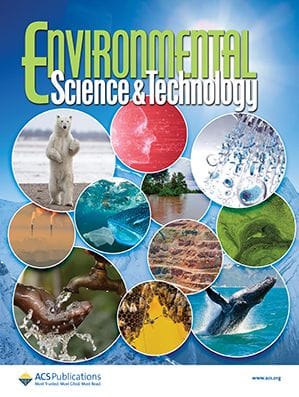
Learn about the 2026 ACS Publications Environmental Science lectureship and award winners.

Celebrating this year’s winners of distinguished awards that honor leading researchers in sustainable chemistry, engineering, and environmental science.
These awards celebrate innovative scholarship, emerging leadership, and the impactful work driving scientific progress and addressing global challenges.
Below, you’ll find each award category alongside the accomplished individuals whose contributions are shaping the future of their fields.
This year’s recipients also took time to reflect on the significance of their work and the evolving landscape of their disciplines. In their interviews, they shared:
- How their research is creating meaningful impact—from advancing fundamental understanding to enabling real‑world applications.
- What excites them about the future, including emerging questions, technologies, and collaborations that inspire their next steps.
Browse by Award or Winner:
ACS Sustainable Chemistry & Engineering Lectureship Award
- Winner: Prof. Grace Chen
- Winner: Prof. Nengchao Luo
- Winner: Dr. Fanran Meng
James J. Morgan Environmental Science & Technology Early Career Award
ACS Sustainable Chemistry & Engineering Lectureship Award
This annual award honors early‑career researchers worldwide whose work advances sustainability, green chemistry, or green engineering. One winner is selected each year from the Americas, EMEA, and Asia‑Pacific.
The award is sponsored by ACS Sustainable Chemistry & Engineering and the ACS Green Chemistry Institute.
Winner: Prof. Grace Chen, University of Massachusetts Lowell (USA)
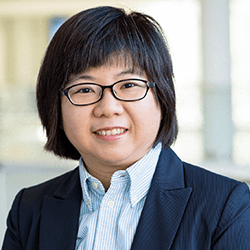
Prof. Grace Wan-Ting Chen is an Associate Professor in Plastics Engineering at the University of Massachusetts Lowell. Her research focuses on advanced recycling of plastic waste, biobased and biodegradable materials, multilayer packaging, microplastic/biofilm interfacial phenomena, safer solvent design, and solvolysis of biomass and plastics.
Her group has produced 58 peer‑reviewed publications and one patent. She has contributed to securing over $8 million USD in grants and is an awardee of the U.S. Army Research Office Early Career Program, ACS PMSE Early Investigator, ACS Principal Investigator Development in Sustainability Grant, the 2022 Department Teaching Excellence Award, and the 2025 Springer Nature Editor of Distinction Award.
How is your research making a difference in the field?
My group helps reshape what “recyclable” can mean for plastics, especially the materials that dominate real-world waste streams but are most difficult to process, like multilayer packaging and mixed plastics. We develop sustainable chemistry and engineering approaches that make these materials easier to take apart and recover at end-of-life, including chemolytic delamination strategies for laminated multilayer films and hydrothermal pathways for deconstructing hard-to-recycle plastics into useful products and feedstocks.
A key contribution of our work is linking technical innovation to the practical constraints that determine whether solutions can scale: packaging performance requirements, compatibility with existing infrastructure, and process safety. Increasingly, my lab is also exploring how catalysts can be used to modulate product selectivity (in hydrothermal liquefaction and chemolysis alike), so that deconstruction does not just break plastics down, but steers them toward higher-value, more usable outputs.
Our impact extends beyond circularity to environmental protection. We advance understanding of plastics in real environments by studying how aging and surface processes, including biofilm interactions and conditions such as sunlight and water temperature, change polymer surfaces and influence fragmentation and microplastics formation, helping move the field from detection toward prevention and mitigation.
Beyond publications, this work makes a difference through translation and workforce development, connecting polymer science to real-world solutions, training students in sustainability-focused plastics engineering, and building industry-relevant methods and capabilities that can accelerate adoption in recycling and materials innovation.
What excites you most about the future of your research area?
I am most excited about a future where plastics circularity is achieved not by simplifying materials, but by co-designing performance and end-of-life from the start, especially for multilayer packaging. I see major momentum in “designed-for-deconstruction” approaches, including multilayers that incorporate water-soluble barrier layers and enable aqueous dissolution and recovery of poly(vinyl alcohol) (PVOH), turning today’s unrecyclable structures into recoverable material streams.
Looking forward, I am energized by the ability to steer chemistry toward what society needs. For example, using catalysts to modulate product selectivity in hydrothermal liquefaction and related deconstruction routes such as chemolysis. I am also excited to deepen the field’s predictive power by pairing experiments with molecular-level computation, leveraging tools such as density functional theory (DFT)/COSMO-based modeling to probe reaction mechanisms and to rationally formulate safer solvents and chemicals, building on my group’s track record in safer-solvent design for manufacturing and plastics recycling.
Finally, I am motivated by the field’s shift toward systems-level decision-making, where projects routinely integrate life cycle assessment (LCA) and techno-economic analysis (TEA) so that “better chemistry” translates into solutions that are scalable, cost-relevant, and genuinely lower-impact.
Winner: Prof. Nengchao Luo, Dalian Institute of Chemical Physics (China)
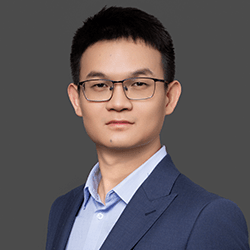
Dr. Nengchao Luo is a Professor at Dalian Institute of Chemical Physics, Chinese Academy of Sciences (CAS). His research focuses on photocatalysis for upgrading renewable carbon resources, including the conversion of biomass to fuels and C1 chemicals (methanol, CO2, and CH4) to C2+ chemicals. Under this topic, he develops oxidation cocatalysts to enable C‒H bond breaking for either C‒C bond cleavage or C‒C coupling. He has coauthored more than 50 Publications and authorized for 11 patents. He received the Excellent Young Scientists Fund from the National Science Foundation of China in 2025, the Rising Star Award of Chinese Catalysis in 2025, and the Young Progress Prize of the Min Enze Energy Chemical Engineering Award in 2025. He is the leader of the Stably Supported Youth Team of CAS in the Fundamental Research Field. He also serves as the Young Editor Board of the Journal of Energy Chemistry and the Chinese Journal of Catalysis.
What does this award mean to you?
This award is an important recognition of my work and the efforts of my team, collaborators, and mentors. It is especially encouraging at this stage of my career and reinforces my commitment to advancing virology research. I’m honoured to be included among such an outstanding group of scientists, including former recipients whose work I greatly admire.
How is your research making a difference in the field?
My research uncovers fundamental mechanisms of viral replication and leverages these insights to develop new antiviral strategies. Our work has identified a glycan-mediated mechanism that triggers opening of human coronavirus spike proteins and revealed new principles of norovirus replication, while also contributing to antiviral development. Ultimately, I’m motivated by discoveries that impact both education and patient care.
What excites you most about the future of your research area?
I’m particularly excited by the integration of new technologies that allow us to study viruses in increasingly native contexts. As a structural virologist, the shift from purified molecules to visualizing viral replication directly within cells using in situ cryo-electron tomography is especially transformative. Combined with advances in structure prediction tools like AlphaFold, these approaches are dramatically improving our ability to interpret complex structural data and uncover new biology.
Winner: Dr. Fanran Meng, The University of Sheffield (UK)
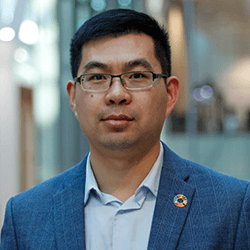
Dr. Fanran Meng is a Senior Lecturer in Sustainable Chemical Engineering at the University of Sheffield and the recipient of major honors including the Royal Society of Chemistry 2025 Environment, Sustainability & Energy Early Career Prize, the 2026 ACS Sustainable Chemistry & Engineering Lectureship Award, the 2026 IChemE Warner Medal award, and the Landor Links Decarbonising Transport Award 2026. His research focuses on decarbonizing complex materials, chemical, energy, and transport systems through whole‑system approaches, supported by over £32 million in funding from EPSRC, the Royal Society, and leading industrial partners.
He has published more than 40 papers in leading journals and his work has been featured by major media outlets. Dr. Meng also contributes to the field through editorial roles across leading sustainability journals and active membership in professional bodies including the EPSRC Manufacturing and Circular Economy Early Career Forum, IOM3, RSC, ISIE, and IChemE.
How is your research making a difference in the field?
My research helps move sustainable chemistry from aspirational targets to decision-ready pathways. A key contribution is developing facility-resolved, global models that link process chemistry and technology choices to supply chains, infrastructure, and policy constraints, so emissions, costs, and resource trade-offs can be evaluated at the level where industrial decisions are actually made.
By integrating LCA, TEA, and process simulation, my work also challenges simplified narratives. For example, it clarifies when material substitution increases emissions, when circular strategies are constrained by energy or feedstock availability, and how regional infrastructure and electricity mixes shape the real mitigation potential of competing options. These insights support more robust prioritisation of interventions across electrification, low-carbon hydrogen, circular feedstocks, CCUS, and demand-side strategies.
More broadly, I aim to make sustainable chemistry more transparent and reproducible by building open, auditable frameworks that can be used by researchers, companies, and policymakers to compare pathways without shifting environmental burdens elsewhere.
What excites you most about the future of your research area?
What excites me most is the opportunity to redesign chemical systems as integrated socio-technical networks, rather than optimizing processes in isolation. Advances in digitalization, open data, and systems modelling now allow us to explore how chemistry, energy systems, materials flows, and policy interact at unprecedented resolution, revealing both bottlenecks and high-leverage solutions.
I’m particularly excited by a shift in how we define “circularity” for chemicals. In ongoing work, we find that targeting carbon loops alone can deliver limited mitigation because many circular-carbon technologies scale slowly, compete for scarce low-carbon resources, and operate at low effective circularity. The highest-impact opportunities often sit downstream: demand reduction, reuse systems, and cross-sector circularity that avoids virgin production in the first place.
The next decade is a chance to combine green chemistry with realistic circularity and sufficiency strategies, developing pathways that are not only lower-carbon on paper but scalable, resilient, and socially credible in practice. Systems engineering can provide the evidence base to prioritize investments and policies that deliver real emissions reductions while avoiding burden-shifting to other environmental impacts.
James J. Morgan Environmental Science & Technology Early Career Award
This award is named after James J. Morgan, the first Editor-in-Chief of Environmental Science & Technology, and honors outstanding early career researchers from Europe, the Middle East, and Africa whose innovative work is pushing the fields represented in Environmental Science & Technology and Environmental Science & Technology Letters driving the field/s forward in ways that echo Morgan’s trailblazing legacy.
We are proud to announce the winners of the 2026 award:
- Prof. Chiheng Chu, Zhejiang University (China)
- Ling Jin, The Hong Kong Polytechnic University (People's Republic of China)
- Zhe Yang, University of Queensland (Australia)
- Yanyan Zhang, Westlake University (China)
Find out more about the 2026 winners:

Meet the Winners of the 2026 James J. Morgan Environmental Science & Technology Early Career Award — The Asia Pacific Region
Recognizing early career researchers leading the fields in new directions through creative, new ideas consistent with Morgan's early contributions to environmental chemistry.
Stay informed about upcoming nomination opportunities
Bookmark the post below and check back throughout the year for the latest news and announcements about nominations for future lectureships and awards.
Environmental and Sustainable Chemistry Lectureships and Awards
Explore both current and past journal lectureships and awards from ACS Publications' Environmental and Sustainable Chemistry portfolio.