
Celebrate 150 years of chemical discovery with four globally renowned scientists whose work has helped define some of the most influential advances in modern science.

As part of the American Chemical Society's 150th anniversary celebration, ACS Publications is proud to bring the ACS150 JACS Symposium Series to ACS Fall 2026.
Taking place on Tuesday, August 25, this special event will feature keynote presentations from four scientists whose discoveries transformed their respective fields and earned them international recognition, including Nobel Prizes. Attendees will also have the opportunity to hear a special panel discussion featuring ACS Priestley Medalists reflecting on the evolving role of chemistry in addressing global challenges.
Below, learn more about each keynote speaker and explore a selection of their research published in ACS journals:
Prof. Carolyn R. Bertozzi
Prof. Stefan W. Hell
Prof. Jack W. Szostak
Prof. M. Stanley Whittingham
Attending ACS Fall 2026? Space is limited for this exclusive event, so be sure to add it to your registration!
Prof. Carolyn R. Bertozzi
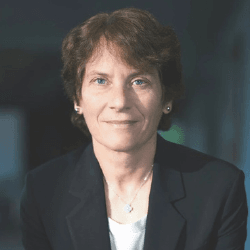
Stanford University, United States
Prof. Carolyn R. Bertozzi is the Anne T. and Robert M. Bass Professor of Chemistry at Stanford University and a leader in chemical biology. She is renowned for developing bioorthogonal chemistry, enabling chemical reactions to occur within living systems without interfering with native biological processes. Her work has transformed glycobiology, imaging, and therapeutic development. A recipient of both the ACS Priestley Medal in 2024 and the Nobel Prize in Chemistry in 2022, Prof. Bertozzi is a member of the U.S. National Academy of Sciences, Medicine, and Engineering. In addition to her scientific achievements, she is a prominent advocate for diversity, inclusion, and excellence in the chemical sciences.
Selected Research Highlights
Mechanism of O2 Activation and Cysteine Oxidation by the Unusual Mononuclear Cu(I) Active Site of the Formylglycine-Generating Enzyme
Ioannis Kipouros; Hyeongtaek Lim; Mason J. Appel; Katlyn K. Meier; Britt Hedman; Keith O. Hodgson; Carolyn R. Bertozzi; Edward I. Solomon
DOI: 10.1021/acscentsci.5c00183
Bioorthogonal Metabolic Labeling of the Virulence Factor Phenolic Glycolipid in Mycobacteria
Lindsay E. Guzmán; C. J. Cambier; Tan-Yun Cheng; Kubra F. Naqvi; Michael U. Shiloh; D. Branch Moody; Carolyn R. Bertozzi
DOI: 10.1021/acschembio.3c00724
Microglia Mediate Contact-Independent Neuronal Network Remodeling via Secreted Neuraminidase‑3 Associated with Extracellular Vesicles
Corleone S. Delaveris; Catherine L. Wang; Nicholas M. Riley; Sherry Li; Rishikesh U. Kulkarni; Carolyn R. Bertozzi
DOI: 10.1021/acscentsci.3c01066
Prof. Stefan W. Hell
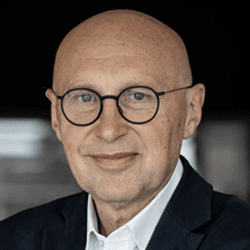
Max Planck Institute for Multidisciplinary Sciences, Göttingen and Max Planck Institute for Medical Research, Heidelberg, Germany
Prof. Stefan W. Hell is a director at both the Max Planck Institute for Multidisciplinary Sciences in Göttingen and the Max Planck Institute for Medical Research in Heidelberg, Germany. He is credited with having conceived, validated, and applied the first viable concept for overcoming Abbe’s diffraction-limited resolution barrier in a light-focusing fluorescence microscope. For this accomplishment he has received numerous awards, including the 2014 Kavli Prize in Nanoscience and the 2014 Nobel Prize in Chemistry.
Prof. Hell received his doctorate (1990) in physics from the University of Heidelberg. From 1991 to 1993 he worked at the European Molecular Biology Laboratory, followed by stays as a senior researcher at the University of Turku, Finland, between 1993 and 1996, and as a visiting scientist at the University of Oxford, England, in 1994. In 1997 he was appointed to the MPI for Biophysical Chemistry (now MPI for Multidisciplinary Sciences) in Göttingen as a group leader and was promoted to director in 2002.
Selected Research Highlights
Photoactivatable Carborhodol and Carborhodamine Dyes with One Cleavable Group: Synthesis, Spectra, and Fluorescence Nanoscopy Applications
Taukeer A. Khan; Mariano L. Bossi; Alena Fischer; Vladimir N. Belov; Stefan W. Hell
DOI: 10.1021/jacsau.5c01583
Supramolecular Complexation of Quenched Rosamines with Cucurbit[7]Uril: Fluorescence Turn-ON Effect for Super-Resolution Imaging
Dušan Kolarski; Mariano L. Bossi; Richard Lincoln; Juan C. Fuentes-Monteverde; Vladimir N. Belov; Stefan W. Hell
DOI: 10.1021/jacs.5c06406
Synthesis of Thioxanthone 10,10-Dioxides and Sulfone-Fluoresceins via Pd-Catalyzed Sulfonylative Homocoupling
Gergely Knorr; Mariano L. Bossi; Alexey N. Butkevich; Stefan W. Hell
DOI: 10.1021/acs.orglett.3c04300
Prof. Jack W. Szostak
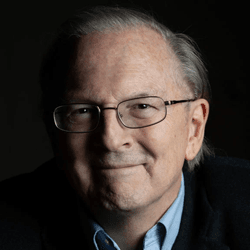
The University of Chicago, United States
Prof. Jack W. Szostak received his B.Sc. from McGill University in Montreal in 1972, and his Ph.D. from Cornell University, Ithaca, NY, in 1977. He is a University Professor and Professor of Chemistry at the University of Chicago, and an Investigator of the Howard Hughes Medical Institute. Prof. Szostak is a member of the National Academy of Sciences and the American Philosophical Society, and a Fellow of the Royal Society, the American Academy of Arts and Sciences, and the American Association for the Advancement of Science.
During the 1980s Prof. Szostak carried out research on the genetics and biochemistry of DNA recombination, which led to the double-strand-break repair model for meiotic recombination. At the same time, Prof. Szostak made fundamental contributions to our understanding of telomere structure and function, and the role of telomere maintenance in preventing cellular senescence. For this work Prof. Szostak shared, with Drs. Elizabeth Blackburn and Carol Greider, the 2006 Albert Lasker Basic Medical Research Award and the 2009 Nobel Prize in Physiology or Medicine.
In the 1990s Prof. Szostak developed in vitro selection as a tool for the isolation of functional RNA, DNA, and protein molecules from large pools of random sequences. His laboratory used in vitro selection and directed evolution to isolate and characterize numerous nucleic acid sequences with specific ligand binding and catalytic properties. From 2000 until the present, Prof. Szostak’s research interests have focused on the laboratory synthesis of self-replicating systems and the origin of life.
Selected Research Highlights
Efficient Assembly of Functional RNA by in Situ Phosphate Activation and Loop-Closing Ligation
Jian Zhang; Aleksandar Radakovic; Filip Bošković; Harry R. M. Aitken; Long-Fei Wu; Jack W. Szostak
DOI: 10.1021/jacs.5c10478
Stereoselectivity of Aminoacyl-RNA Loop-Closing Ligation
Shannon Kim; Marco Todisco; Aleksandar Radakovic; Jack W. Szostak
DOI: 10.1021/jacs.4c16905
RNA Complexes with Nicks and Gaps: Thermodynamic and Kinetic Effects of Coaxial Stacking and Dangling Ends
Marco Todisco; Aleksandar Radakovic; Jack W. Szostak
DOI: 10.1021/jacs.4c05115
Prof. M. Stanley Whittingham
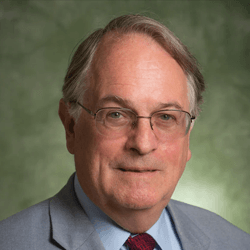
Binghamton University (SUNY), United States
Prof. M. Stanley Whittingham is a Distinguished Professor of Chemistry and Materials Science and Engineering at Binghamton University. Following his D.Phil. at Oxford University, he was a research associate in Materials S&E at Stanford University. This was followed by 16 years in the energy industry, before returning to academia at Binghamton.
Prof. Whittingham developed the materials chemistry programs and subsequently M.S. and Ph.D. degrees in Materials Science and Engineering. He served as the University VPR for five years, and as vice-chair, Board of Directors of the Research Foundation of SUNY. He was the 2019 Chemistry Nobel Laureate for the discovery of lithium rechargeable batteries, and the 2023 VinFuture $3M Grand Prize winner. He is a member of the National Academy of Engineering and Fellow of the Royal Society.
He presently leads the Battery-NY $113M economic development effort and is the Chief Innovation Officer of the recently awarded NSF Upstate New York Energy Storage Engine. He is a founding member of NYBEST, and serves on the Board as Vice-Chair for Research, and Chief Scientific Officer of NAATBatt. He received a knighthood in the King’s birthday honors 2024 list.
Selected Research Highlights
Importance of High Valence Element Nb in Ni-Rich Layered Cathodes for High-Voltage Lithium-Metal Batteries
Fengxia Xin; Isik Su Buyuker; Hui Zhou; Fenghua Guo; Anshika Goel; Jianming Bai; Feng Wang; M. Stanley Whittingham
DOI: 10.1021/acsenergylett.4c01230
Enhanced Long-Term Cycling Life of Ni-Rich NMC Cathodes in High-Voltage Lithium–Metal Batteries
Fengxia Xin; Weiran Zhang; Linna Qiao; Hui Zhou; Isik Su Buyuker; Fenghua Guo; Anshika Goel; Guangwen Zhou; Chunsheng Wang; M. Stanley Whittingham
DOI: 10.1021/acsami.4c05861
Fatigue Phase Suppression in Aged High Nickel Layered Cathodes by Aluminum Substitution during Co-precipitation
Ben Pei; Hui Zhou; Yanxu Zong; Xiaobo Chen; Mateusz J. Zuba; Guangwen Zhou; Hao Liu; M. Stanley Whittingham
DOI: 10.1021/acsenergylett.4c01199
Connect with ACS Publications at ACS Fall 2026!
Learn about the many exciting ACS Publications events taking place at ACS Fall 2026 and visit the ACS Booth to learn more about our journals, network with editors, and gain insights into the entire publishing process.

ACS 150th Anniversary
Celebrating ACS150: Chemistry is Everything
Throughout 2026, ACS will mark 150 years of advancing chemistry — a historic milestone built on discovery, innovation, and community.
