
Read interviews from scientists, authors, and educators in India, in which they share insights on the evolving open access landscape and the future of scholarly publishing.

Every year, ACS Publications come together to celebrate International Open Access Week. This year’s theme, “Who Owns Our Knowledge?” asks a pointed question about the present moment and how, in a time of disruption, communities can reassert control over the knowledge they produce.
ACS Publications has a long history of championing open science, developing efficient workflows, and working as a trusted partner to help authors and institutions achieve their open access publishing goals.
We welcome you to learn more about the open access options available to authors at ACS Publications. We also offer a dedicated open access microsite featuring free articles, making it easy for you to access valuable research and insights without any barriers.
For the researcher community, the week is an opportunity to celebrate impactful insights and contributions through discussions on the experience of open science, especially surrounding the evolving landscape of scholarly publishing in the age of artificial intelligence.
In addition to the content below, we invite you to join ACS Publications for "Open Science Essentials," a series of webinars exploring open science. Registration is free—learn more and register today.
Read Insights and Perspectives from the Scientific Community in India
Hear perspectives from authors, researchers, and educators in India as they share their thoughts on the current landscape of open access and contemplate the direction to chart for the future.
Prof. Ankona Datta
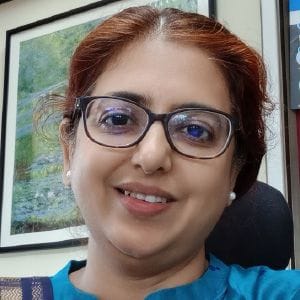
Prof. Datta received her B.Sc. and M.Sc. degrees in chemistry from the Indian Institute of Technology, Kharagpur in 2000. She did her graduate work on chiral water soluble porphyrins for catalysis and recognition with Prof. John T. Groves at Princeton University (Ph.D., 2006). After graduating from Princeton she joined as a postdoctoral scholar in the laboratory of Prof. Ken Raymond at the University of California, Berkeley, where she worked on macromolecular MRI contrast agents. Since 2010 she is a faculty in the Department of Chemical Science at the Tata Institute of Fundamental Research, India. Her current research interests are in the fields of Chemical Biology and Molecular Imaging. She is an Advisory Board member of ACS Sensors.
“Who Owns Our Knowledge?” is the theme for this year’s International Open Access Week. How does this resonate with you as a researcher?
Research all over the world is funded by taxpayers’ money. Hence, the knowledge that is generated through scientific research should be accessible to the general public. I feel that the scientific publications should mainly be in open access journals. The method of peer-review should become archive based, where, researchers upload manuscripts to a central site and peer-review should be open with reviewers revealing their identity. Once reviewed and revised on archive the researchers should then be able to transfer their manuscript along with the peer-review inputs to specific journals for consideration. At this stage additional peer-review, again revealing the identity of the reviewer, might be considered. Open access and open review process should be the Mantra for ‘Who Owns our Knowledge’.
With AI tools becoming increasingly integrated into scholarly publishing, what challenges and opportunities do you foresee, especially in the context of the research ecosystem in India?
My research is my scientific identity. When I write a paper, my thoughts on the topic are reflected. While AI tools are increasingly being used to write manuscripts, and might help non-native speakers improve their manuscripts, I feel that overuse of AI tools will make scientific manuscripts monotonous and will not reflect the thoughts, interpretation, and most importantly the individuality of the researcher, which will be a huge loss to the scientific community.
When choosing a journal to publish in, what aspects do you consider in terms of ensuring accessibility and visibility: impact factor, open access policies, editorial board, or something else?
Impact factor has become a necessary bane in scientific publishing and hence has to be considered when deciding on which journal to publish. I usually read the ‘about the journal’ segments on a journal website to decide whether an article would be suitable for the journal before submission.
Could you share one of your articles published open access in an ACS journal? How was your publishing experience?
My experience publishing in JACS Au has been extremely positive thus far, with competitive peer review timelines, and professional and rapid publication once a manuscript is accepted.
Ananth Govind Rajan
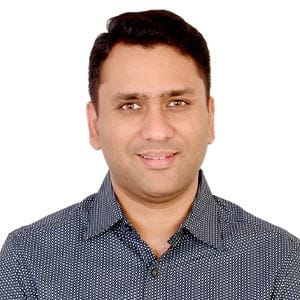
Ananth Govind Rajan is an Assistant Professor of Chemical Engineering at the Indian Institute of Science. He earned his B.Tech. from IIT Delhi and completed his M.S. and Ph.D. at MIT, followed by postdoctoral research at Princeton University. His research integrates quantum-mechanical and molecular simulations with machine learning to model nanomaterials for water splitting, CO2 reduction/capture, and membrane separations. He has received honors such as I&ECR’s Influential Researchers and IIT Delhi’s GOLD Award, and he is an Associate of the Indian Academy of Sciences and Indian National Academy of Engineering. He serves on the Early Career Board of Nano Letters.
“Who Owns Our Knowledge?” is the theme for this year’s International Open Access Week. How does this resonate with you as a researcher?
This year's theme for the International Open Access Week resonates strongly with me because it asks us to reflect on the ethical dimensions of knowledge dissemination. As a researcher, I believe that scientific knowledge should be a shared resource for all of humanity. Thus, we often release our codes freely through GitHub. The question of knowledge ownership is especially relevant in contexts where public funding supports research, yet the outcomes are often inaccessible to the very public that funded it.
In India, where smaller institutions and many individuals lack access to expensive journal subscriptions, open access publications are more widely read and shared. However, it is understandable that not everyone can publish open access all the time due to the costs involved. Thus, initiatives such as "one nation, one subscription" can play an important role in ensure wide accessibility of scientific knowledge. Overall, 2025's theme encourages us to advocate for more inclusive models of publishing, including open access, that prioritize accessibility, equity, and the collective advancement of science.
With AI tools becoming increasingly integrated into scholarly publishing, what challenges and opportunities do you foresee, especially in the context of the research ecosystem in India?
The integration of AI into scholarly publishing offers both promising opportunities and significant challenges, particularly in the Indian research landscape. On the positive side, AI can assist researchers with tasks such as summarizing the literature and editing manuscripts, which can enhance productivity when used judiciously. It can also help bridge language barriers and improve the clarity and structure of papers. However, challenges include the risk of over-reliance on AI-generated content, lack of safeguards against hallucinated/wrong information, including citations, generated by LLMs, potential biases in algorithms, and ethical concerns around authorship and originality. Going forward, there is a need for clear guidelines and thoughtful training to ensure that AI tools are used responsibly and equitably by everyone.
When choosing a journal to publish in, what aspects do you consider in terms of ensuring accessibility and visibility: impact factor, open access policies, editorial board, or something else?
When selecting a journal for publication, I consider a combination of factors that influence both the accessibility and visibility of our work. Open access journals allow our research to be freely available to anyone who might benefit from it, especially in regions where institutional access is limited. More than the impact factor, I consider the standing of the journal among fellow scientists, when deciding where to publish. The composition and reputation of the editorial board matter too, as they reflect the journal’s commitment to rigorous and fair peer review. Ultimately, our group aims to publish in journals that value scientific rigor, scholarly integrity, and meaningful engagement with the research community.
Could you share one of your articles published open access in an ACS journal? How was your publishing experience?
I am happy to share one of my open access articles published in an ACS journal. Our article, "Generalized Model for Inhibitor-Modulated 2D Polymer Growth to Understand the Controlled Synthesis of Covalent Organic Frameworks," was published in JACS Au.
My experience with publishing open access in JACS Au was very positive. The submission process was straightforward, and the peer review was timely and constructive. I appreciated the clarity of ACS's open access licenses, the discounts offered to scientists from emerging economies and to those with ACS membership, and the support provided during the publication process. Once published, our article was easily accessible and received good visibility, which was enhanced by ACS’s rapid indexing and social media presence. Publishing open access also allowed me to share the work more freely with colleagues and students, which I found particularly valuable.
Prof. Binoy K. Saikia
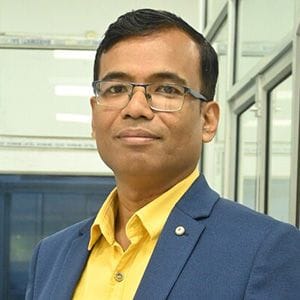
Prof. Saikia is a Senior Principal Scientist at CSIR-North East Institute of Science and Technology, Jorhat, and Professor at the Academy of Scientific & Innovative Research, India. He holds an MSc and PhD in Chemistry, is ranked among the top 2% Energy scientists and the Asian Scientist 100 (2021), and received Assam’s Civilian Award (2021) and the Prestigious Shanti Swarup Bhatnagar Prize (2021).
His work spans sustainable utilization of carbonaceous resources, carbon nanomaterials, atmospheric and environmental chemistry, and energy storage. He has around 200 publications and six patents, including Indian and US patents on coal‑derived blue‑fluorescent carbon quantum dots, alongside multiple technology transfers and invited talks.
“Who Owns Our Knowledge?” is the theme for this year’s International Open Access Week. How does this resonate with you as a researcher?
The theme is truly food for thought to reflect on the ownership of the knowledge we disseminate, especially when we also pay publication or dissemination charges for our own knowledge. I believe this represents a new generation of knowledge dissemination, where the principle still applies: what is seen is what sells. My point is that self-promotion is important, as it not only serves as a means of sharing knowledge but also enhances our own knowledge and potential societal impact. However, I also firmly believe that while knowledge itself has no ultimate ownership, the creator has the logical first right over it. Hence, knowledge will continue to evolve, day by day, year by year, with the passage of time.
With AI tools becoming increasingly integrated into scholarly publishing, what challenges and opportunities do you foresee, especially in the context of the research ecosystem in India?
AI tools are having a tremendous impact on the research ecosystem, as we are now witnessing. They represent a remarkable invention, offering abundant opportunities in research publication and related domains, many of which are beyond our imagination today. AI is poised to bring a paradigm shift to the research ecosystem, not only in India but across the world. I anticipate that scholarly publishing will become faster with the aid of AI, accompanied by smarter management of newly generated knowledge. However, the key challenges of using AI tools may include a decline in the originality and ownership of new knowledge, as well as an increase in overlapping work. Another major challenge will be developing human resources capable of effectively using AI tools in research and development. This clearly highlights the need for a broader transformation in the knowledge management system to prevent duplication and clarify ownership. In this regard, the innovation of research-domain-specific, superspecialist AI tools will be essential for effectively integrating such technologies within the scientific community. At the same time, significant opportunities exist for chemical science researchers to enhance collaboration with experts in computer science and AI engineering.
When choosing a journal to publish in, what aspects do you consider in terms of ensuring accessibility and visibility: impact factor, open access policies, editorial board, or something else?
My direct answer would be the publication house of the journal, although in my early research days I focused more on the journal’s impact factor and citation metrics. The reputation, branding, visibility, and image of the publication house are my main considerations when choosing where to publish my work. Branding now plays an important role in science, as it helps make research more visible to a wider audience, including peers and science enthusiasts. In this context, open access plays a unique role by increasing the reach of research, not only among experts but also among citizen scientists who are interested in engaging with science. Therefore, we need to strengthen the branding and visibility of journal publishers to make their work more noticeable to society in the required areas.
Could you share one of your articles published open access in an ACS journal? How was your publishing experience?
I have published one of my articles, "Solid-State Phosphors from Coal-Derived Carbon Quantum Dots," in the ACS open-access journal ACS Omega. My decision to publish there stemmed from my strong desire to make my scientific knowledge accessible to researchers everywhere, even though at the time I struggled with the article processing charges (APCs). My focus was on ensuring that my research findings and knowledge were easily accessible and visible to a broader audience, while also evaluating the possible impact of my work. That was my guiding principle, and the experience of seeing my work published was truly rewarding. I received letters of interest in my research and chemical processes not only from fundamental researchers but also from industry professionals who wanted to learn more about my work. This kind of recognition is the greatest gratification a scientist can hope for in their career.
Deepshikha Singh
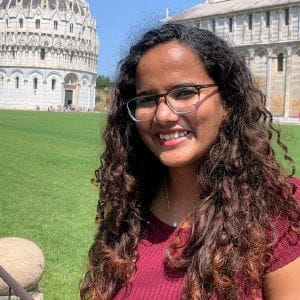
Deepshikha Singh is a Research Scholar at the Indian Institute of Technology Gandhinagar, specialising in RNA G-quadruplex structures in dysregulated long non-coding RNAs in ovarian cancer. She holds a Master’s in Biotechnology from Savitribai Phule Pune University and a Bachelor’s in Microbiology from Fergusson College Pune, both with distinction. Her research integrates experimental and computational approaches to explore the role of RNA G-quadruplexes in cancer biology, their interactions with RNA-binding proteins, and their potential applications as diagnostic biomarkers and therapeutic targets.
Her scientific contributions have been recognised with multiple travel grants and awards, including the Best Oral Presentation at the International Conference on Interdisciplinary Approaches in Biological Sciences for Sustainable Well-being (IABSSW, 2025). She has presented at both national and international platforms, including the prestigious Gordon Research Conference on Nucleic Acids in Lucca, Italy. Along with her passion for research, Deepshikha is deeply enthusiastic about art and travel, which inspire creativity and broaden her perspective beyond academia.
“Who Owns Our Knowledge?” is the theme for this year’s International Open Access Week. How does this resonate with you as a researcher?
As a young researcher, this theme strongly resonates with me because knowledge is meant to be shared, not restricted behind paywalls. Open access enables easy access to scientific discoveries, ensuring that students and early-career researchers like myself can benefit equally. My institute provides access to various journals which are not open access. I am grateful that I have this privilege, and this greatly helps my research needs. In my opinion, there should not be any “ownership” of knowledge; intellectual property rights are a different matter, but research should be accessible to everyone. Open access bridges gaps in research, helps in collaborations, and ultimately accelerates innovations that benefit mankind. In my experience, open access publishing broadens the reach of my work by making it freely available to everyone, which not only increases its visibility but also encourages wider sharing and higher citations.
With AI tools becoming increasingly integrated into scholarly publishing, what challenges and opportunities do you foresee, especially in the context of the research ecosystem in India?
AI is both a boon and a bane for research. It is immensely helpful for speeding up literature review, helps with data analysis and can assist in troubleshooting experimental hurdles. But its effectiveness ultimately depends on the researcher’s own understanding. Excessive dependence on AI risks diminishing critical thinking and creativity, potentially creating mental blocks. In India, at various institutions, research is often constrained by funding and may also face issues of affordability and accessibility to premium AI tools. In my opinion, with proper training on AI, implementing ethical guidelines, and thoughtful integration of AI into academic setups, AI has the potential to drive high-quality, globally competitive research in India.
When choosing a journal to publish in, what aspects do you consider in terms of ensuring accessibility and visibility: impact factor, open access policies, editorial board, or something else?
My supervisor, Dr. Bhaskar Datta, and I collectively decide on the journal to publish in. After completing a manuscript, we sit together to brainstorm the strengths and unique aspects of our work, and then list down journals that align closely with the theme and scope of our research. The first aspect is the suitability of the journal with the theme of our research. For doing this, I carefully review journals that have previously published similar studies, paying close attention to their editorial policies, submission guidelines, readership, and visibility.
Another critical factor is ensuring that the journals we consider are credible and not predatory, as integrity in publishing is just as important as visibility. While impact factor remains a consideration, our priority is also the accessibility and long-term visibility of research. Before submission, we do our homework on the editorial board so that we can be thorough in our cover letter to describe the suitability of our research for that particular journal.
Could you share one of your articles published open access in an ACS journal? How was your publishing experience?
I published my article, "Putative G-Quadruplex Structures in Dysregulated Long Non-coding RNA of Ovarian Cancer and Their Binding Interactions with Human Serum Albumin," in ACS Omega, co-authored with Chinmayee Shukla and Dr. Bhaskar Datta. My publishing experience with ACS was highly positive at every stage. The submission portal was user-friendly and efficient, making the initial process seamless. The peer review was quite thorough and constructive, and provided us with valuable insights that helped strengthen the final manuscript. There was clear communication from the editorial team, and we got timely reminders and insights.
I greatly appreciate the ACS journal’s commitment to accessibility. The open access format has allowed my work to reach researchers globally, enabling discussions and interest from peers across different disciplines. The overall experience has reinforced my confidence in ACS journals as platforms that combine rigorous review, smooth publishing workflows, and broad visibility for impactful research.
Explore Additional Resources from ACS Publications
Blog Articles
Choosing Open Access with ACS Publications: A Step-by-Step Guide
ACS Publications Joins India's One Nation One Subscription Initiative
National Librarians’ Day 2025: Voices from India’s Academic Libraries
Webinars
Join ACS Publications for "Open Science Essentials," a series of webinars exploring open science. Registration is free—learn more and register today.