Learn about the 2026 winners of ACS Publications' Organic and Inorganic Chemistry lectureships and awards.
ACS Publications journals proudly highlight researchers whose innovative work is reshaping the landscape of chemical science.
The 2026 Organic and Inorganic Chemistry lectureship and award recipients exemplify this spirit of discovery, standing out for both their scientific impact and their leadership within the community.
Along with celebrating their achievements, this year’s winners reflect on the broader significance of their research and the directions in which their fields are moving.
In their interviews, each awardee shares insights on:
- What the award means to them
- The inspiration behind their pursuit of their field of research
- What the biggest opportunities and challenges are in their field of research currently
Browse by Award or Winner:
2026 Inorganic Chemistry Lectureship
- Winner: Dr. Julia Zaikina
2026 Organic Letters Outstanding Publication of the Year Award Lectureship
- Winner: Prof. Marvin Parasram
2026 Organic Process Research & Development Outstanding Publication of the Year Lectureship Award
- Winner: Dr. Richard Loach and colleagues
2026 Organometallics Distinguished Author Award
- Winner: Prof. Courtney C. Roberts
2026 The Journal of Organic Chemistry Outstanding Publication of the Year Award Lectureship
- Winner: Dr. Jun Xiao and colleagues
2026 Inorganic Chemistry Lectureship
Sponsored by Inorganic Chemistry and the ACS Division of Inorganic Chemistry, this award recognizes an early career researcher who has demonstrated creativity and impact in leading research in inorganic chemistry, broadly defined.
Winner: Dr. Julia Zaikina, Associate Professor, Iowa State University (USA)
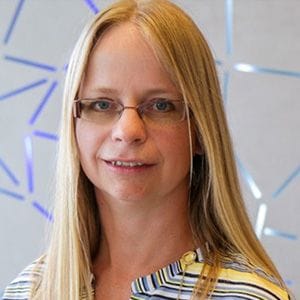
Dr. Zaikina is an Associate Professor at the Department of Chemistry at Iowa State University and scientist at Ames National Laboratory. She holds a Ph.D. in Inorganic and Solid State Chemistry and, after two postdoctoral stints at Florida State University and UC Davis, she joined the faculty at Iowa State University as an assistant professor in 2017. Dr. Zaikina’s research group utilizes a synergistic combination of diffraction and total scattering techniques and computational methods to establish the structure of the complex solids.
Dr. Zaikina is recognized for advancing synthetic solid‑state chemistry through pioneering innovative synthetic strategies that bridge computational prediction and experiment to create complex inorganic materials, uncovering new borides, antimonides, and functional solids that address current scientific challenges in sustainable energy.
Dr. Zaikina will be honored at an upcoming Award Symposium at ACS Fall 2026 in Chicago, between August 23-27 2026.
What does being recognized by this award from Inorganic Chemistry mean to you?
As a freshman pursuing undergraduate degree in chemistry, I’ve been drawn to the field of inorganic chemistry — the idea that you can synthesize compounds that don’t exist in nature (often with vivid colors!) really sparked my interest. As a freshman, I pursued undergraduate research project that led to my first publication (as a co-author) in Inorganic Chemistry. Two decades later, I submitted the manuscript as a corresponding author from my own research group to Inorganic Chemistry, which felt like a full-circle moment.
Inorganic Chemistry continues to be a flagship journal in the field, bringing together a broad community of researchers, from bioinorganic to high-temperature solid-state chemistry. I’m truly honored to be recognized by this award. I also regularly incorporate examples from Inorganic Chemistry into my teaching, so this recognition feels especially meaningful and closely connected to my work.
What inspired you to pursue your field of research? How would you describe it to someone outside your field?
I’ve found that there is something really exciting about creating compounds that don’t exist in nature, but what truly pulled me in were diffraction methods. They let you “see” the spatial arrangement of atoms in a molecule or solid that you’ve just made. That techniques fascinated me from the start and still excites me today.
Once you know where the atoms are, as a synthetic chemist, you gain a kind of “superpower” — you can tweak or modify a structure and begin to tune its properties (at least to some extent!). I love that this field combines the thrill of discovery with the ability to rationally design materials to attain specific behaviors. To someone outside the field, I’d describe my work as figuring out how atoms are arranged in materials and then using that knowledge to design and synthesize (usually at very high temperatures, 800 deg. C or 1472 deg. F) new compounds with useful properties.
What would you say is the biggest opportunity and biggest challenge in your field of research currently?
I’d say the biggest challenge in solid state inorganic chemistry right now is bridging the gap between computational predictions and the complexity of real, synthesizable materials. While computational methods have advanced tremendously in recent years, the computational studies still do not fully grasp the complexities of real materials, that tend to have atomic disorder, vacancies, or other subtleties that experiments reveal. The biggest opportunity, though, is exactly the flip side: if we can better align theory and experiment, create a true feedback loop, and foster deeper collaboration, the impact on both computational and experimental advances could be enormous. Appreciating the fine details on both sides, like the subtleties of atomic disorder that experiments reveal and the predictive insights that computations provide, and cross-pollinating ideas could really push the field forward.
2026 Organic Letters Outstanding Publication of the Year Award Lectureship
This award recognizes the research team behind an outstanding Letter published in an issue of Organic Letters in 2025 that demonstrates creativity and impact in the field of organic chemistry, broadly based.
This lectureship is awarded in partnership with Organic Letters and the ACS Division of Organic Chemistry.
Winner: Prof. Marvin Parasram and colleagues, New York University (USA)

Prof. Parasram earned his B.S. in Chemistry from Stony Brook University in 2010 and completed his Ph.D. with Vladimir Gevorgyan at the University of Illinois Chicago. After an NIH postdoctoral fellowship with Abigail Doyle at Princeton, he joined NYU as an Assistant Professor in 2020. His lab develops sustainable heteroatom‑transfer reactions using photoexcited 1,3‑dipoles. His work has earned major honors, including the NIH MIRA (2023), Amgen Young Investigator Award (2024), NYU Golden Dozen Teaching Award (2024), NSF CAREER (2025), Camille Dreyfus Teacher‑Scholar Award (2025), and Sloan Fellowship (2026).
Winning Article: “Merging Photoexcited Nitroarenes with Lewis Acid Catalysis for the Anti-Markovnikov Oxidation of Alkenes”
Prof. Parasram will be honored for his winning research at an upcoming Award Symposium at ACS Fall 2026 in Chicago, between August 23-27 2026.
Why did you choose Organic Letters to publish your winning research?
Organic Letters has been one of my favorite journals since I started graduate school in 2010. I always felt that most synthetically useful and innovative reactions were published in Organic Letters. Beyond its prestige, the submission and editorial process is remarkably rapid and efficient, ensuring our work reaches a broad audience quickly. I am thrilled that our award-winning research was published here.
What inspired you to pursue your field of research? How would you describe it to someone outside your field?
The inspiration for our research program came from realizing that blockbuster drugs are enriched with heteroatom-containing functional groups. These heteroatom groups can affect the therapeutic profile of many pharmaceuticals. However, current approaches for installing these heteroatom groups often require harsh reaction conditions and the use of costly precious metals, making these protocols unsustainable. Our work features the use of light-activated reagents (1,3-dipoles) to install important heteroatom groups onto organic molecules under mild conditions, obviating the need for toxic or expensive precious metal catalysts.
What would you say is the biggest opportunity and biggest challenge in your field of research currently?
I believe the biggest opportunity in our field is to design impactful synthetic methods and retrosynthetic approaches rapidly and precisely using sophisticated data science tools. The biggest challenge in our field is the general public’s trust in science. I hope that researchers continue to publish reproducible and effective methods that reinforce public confidence in scientific progress.
2026 Organic Process Research & Development Outstanding Publication of the Year Lectureship Award
This award recognizes the research team behind an outstanding article published in an issue of Organic Process Research & Development (OPR&D) in 2025 that demonstrates creativity and impact in the field of process chemistry and related disciplines associated with reaction scale-up.
This lectureship is awarded in partnership with Organic Process Research & Development and the ACS Division of Organic Chemistry.
Winner: Dr. Richard Loach and colleagues, Pfizer (USA)

Richard earned a Chemistry BSc from Imperial and a PGCE from King’s College London. After three years teaching in South London, he completed his MSc (2009) and PhD (2013) at Laval University on natural product synthesis. He then held a postdoc at MIT before joining Pfizer in 2016, contributing to ADC chemistry, photoredox technology, and later inflammation and immunology programs. He has supported projects from early discovery to scale‑up and actively fosters academic collaborations with groups such as Keary Engle and Mary Watson.
Winning Article: “Building Efficient Diastereo- and Enantioselective Synthetic Routes to trans-Cyclopropyl Esters for Rapid Lead Scale-Up”
Richard will be honored for his winning research at an upcoming Award Symposium at ACS Fall 2026 in Chicago, between August 23-27 2026.
Why did you choose OPR&D to publish your winning research?
The number one concern we had to address in the published work was rapidly developing options to scale the synthesis of a challenging structural motif. OPR&D felt like the instant choice since it prioritizes showcasing the highest calibre chemistry that not only works but can be readily and reliably scaled in an industrial setting.
What inspired you to pursue your field of research? How would you describe it to someone outside your field?
My biggest inspiration has always been curiosity, answering those never-satiated questions of why nature does what it does to make the world we live in. In this respect chemistry is truly the central science and working in drug discovery allows you to operate at the hub of a curiosity-driven enterprise that encompasses a myriad of other scientific disciplines. I describe what I do to others (especially my children) as a Lego-builder of atoms: harnessing organic chemistry involves obeying order, rules, logic but also feeds a lot of creativity that can lead you to highly innovative outcomes. Our job in drug discovery is ultimately to build ever more original and sophisticated Lego models to hopefully end up with the one that fits the best for the job we had in mind. But as all Lego-builders know, the work is never done, we can always make it even better….
What would you say is the biggest opportunity and biggest challenge in your field of research currently?
As a chemist I think you learn to not distinguish between the word challenge and opportunity, they are one in the same as far as making molecules is concerned. I think the biggest challenges and therefore opportunities in medicinal/organic chemistry right now entail branching out of traditional small molecule inhibitor space and into other areas such as chemical biology, biologic-small molecule conjugates and nanoparticle-derived modalities. This will in turn trigger a rapid expansion in the level of molecular creativity and intricacy demanded of the new generations of synthetic organic chemists entering the field.
2026 Organometallics Distinguished Author Award
This award recognizes an early-career author of exceptional articles published in Organometallics during the past two years (2024-2025). The recipient is selected for their work emphasizing the importance of organometallic chemistry and having a profound impact on organic and inorganic chemistry as a whole.
This lectureship is awarded in partnership with Organometallics, the ACS Division of Organic Chemistry, and the ACS Division of Inorganic Chemistry.
Winner: Prof. Courtney C. Roberts, University of Twin Cities, Minnesota (USA)
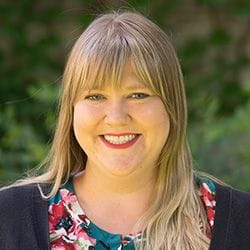
Prof. Roberts is an Associate Professor of Chemistry at the University of Minnesota and the recipient of multiple institutional honors, including the 3M Alumni Professorship and the McKnight Land‑Grant Professorship. She obtained her B.S. in chemistry from Pepperdine University and her Ph.D. from the University of North Carolina at Chapel Hill. Prof. Roberts then completed her postdoctoral research at the University of Michigan, where she explored C–H functionalization reactions using high valent Ni. She began her career as an Assistant Professor at the University of Minnesota in the Fall of 2019.
The Roberts Group focuses on the development of d0 metal catalysts for alkyl–alkyl cross coupling as well as harnessing heterocyclic aryne intermediates for medicinally relevant building blocks and new methods in photoredox catalysis.
She is recognized for her work using metal coordination to stabilize otherwise inaccessible aryne complexes, enabling new heteroarene difunctionalization strategies and advancing fundamental early transition metal organometallic chemistry.
What does being recognized by this award from Organometallics mean to you?
I’m so grateful that my group has been recognized with this award! I attend this symposium every single time I go to ACS Fall and have always been incredibly inspired by all of the previous winners so it is a huge honor to stand among them. This recognition is such a testament to the hard work and creativity of the team of researchers that I lead and I’m beyond grateful for everything they do in the lab.
What inspired you to pursue your field of research? How would you describe it to someone outside your field?
Ever since I was an undergraduate student, I’ve loved inorganic chemistry. The crystal structures, the colors, the challenging syntheses - I loved it all! I will admit that it took me a long time to love the field of organic chemistry. But when I saw the impact of using inorganic principles to solve organic problem choices that is when I knew I had found the field—organometallics--that interested me the most and I knew I needed to know a lot about both fields to make an impact.
I would describe the field of organometallics to an outsider as the best of both worlds of synthesis. In organic chemistry, there are a limited number of reactive intermediates that all transformations are based on - partial positive/negative charges, carbocations, carbanions, radicals, and a few more. When you introduce a metal to the mix, you get so many interesting mechanisms and possible intermediates due to the metal identity, oxidation state, coordination number, supporting ligands, etc but fewer problems to solve as there are a limited number of inorganic substrates. Organometallics combines the best parts or organic and inorganic chemistry by opening up the problem choices and the ways to solve them.
What would you say is the biggest opportunity and biggest challenge in your field of research currently?
I think sustainability is one of the biggest opportunities in my field. Many transition metal-catalyzed reactions that involve organometallic intermediates are adopted by industry. These catalytic reactions provide sustainable alternatives to reactions that usually involve stoichiometric reagents. Sometimes we need to discover how organometallic intermediates form and react before transferring them to catalysis which is a huge focus in my group. I think one of the biggest challenges in the field is also related to sustainability - many metals that organometallic chemists use are precious metals but, as a field, we are actively working on moving to more earth abundant metals.
2026 The Journal of Organic Chemistry Outstanding Publication of the Year Award Lectureship
This award recognizes the research team behind an outstanding article published in an issue of The Journal of Organic Chemistry in 2025 that demonstrates creativity and impact in the field of organic chemistry, broadly based.
This lectureship is awarded in partnership with The Journal of Organic Chemistry and the ACS Division of Organic Chemistry.
Winner: Dr. Jun Xiao and colleagues, Pfizer (USA)

Jun earned a BSc and MSc in Chemistry from Beijing Normal University before moving to the U.S. in 1997 to complete a second MSc at Stony Brook University in supramolecular chemistry. She joined Pfizer in 1999 as a synthetic medicinal chemist and has spent over 25 years contributing to programs in oncology, cardiovascular disease, diabetes, obesity, and rare diseases, from early discovery to large‑scale synthesis. Since 2019, she has served as an outsourcing liaison and now leads synthetic chemistry efforts for an oncology program at Pfizer.
Winning Article: “C(sp2)–C(sp3) Suzuki–Miyaura Cross-Coupling Using gem-Bis(boronates)”
Jun will be honored for her winning research at an upcoming Award Symposium at ACS Fall 2026 in Chicago, between August 23-27 2026.
Why did you choose The Journal of Organic Chemistry to publish your winning research?
We consistently select ACS journals for publishing our research due to their esteemed international reputation. The Journal of Organic Chemistry (JOC) is an ideal venue, featuring distinguished editors who appreciate the relevance of our work and provide access to a suitable scholarly audience for this Csp2-sp3 SMC methodology. In fact, choosing this journal has proven to be one of my best decisions.
What inspired you to pursue your field of research? How would you describe it to someone outside your field?
My father, a long-time cardiovascular disease patient, once called to share how proud he was that many of his medications were made by Pfizer—just because I worked there, he assumed I played a part in creating them! That moment reminded me why I was drawn to drug discovery: the chance to use organic chemistry to address real medical challenges.
To someone outside the field, I would describe drug discovery as a highly collaborative problem‑solving process. Chemists design and build molecules, test how they behave in biological systems, and refine them iteratively with the goal of turning scientific ideas into safe and effective medicines that can ultimately benefit patients.
What would you say is the biggest opportunity and biggest challenge in your field of research currently?
Drug discovery now encompasses a broader range than before. Advances in chemistry, biology, and technology have created new opportunities to tackle targets and modalities that were once out of reach. Yet the intricate nature of diseases and the rigorous requirements for turning promising research into safe, effective medications continue to pose the greatest challenges.
Stay informed about upcoming nomination opportunities
Bookmark the post below and check back throughout the year for the latest news and announcements about nominations for future Organic and Inorganic Chemistry lectureships and awards.

Organic and Inorganic Chemistry Lectureships and Awards
Explore nomination opportunities and browse the lectureship and award winner archives from ACS Publications' Organic and Inorganic Chemistry portfolio.