
Learn about the 2026 winners of ACS Publications' Polymer Chemistry lectureships and awards.

Each year, ACS journals recognize exceptional scientists whose research is shaping the future of polymer and macromolecular science.
This year’s recipients represent a range of expertise across the field, and their reflections offer insight into the ideas, challenges, and opportunities driving polymer research forward.
Browse by Award or Winner:
ACS Macro Letters / Biomacromolecules / Macromolecules Early Career Award
- Winner: Dr. Mingjiang Zhong
- Winner: Dr. Aleksandr (Alex) V. Zhukhovitskiy
ACS Macro Letters / Biomacromolecules / Macromolecules Early Career Award
This award recognizes two outstanding early career investigators conducting research in any area of fundamental polymer or biopolymer science. The award is presented by ACS Macro Letters, Biomacromolecules, and Macromolecules, in partnership with the Division of Polymer Chemistry.
The awardees will present lectures as part of an Award Symposium at ACS Fall 2026 on Tuesday, August 25 at 8:00 AM - 12:00 PM CDT in Room S401BC (McCormick Place Convention Center). View the full program.
Winner: Dr. Mingjiang Zhong, Yale University (USA)
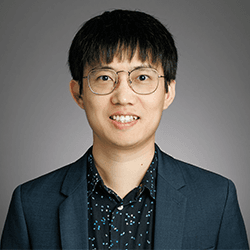
Dr. Mingjiang Zhong was born and raised in China. He received his B.S. degrees in Chemistry and Mathematics from Peking University in 2008, where he conducted undergraduate research in Prof. Yun-Dong Wu’s group. He then pursued graduate studies at Carnegie Mellon University, working with Prof. Krzysztof Matyjaszewski and Prof. Tomasz Kowalewski. In 2013, he joined the Massachusetts Institute of Technology as a postdoctoral researcher in the groups of Prof. Jeremiah Johnson and Prof. Bradley Olsen. He began his independent research career in 2016 and is currently an Associate Professor at Yale University, with a primary appointment in the Department of Chemical and Environmental Engineering and secondary appointments in the Departments of Chemistry and Materials Science.
What does this award mean to you?
I am deeply honored to receive this award, especially because these journals represent the core intellectual community that has shaped my development as a polymer scientist. This recognition se
rves as a powerful testament to the students, postdocs, and collaborators whose ingenuity and dedication have translated our fundamental discoveries into impactful materials. It is both a celebration of our group's journey and a profound encouragement to continue pushing the boundaries of precision polymer chemistry.
How is your research making a difference in the field?
Our research bridges fundamental synthesis and materials engineering by developing precision methodologies that yield exact control over polymer topology, tacticity, and monomer sequence. This level of control allows us to synthesize materials with highly diverse properties without altering their underlying chemical composition. Ultimately, it enables us to directly translate single-chain behaviors into targeted macroscopic functions for critical applications in energy storage, soft electronics, and environmental water purification.
What excites you most about the future of your research area?
I am most excited by the opportunity to make polymer synthesis increasingly predictive by integrating precision chemistry with high-throughput experimentation and data-driven design. This convergence will allow us to engineer complex macromolecular systems with the same level of confidence and exactness that chemists have long achieved in small-molecule synthesis. Ultimately, accelerating this discovery cycle will dramatically expand our ability to solve urgent global challenges in energy sustainability, water security, and human health.
Winner: Dr. Aleksandr (Alex) V. Zhukhovitskiy, University of North Carolina at Chapel Hill (USA)
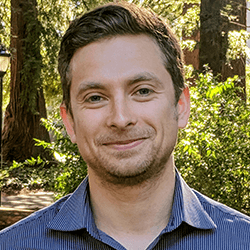
Aleksandr (Alex) V. Zhukhovitskiy was born in Dnipro, Ukraine and immigrated to the US at the age of 11. He completed his undergraduate studies in Chemistry, Mathematics, and the Integrated Science Program at Northwestern University, earning a joint BA/MS degree in Chemistry in 2011. From 2011 till 2016, Alex conducted doctoral research in the laboratory of Professor Jeremiah A. Johnson in the Department of Chemistry at the Massachusetts Institute of Technology, and from 2016 till 2019, carried out postdoctoral research in Professor F. Dean Toste’s group in the Department of Chemistry at the University of California, Berkeley.
In 2019, Alex started his research group in the Department of Chemistry at the University of North Carolina at Chapel Hill, where he is currently an Associate Professor and William R. Kenan Jr. Faculty Scholar. Research in the Zhukhovitskiy Group is focused on addressing fundamental challenges in polymer chemistry by implementing and advancing organic, inorganic, organometallic, and supramolecular chemistry methods. Applications of this research include polymer sustainability, tissue engineering, and solar energy capture and conversion.
For his group’s work, Alex has been recognized with the Army Research Office, Air Force Office of Scientific Research, Department of Energy, and National Science Foundation Early Career Awards, Camille Dreyfus Teacher Scholar Award, Sloan Research Fellowship, ACS Polymeric Materials Science and Engineering Early Investigator Award, Organometallics Distinguished Author Award Lectureship, Phillip and Ruth Hettleman Prize for Artistic and Scholarly Achievement (UNC-CH), 3M Non-Tenured Faculty Award, and the Thieme Chemistry Journals Award.
What does this award mean to you?
This award is an honor for me and my group, which tells us that our work connects with and impacts others in the field of polymer chemistry. I was flattered to be nominated for it in the first place, and, considering all the outstanding early-career polymer chemists in our community, I feel fortunate to have been selected as one of the awardees.
How is your research making a difference in the field?
I can only speculate exactly how my group's work impacts others, so, instead, I will describe the impact I hope it has. In short, more than our specific findings, I hope the problems we have chosen to work on resonate with the broader community: for instance, how to modify the backbones of polymers rather than their side-chains and how to control entanglement topology in polymer networks.
What excites you most about the future of your research area?
What most excites me about the future of polymer chemistry is that we have some amazingly kind and thoughtful stewards of this future at different career stages.
Stay informed about future nomination opportunities
Bookmark the post below and check back throughout the year for the latest news and announcements about nominations for future Polymer Chemistry lectureships and awards.
Polymer Chemistry Lectureships and Awards
Explore nomination opportunities and browse the lectureship and award winner archives from ACS Publications' Polymer Chemistry portfolios.