
Learn how ACS Publications is strengthening India’s research ecosystem through ONOS, from nationwide journal access to ethical publishing guidance.

In this Article:
Empowering Researchers Beyond Access
ONOS Support for Open Access Publishing
Open Calls for Submissions
Voices from the ONOS Research Community
– Prof. Diwan Singh Rawat
– Dr. Charu Verma
– Prof. Jyotishman Dasgupta
– Prof. Akshai Kumar A. S.
Stay Connected with ACS Insights
The One Nation One Subscription (ONOS) initiative marks a defining shift in India’s research landscape. Launched on January 1, 2025, the scheme has enabled country-wide access to high-impact international scholarly literature for more than 6,500 institutions across India. Students, faculty, and researchers from centrally funded and state-managed Higher Education Institutions, as well as Central Government Research & Development institutions, now benefit from seamless access to journals from 30 leading global publishers, including ACS Publications.
The most recent usage statistics released by INFLIBNET highlight the remarkable impact of ONOS:
- 113 million full-text article downloads in 2025
- ACS Publications stands third in the 30 publishers list and the journals accounted for 12.9 million downloads, contributing ~12% of the total usage
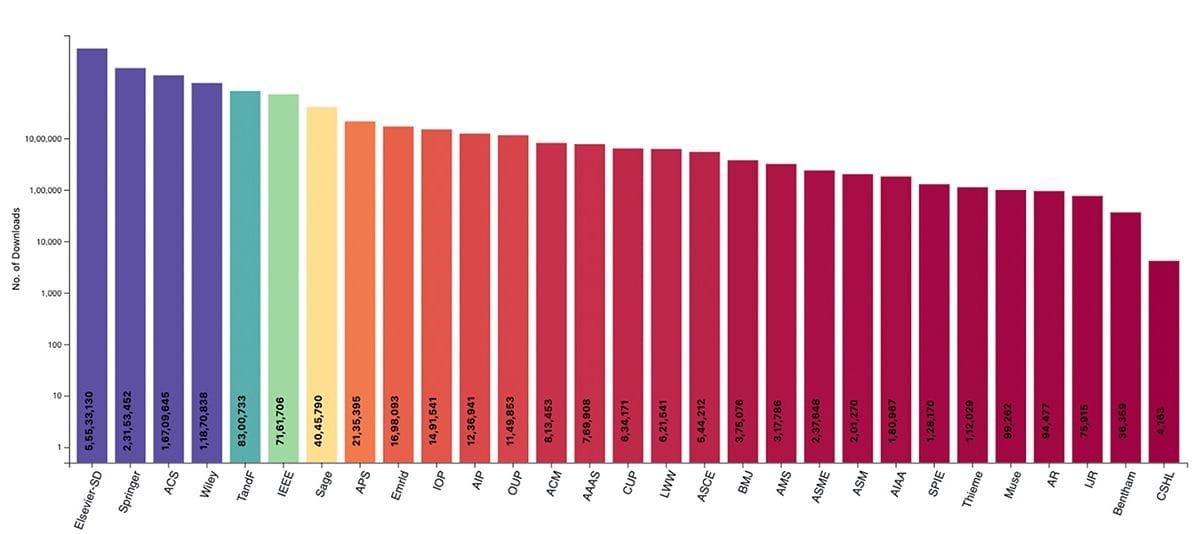
Source: ONOS Usage dashboard
Empowering Researchers Beyond Access
Ensuring seamless access is only the first step. To maximize the value of ONOS for the research community, ACS Publications has conducted a series of webinars, interaction sessions, and training programs across India. Several of these sessions organized in collaboration with the Information and Library Network (INFLIBNET) Centre, Gandhinagar and institutes across India attracted thousands of enthusiastic researchers.
These engagement initiatives showcase:
- ACS journals and publishing opportunities
- Research-enabling programs and tools such as ACS Author Lab and ACS Reviewer Lab
- Best practices in peer review and scholarly communication
With the rapid integration of Artificial Intelligence in scholarly publishing, ACS Publications has also emphasized the responsible and ethical use of AI. Through webinars and onsite interactions, researchers are guided towards credible, transparent, and ethical AI practices that can meaningfully advance scientific discovery.
ONOS Support for Open Access Publishing
While access to journal content remains the cornerstone of ONOS, Article Publishing Charges (APCs) are also an approved and centrally funded component of the scheme. APC support is available for a curated list of selected open-access journals, finalized by subject expert groups and hosted on the ONOS website. While the current list focuses on a limited selection of journals, it nonetheless represents a positive and meaningful step forward by the Government of India. The scheme represents a meaningful step toward encouraging open access publishing in credible, high‑impact journals that hold strong influence within the global research community.
We are pleased to share that ACS Publications has three high-impact open access journals included under ONOS APC support:
Eligible researchers publishing in these journals can avail centrally funded APCs through ONOS.
Open Calls for Submissions
We invite researchers to consider the following open calls for papers:
Molecular Editing in Natural Products and Drug Molecules
Submission Deadline: June 1, 2026
Circular Water Economy
Submission Deadline: July 1, 2026
Future Perspectives on Battery Chemistries
Submission Deadline: September 1, 2026
Voices from the ONOS Research Community
ACS Publications remains deeply committed to strengthening India’s research ecosystem through the ONOS initiative. To further enhance awareness and engagement, we are developing a series of user-focused campaigns aimed at ensuring impactful use of our 90+ journals.
As scientists and active members of the research community, your perspectives, experiences, and words of encouragement play a vital role in fostering meaningful, inclusive, and relatable conversations that inspire the next generation of researchers across India.
Together, let us continue to advance science ethically, collaboratively, and with global impact.
Explore with these interviews how ONOS impacts researchers and authors, and what lies ahead for India’s academic and research ecosystem.
Prof. Diwan Singh Rawat

Professor Diwan S Rawat, an esteemed academician with affiliations to notable institutions, currently serves as the Vice Chancellor of Kumaun University in Nainital. He holds prestigious titles such as FNASc (Fellow of the National Academy of Sciences, India), FRSC (Fellow of the Royal Society of Chemistry), and CChem (Chartered Chemist from London). With a profound academic background and expertise, Prof. Rawat has contributed significantly to the field of chemistry. His research interests lies in the areas of development of small organic molecules as anticancer, antimalarial, antimicrobial and anti-Parkinson agents and nano-catalysis. One of his molecule has been licenced to Boston based pharmaceutical industry for the development as a drug for the treatment of Parkinson`s disease.
Since the launch of One Nation One Subscription (ONOS), how has your access to scholarly journals and research literature changed?
It has been immensely helpful for researchers across, specially the state funded universities. The experiences of the faculty and student was simply amazing. Excellent initiative indeed. Earlier they used to request someone, which is always time consuming.
How has ONOS influenced your day-to-day research workflow such as literature reviews, experiment planning, or staying updated in your field?
Students and faculties are motivated as the biggest bottleneck of the research initiation process has been taken care of by the availability of literature search by ONOS. Downloading research articles by just one click was the most satisfying moment for all of them.
Do you foresee ONOS influencing your decisions on where and how you publish your work (e.g., open access vs. subscription journals)?
Yes of course, but coverage of APC ranges is limited which needs to be expanded.
In your opinion, how might ONOS contribute to ensuring publishing in open access journals?
If wider coverage of APC is given it will definitely boost the research publication in open access journals.
What improvements or additional resources would you like to see included in ONOS in the future (e.g., datasets, books, advanced tools)?
More journals from other publishing houses and coverage of a wide range of journals for APC will help the researchers.
Dr. Charu Verma
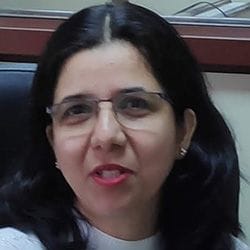
Dr. Charu Verma, Ph.D., is a Chief Scientist at CSIR-NIScPR, Ministry of Science & Technology, India. She has around 30 years of experience in leading National-level technology programs in software development, data science, and capacity building for digital government, National R&D management, and Enterprise digital transformation at CSIR-NIScPR, InterraIT, Infosys, and Duet Technologies. At CSIR-NIScPR, she heads 15 international research journals in various disciplines of Science & Technology and manages major technology-led transformation projects in IT.
An accomplished academic and technology professional, Dr. Verma has authored eight research papers and a book chapter, including Transforming Organizations with Flexible Systems Management (Springer) and Big Data Patentometrics for R&D Decision-Making (Emerald Insight). Her experience includes serving as faculty for SAARC countries, conducting national-level training programs, delivering guest lectures, and mentoring over 50 interns.
She holds a Ph.D. from Delhi Technological University with research focused on Big Data in E‑Governance, Gold Medalist in MBA (Technology Management) from IIT Delhi and a President Gold Medalist in Engineering from NSUT (formerly DIT). She is also a Senior Member of IEEE and CSI, Fellow of IETE, and Life Member of IWSA.
How do we foresee the One Nation One Subscription (ONOS) initiative to reshape India’s research and innovation landscape in the next 3-5 years?
The One Nation One Subscription (ONOS) initiative is expected to significantly democratize access to global scholarly literature across India’s universities and research institutions. Over the next 3–5 years, it will reduce disparities in information access, strengthen interdisciplinary collaboration, and accelerate high-quality research output. By lowering institutional subscription costs and enabling wider availability of journals and databases, ONOS can enhance evidence-based policymaking, support innovation ecosystems, and empower students, researchers, and startups with timely scientific knowledge, thereby strengthening India’s overall research and innovation capacity.
Which outcomes matter most for evaluating the national impact of the ONOS initiative (e.g., equity, productivity, global competitiveness)?
The impact of the ONOS initiative should be evaluated through outcomes such as equitable access to scholarly literature across institutions, increased research productivity, and enhanced global competitiveness. Key indicators include growth in high-quality publications, improved citation impact, expanded participation from institutions in underserved regions, and stronger academia–industry collaboration. Additionally, improved efficiency in research spending and greater international collaboration will signal how effectively ONOS strengthens India’s knowledge ecosystem and supports innovation-driven development.
What initiatives has CSIR‑NIScPR undertaken, within the scope of ONOS, to ensure seamless access to scientific content across India?
Within the framework of the ONOS, CSIR-NIScPR has strengthened national-level digital access through its platforms such as the NIScPR Online Periodicals Repository (NOPR) and Open Research@CSIR-NIScPR. It has worked on centralized hosting, metadata standardization, DOI integration, and cloud-enabled dissemination to ensure discoverability and uninterrupted access. Capacity-building workshops, outreach programs, and integration with institutional networks further support seamless nationwide access to high-quality scientific content across universities and research institutions.
What role can ONOS play in reducing barriers to open access publishing for Indian researchers, especially in high-quality journals?
ONOS can reduce barriers to open access publishing by strengthening national negotiation power with global publishers and enabling transformative agreements that combine reading and publishing rights. This can lower or waive article processing charges (APC) for Indian researchers in high-quality journals. By ensuring broader access to literature and facilitating publishing opportunities, ONOS can support greater visibility of Indian research, encourage compliance with open science principles, and improve participation of researchers from resource-constrained institutions in global scholarly communication.
Prof. Jyotishman Dasgupta

Prof. Jyotishman Dasgupta received his Ph.D. in the field of oxygenic photosynthesis under the supervision of Prof. G. Charles Dismukes. In 2006, he moved to UC Berkeley where he did his postdoctoral work with Prof. Richard A. Mathies. He joined the Tata Institute of Fundamental Research, Mumbai in 2010, and has been there ever since. The central theme of his research group is to probe dynamical structural events leading to charge generation in molecular materials, in order to fabricate bio-inspired molecule-based devices for photocatalysis and solar electricity generation. He received the 2017 Asian and Oceanian Photochemical Association (APA) Prize for Young Scientist, the 2018 Best Emerging Investigator Award and the 2024 CRS Silver Medal. He has been inducted as a Fellow in the Royal Society of Chemistry as “Leaders in Field”, and has been in the editorial board of The Journal of Physical Chemistry, The Journal of Physical Chemistry Letters, and The Journal of Chemical Physics.
We at TIFR being a DAE institute, do not fall under the ONOS agreement directly but have something similar called One DAE One Subscription (ODOS) for DAE institutes. The "read" part of ONOS agreement is currently under scrutiny by the Department of Higher Education (DHE).
Since the launch of One Nation One Subscription (ONOS), how has your access to scholarly journals and research literature changed?
There has been no change in the access to journals or research literature as such since DAE institutes have been well connected to latest in research literature and has one of the largest collection of books.
How has ONOS influenced your day‑to‑day research workflow such as literature reviews, experiment planning, or staying updated in your field?
This has also been a status quo. No changes that can be felt that can be analyzed with substantial statistics.
Do you foresee ONOS influencing your decisions on where and how you publish your work (e.g., open access vs. subscription journals)?
Yes it does influence publication in open access journals. These journals, sometimes the best in the fields e.g. Nature Communication or Science Advances, charge heavily.
In your opinion, how might ONOS contribute to ensure publishing in open access journals?
If the charges are all taken care of with the ONOS subscription scheme, it will enable more publications in open access. Although society journals (high quality of reviews) will still get the best papers but still open access publications will certainly increase.
What improvements or additional resources would you like to see included in ONOS in the future (e.g., datasets, books, advanced tools)?
It would be great to see book access heavily increase. Also if there are AI-based tools for sorting literature and quality of work.
Prof. Akshai Kumar A. S.
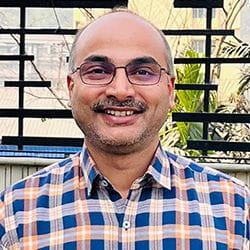
Prof. Akshai Kumar has around 21 years of experience in the area of organometallic chemistry, homogeneous catalysis and heterogenization of molecular catalysts. He has 65 research articles in peer-reviewed journals, including one in Chemical Reviews, apart from 6 book chapters and 4 US patents (granted), 1 Indian patent (granted), 9 International patents (filed) and 9 Indian patents (filed). Career highlights include the development of efficient catalyst for transformation of waste to fuel and value-added chemicals. This includes conversion of unproductive hydrocarbons to fuel-grade chemicals, upgrading low-energy density ethanol to high-energy density fuels and generation of green hydrogen via transformation of inexpensive glycerol, ethanol and methanol to high value lactic acid, acetic acid and formic acid respectively.
He is a Member of Society of Carbon Dioxide Research and Innovation, Member of Indian Young Academy of Science, Member of Bureau of Indian Standards, Member of the Chemical Research Society of India and Fellow of the Indian Chemical Society. In addition to Associate Professor at the Department of Chemistry, currently, he is the Head, Centre for Nanotechnology at IIT Guwahati.
Since the launch of One Nation One Subscription (ONOS), how has your access to scholarly journals and research literature changed?
ONOS has significantly improved my access to scholarly journals and research literature. This initiative has greatly reduced the dependency on institutional subscription, making it easier to have a broader and consistent access to high-quality peer reviewed journals and obtain relevant literature more conveniently and in a timely manner. There is an enhancement in ease and efficiency for accessing research resources which will have a good impact on the research and academic outcome.
How has ONOS influenced your daytoday research workflow such as literature reviews, experiment planning, or staying updated in your field?
ONOS has made my day-to-day research work more smoother. Improved access to scholarly literature helps in better planning of the experiments streaming in-line with the recent methodologies and relevant research in the area. Having a regular access to recent publications makes it easier to stay updated, design new research protocol and improve the quality of my work.
Do you foresee ONOS influencing your decisions on where and how you publish your work (e.g., open access vs. subscription journals)?
ONOS will have limited but relevant influence in my publishing decisions. Although, through ONOS and greater access to subscription based journals, there will be a reduced concern on the visibility and readership. However, open-access will be still relevant and important for readers beyond academic institutions. ONOS will definitely affect the decision for journal selection, audience and impact while keeping in mind the quality of work.
In your opinion, how might ONOS contribute to ensure publishing in open access journals?
In my opinion, the publishing cost associated with open-access journals is very high, which compels researchers to target subscription-based journals. One nation one subscription policy will no doubt improve the readership and accessibility issues of these subscription-based journals, but for a wider audience and more impact, open-access journals are very important. Through this initiative and a centralized subscription, institutions will be better positioned to encourage open-access journals.
What improvements or additional resources would you like to see included in ONOS in the future (e.g., datasets, books, advanced tools)?
In addition to research papers, books are also very crucial to carry out a scientific-sound research and develop new methodologies while referring to an already-existing protocol. Therefore inclusion of books will be very beneficial. Also, with growing artificial intelligence, advanced tools such as AI-assisted literature discovery which is trustworthy and reliable will improve the efficiency of research and facile flow of new-innovative ideas. Additional facilities or tutorials for different field-centred characterizations tools can also be highly useful for budding researchers.
Stay Connected with ACS Insights
Newsletters are a great way to stay up to date on content, products and services offered by ACS Publications. Subscribe to the monthly ACS Insights India newsletter for the latest updates, events, and more from ACS Publications.