
Hear from authors, reviewers, and editors across India as they reflect on the value of peer review and where the process is heading in a fast-growing research community.
Peer review remains a cornerstone of scholarly publishing, helping to ensure the quality, rigor, and integrity of the scientific record. As research output continues to grow, the scholarly community faces the challenge of balancing increasing submission volumes and expectations for faster decisions with the need to maintain thoughtful, high-quality review.
This year's Peer Review Week theme, "Peer Review Capacity: Volume, Speed, and Quality," highlights the importance of sustaining a robust and trusted peer review ecosystem. To mark the occasion, ACS Publications spoke with members of India's research community about their experiences as an author/editor/reviewer, their views on the evolving role of peer review, and its continued importance in advancing science.
As we celebrate Peer Review Week 2026, we extend our sincere gratitude to peer reviewers around the world. Their commitment to thoughtful, constructive evaluation helps advance high-quality research and strengthen trust in science. By sharing these perspectives, we recognize the individuals who contribute their expertise to the peer review process and help ensure that scientific discovery continues to thrive.
Join us throughout Peer Review Week as we spotlight voices from India's research community and celebrate the people behind rigorous and trusted research.
In This Article:
Read Interviews From India’s Research Community
Dr. Sudipta Maiti
Dr. Khushboo Suman
Dr. Pradip Pachfule
Dr. Kabeer Jasuja
Read Interviews From India’s Research Community
Dr. Sudipta Maiti
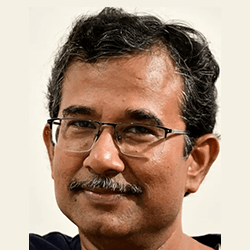
Dr. Sudipta Maiti is a Senior Professor with joint appointment in the Departments of Biological Sciences and Physics in the Hyderabad campus of the Birla Institute of Technology and Science Pilani, India. Till 2024, he was Senior Professor and Chair of the Dept. of Chemical Sciences at the Tata Institute of Fundamental Research, Mumbai, India. He has an undergraduate degree in Physics from IIT Kanpur and a Ph.D. in ultrafast spectroscopy from the Univ. of Pennsylvania, USA. Subsequently, he was a post-doctoral fellow in the lab of Prof. Watt Webb at Cornell University, USA. He is currently the Chair of the Fluorescence Subgroup, Biophysical Society (USA), and he has served as President of the International Society on Optics Within Life Sciences (Germany, owls-society.org), and of the Indian Biophysical Society. He is a Fellow of the Indian Academy of Sciences and an Executive Editor of The Journal of Physical Chemistry.
His current research interest spans several areas of Biophysics, namely, protein aggregation, neurotransmission, membrane interactions, and the development of new techniques and instruments for studying biological phenomena (see biophotonics.co.in). He has published over a hundred research papers in international journals. He has also built, patented and commercialized novel high-end microscopy and spectroscopy instruments throughout his three-decade long career. He is a passionate scientific-community builder and an award-winning teacher. He co-founded the Fluorescence Society, which organizes the FCS series of national workshops to teach graduate students how to build optical instruments. He has recently co-founded the photonics start up Lightprobe Technologies, which is building top-end microscopes and spectrometers in India.
How has your experience with peer review shaped your own research and scientific career? Could you share a memorable experience as an Editor working with ACS Publications?
For an academic scientist, peer review is really at the centre of all the judgments that we really care about. A positive peer review not only immediately gives a sense of succeeding in an effort that has taken months and years of effort from you and your students, it is also a validation of the value that your peers see in your ideas and abilities. However, as for many of my peers, rejections have been frequent. However disappointing, handling rejections well is also a learning process, and a training that you give to your students. In my work, I have seen strong mismatches between my own sense of the worth of a piece of work, and what the reviewers think about it, both in positive decisions and in negative ones. So, as you grow professionally, you learn to handle these with some sense of detachment. After all, you are you’re your best cheerleader and the fiercest critic.
My most memorable experience as an editor is when a manuscript got the reviewers’ nod, after going through them a few rough rounds. I could see that the authors have interesting findings, but it was written in a way that did not really bring it out well. I persisted with it and kept providing clues to what they could do better. To avoid any bias, I never look up an author’s background, so I did not know who the authors were. Finally, after the acceptance, the corresponding author wrote me a letter of appreciation, stating that this was his very first paper as an independent researcher. That felt really good.
Peer Review Week 2026 focuses on "Peer Review Capacity: Volume, Speed, and Quality." In your view, what is the biggest challenge in balancing these priorities, and how can the research community address it?
I think the main challenge is to maintain an acceptable quality to speed ratio in peer review. People who perform a good review must be appreciated on some way. One possible way is to have the editor grade the quality of the review, and to have some of the best reviews published (perhaps as an online companion to a paper, with the consent of the reviewer), and the journal providing some recognition to the reviewer.
How do you see peer review evolving over the next decade? Are there changes, innovations, or practices that you believe will strengthen the process for authors, reviewers, and editors?
One recent challenge is the ‘quick AI review’. It’s a difficult one to tackle, but tackle it we must (beyond rewriting for English). On the other hand, I think AI will help us find the right reviewer much more easily than it is possible now. The trend towards open review is a good one, but it also has its pitfalls, in terms of the reviewers being to restrained in their criticism. Overall, I do not think the peer review process will change fundamentally, if we are able to navigate the AI trends properly.
What advice would you give to early-career researchers who are beginning their journey as peer reviewers?
One timeless advice is to "Do unto others as you would have them do unto you”. Be kind, be detailed, but be fast. If you are not an expert in all of the techniques/areas described in the manuscript, then do tell that to the Editor.
Dr. Khushboo Suman
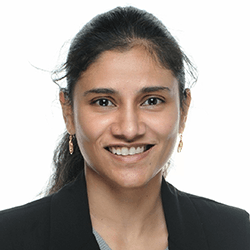
Dr. Khushboo Suman is an Assistant Professor in the Department of Chemical Engineering at the Indian Institute of Technology Madras, where she leads a research group focused on soft matter and complex fluids. Her research explores the interplay between microstructure and macroscopic properties in colloidal gels, thermoresponsive materials, polymeric systems, and functional soft materials, with a strong emphasis on rheology and advanced scattering and spectroscopic techniques. Her work aims to develop fundamental understanding of structure–property relationships and translate these insights into applications in areas such as sustainable materials, food systems, and biomedical products.
Dr. Suman completed her Ph.D. from IIT Kanpur and subsequently worked as a postdoctoral researcher at the University of Delaware. She is the recipient of Young Engineers award 2026 by The Institution of Engineers (India) and the Future of Rheology Award (second place) at the 95th Annual Meeting of the Society of Rheology.
How has your experience with peer review shaped your own research and scientific career? Could you share a memorable experience as an author and/or reviewer with ACS Publications?
Peer review has been an important part of my development as a researcher because it has taught me to look at scientific work from perspectives beyond my own research questions.
As an author, constructive reviewer comments have often helped me identify gaps in interpretation, improve the clarity of my arguments, and communicate the broader significance of my work more effectively. As a reviewer, the process has strengthened my ability to critically evaluate whether conclusions are adequately supported by experiments and whether alternative explanations have been considered. My experience with ACS Publications in particular has reinforced something I try to carry into my own reviews: that feedback can be rigorous and honest without being harsh, and that's usually when it's most useful.
One particularly memorable experience for me was when a reviewer once asked a question during peer review that seemed simple on the surface, but it ended up sparking an entirely new research idea. We explored into that question, followed it further than we had originally planned, and eventually turned into an independent publication. It was a good reminder that peer review is not just about polishing a manuscript, sometimes a good question from a reviewer can send you somewhere you never would have gone on your own.
Peer Review Week 2026 focuses on "Peer Review Capacity: Volume, Speed, and Quality." In your view, what is the biggest challenge in balancing these priorities, and how can the research community address it?
The core difficulty is that high-quality peer review requires significant time and effort, which researchers increasingly struggle to provide alongside their research, teaching, mentoring, administrative, and publishing responsibilities. At the same time, submission volumes continue to rise faster than the available reviewer pool, placing increasing pressure on the peer-review system. We can aim at accelerating review but not at the expense of careful scientific evaluation. One option is to give reviewing some significant weight in career evaluation rather than just a scholarly contribution. Another is to keep broadening the reviewer pool, something I believe ACS is already working on. Actively bringing in capable postdocs and senior grad students, under proper mentorship, would spread the reviewing workload across more people, and it would also give early-career researchers real practice at evaluating a manuscript and sharpening the kind of critical thinking that comes with it.
How do you see peer review evolving over the next decade? Are there changes, innovations, or practices that you believe will strengthen the process for authors, reviewers, and editors?
Over the next decade, I expect peer review to become more efficient, structured and modular (checklists, reporting standards, and reproducibility criteria tailored by subfield) while retaining human scientific judgment at its core. Artificial intelligence may assist editors and reviewers with tasks such as identifying relevant literature, checking consistency, detecting reporting gaps, and reducing administrative burdens. However, assessing originality, scientific significance, experimental rigor, and the plausibility of interpretations will continue to require subject expertise and thoughtful human judgment. I also believe reviewer training will become increasingly important, particularly for early-career researchers. A better recognition of high-quality reviewing could further strengthen the system. Another promising direction is greater emphasis on constructive review: feedback should not only determine whether a manuscript is publishable but should help authors improve the scientific quality and communication of their work. The strongest future system will combine technological efficiency with fairness, expertise, and collegiality.
What advice would you give to early-career researchers who are beginning their journey as peer reviewers?
My advice to early-career researchers is to approach peer review as both a responsibility and a learning opportunity. Before accepting an invitation, ensure that the manuscript falls within your expertise and that you can provide a thoughtful review within the requested timeframe. One should be honest about the limits of expertise and say so explicitly. When reviewing, focus first on the central scientific questions such as are the methods appropriate, are the conclusions supported by the evidence, what is genuinely new, and what additional information would strengthen the work. Try to distinguish essential concerns from minor suggestions and always communicate criticism respectfully and constructively. Reviewing other researchers' work can also improve your own scientific writing by exposing you to different ways of designing studies and presenting results. One should not be afraid to recommend acceptance when a paper is genuinely solid as reviewing is not about finding flaws for their own sake. Finally, remember that a good review is not simply a list of problems, it provides clear reasoning and, whenever possible, constructive suggestions that help authors and editors make informed decisions and ultimately improve science.
Dr. Pradip Pachfule
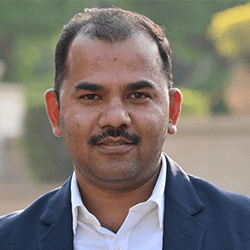
Dr. Pradip Pachfule has been a faculty member at S. N. Bose National Centre for Basic Sciences, Kolkata (India), since 2021. He received his Ph.D. in chemical sciences in 2014 from CSIR-National Chemical Laboratory, Pune (India). He then worked as a JSPS postdoctoral research fellow at AIST, Osaka, Japan. He then held positions as an Alexander von Humboldt postdoctoral fellow and a postdoctoral research fellow at Technische Universität Berlin in Germany. Dr. Pachfule's research focuses on synthesizing covalent organic frameworks for use in photocatalytic water splitting, hydrogen peroxide generation, organic transformations, and energy storage. He has received the Rising Star Award from Small, Thieme Chemistry Journals Award, IGSTC PECFAR Award - 2025, and is currently serving as a DAAD Research Ambassador.
How has your experience with peer review shaped your own research and scientific career? Could you share a memorable experience as an author and/or reviewer with ACS Publications?
Peer review has played a significant role in developing my scientific thinking and shaping my research career. As a reviewer, I have the opportunity to read emerging research from around the world, often before it gets published. This exposure helps me to identify new research directions, evaluate ideas critically and refine my approach to research and scientific writing continuously. A particularly memorable experience I had with ACS Publications was when, after one of my conference talks, a researcher approached me and said that a JACS paper I had published had significantly influenced the way they thought about their own research. They also told me that they had used the paper as a template when preparing their own manuscripts. This was especially meaningful to me because it demonstrated how scientific publications can influence not only research directions, but also how we communicate science.
Peer Review Week 2026 focuses on "Peer Review Capacity: Volume, Speed, and Quality." In your view, what is the biggest challenge in balancing these priorities, and how can the research community address it?
The biggest challenge when it comes to balancing volume, speed and quality is the rapidly increasing number of scientific publications, alongside the emergence of new journals and publishing platforms. Researchers are increasingly being asked to review more manuscripts while also managing their own research, teaching, mentoring and administrative responsibilities. This makes it difficult to decide which invitations to accept and how much time can realistically be devoted to each review. I believe that a stronger culture of responsible reviewing is required as part of the solution. Researchers should only accept reviews that align with their area of expertise and ensure they have enough time to provide thoughtful, constructive feedback. Journals can also help by improving reviewer selection, avoiding unnecessary duplication of reviews, and recognizing reviewers' contributions. Ultimately, maintaining the quality and integrity of peer review must be given greater importance than simply increasing the speed or volume of reviews.
How do you see peer review evolving over the next decade? Are there changes, innovations, or practices that you believe will strengthen the process for authors, reviewers, and editors?
I believe that, over the next decade, peer review will become increasingly transparent, constructive and collaborative. The process has already become more open in many areas, and I expect this trend to continue with greater transparency surrounding reviewer identities, editorial decisions, review reports and the criteria used to evaluate manuscripts. At the same time, technological developments — including the responsible use of artificial intelligence — may help editors and reviewers to identify methodological issues, improve reporting and manage the growing volume of submissions. However, such tools should support, rather than replace, expert scientific judgement. I also foresee a greater emphasis on constructive reviewing, where the objective is to help authors improve their work, not simply to identify weaknesses. A combination of transparency, appropriate technology, expert judgement and recognition of reviewers' contributions could make peer review more efficient while strengthening trust among authors, reviewers and editors.
What advice would you give to early-career researchers who are beginning their journey as peer reviewers?
I would advise early-career researchers to embrace peer review as an opportunity to learn, contribute, and develop as scientists. They should review manuscripts for journals relevant to their area of expertise, approaching each one objectively and without being influenced by the authors' identity, reputation, or institution. The process of reviewing teaches you how to critically assess scientific questions, experimental design, data interpretation and scientific writing. It also provides valuable insight into what constitutes a clear, convincing, and impactful manuscript. I would encourage young researchers to regularly take on reviewing opportunities, while always maintaining confidentiality, fairness, and professionalism. With experience, reviewing becomes an important part of scientific development, strengthening both research and writing skills. Furthermore, it enables early-career researchers to contribute meaningfully to the scientific community.
Dr. Kabeer Jasuja
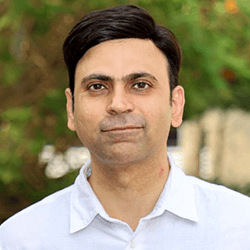
Dr. Kabeer Jasuja is the Dr. Dinesh O. Shah Chair Professor and Head of the Department of Chemical Engineering at IIT Gandhinagar. He received his B.Tech. from IIT Kharagpur in 2007 and Ph.D. from Kansas State University in 2011, followed by postdoctoral research at Northwestern University. He joined IIT Gandhinagar in 2012.
His research focuses on nanomaterials, surface science, and 2D materials. His group discovered a new family of boron-rich nanosheets, isomorphous to graphene, by revisiting the chemistry of layered metal diborides. This work has opened new directions for the use of nanoscale metal borides in energy, environmental, and advanced materials applications. For these contributions, he received the INAE Young Engineer Award (2018) and was elected an Associate of the Indian Academy of Sciences (2019). He is also a recipient of the INSPIRE Faculty Award.
Dr. Jasuja has held several academic and leadership roles at IIT Gandhinagar, including Dean of Academic Affairs, Associate Dean of Undergraduate Studies, and Head of Counseling Services. He also conceptualized the Peer Assisted Learning (PAL) programme, an academic support initiative for undergraduate students. He has received IIT Gandhinagar’s Awards for Excellence in Teaching (2015) and Excellence in Institution Building (2020). Since 2021, he has held the Dr. Dinesh O. Shah Chair in Surface Science and Nanotechnology.
How has your experience with peer review shaped your own research and scientific career? Could you share a memorable experience as an author and/or reviewer with ACS Publications?
Peer review has shaped my career in ways that go well beyond improving individual manuscripts. I have benefited significantly from reviews that were genuinely constructive, particularly early in my career, when we were trying to establish new research directions and were still learning to recognize the limitations and possibilities of our own work. Some of the reviews I received did more than point out gaps. They suggested experiments, alternative ways of looking at the problem, and practical approaches that actually changed how we pursued the research.
One experience I remember particularly fondly was when, after about ten years of work on AlB2-type layered metal diborides and their exfoliation into quasi-2D nanostructures, we felt that the work could form the basis of a meaningful review article. I wrote to Prof. Gregory Hartland, who was then Deputy Editor of The Journal of Physical Chemistry C, and shared the idea with him. He responded promptly, encouraged us to develop the article, and suggested that we focus more specifically on the underlying physical-chemistry aspects. That eventually led to a review article, which Prof. Hartland later highlighted in an editorial.
I found that interaction very valuable. It was not simply about whether the review would be suitable for the journal. His suggestion helped us think more clearly about what the real intellectual contribution of the review should be. It made me appreciate how much an editor or reviewer can contribute when they engage with the science rather than simply evaluating the manuscript.
Peer Review Week 2026 focuses on "Peer Review Capacity: Volume, Speed, and Quality." In your view, what is the biggest challenge in balancing these priorities, and how can the research community address it?
The biggest challenge, in my view, is that good peer review requires something that is increasingly difficult to find in academia: time and attention. A thoughtful review is not just about reading a manuscript and making a list of what is missing. You have to spend some time thinking about the problem along with the authors.
I recall that for a study we published in Langmuir, we were having difficulty preparing a TEM sample of our nanomaterial. One of the reviewers suggested a rather simple but creative approach: deposit a droplet of the dispersion on the grid, prevent evaporation, and freeze it. The reviewer was also careful to say that they had not tried the method but thought it might be worth exploring. We tried it, and it worked. We were able to obtain the images that ultimately strengthened the paper.
That kind of suggestion is difficult to make if you are reviewing a manuscript very quickly. It requires the reviewer to actually think about the problem. At the same time, with the number of manuscripts increasing, even researchers who would like to review more often have to decline because they know they cannot give the manuscript the attention it deserves.
Reviewing is a service to the scientific community. All of us depend on the time that other researchers give to reviewing our work. So, I think supporting the reviewers who are already contributing would help a lot in the long run.
How do you see peer review evolving over the next decade? Are there changes, innovations, or practices that you believe will strengthen the process for authors, reviewers, and editors?
I hope peer review retains its rigor but also becomes a stronger avenue for scientific exchange and mentorship.
One area where I see considerable potential is in giving early-career researchers more opportunities to interact with experienced reviewers and editors, particularly in developing research ecosystems. Facilitating a meeting of experienced researchers and role models in the country or region of early-career researchers can be extremely valuable.
There is a kind of scientific judgment that comes with experience and is difficult to convey through papers or even through a detailed reviewer report. A conversation with someone who has spent many years evaluating research can teach you things that are otherwise difficult to learn.
I would therefore like to see more regional reviewer-development programmes, workshops, and forums where early-career researchers can interact with experienced editors and reviewers. If we can build that kind of culture, peer review can do more than maintain the quality of the scientific literature. It can also help pass scientific judgment and experience from one generation to the next.
What advice would you give to early-career researchers who are beginning their journey as peer reviewers?
My advice would be to see reviewing as an opportunity to contribute to science, rather than simply as a responsibility or an exercise in finding shortcomings. A good review needs to be rigorous, but it should also be constructive.
I remember a review of our work on a new class of boron-based nanosheets where the reviewer suggested that we should quantify degree of surface functional groups on our boron-based nanomaterials. We followed the suggestion and found that hydride species were dominant. That changed how we understood the material and opened up a completely different way of thinking about its chemistry. We subsequently explored that chemistry across several applications.
For me, that is a good example of what a useful review can do. The reviewer was not simply asking us to add another piece of characterization; the suggestion led us to understand the material differently.
So, I would encourage early-career reviewers to ask themselves: If I were the author, what would I find genuinely useful in this review? Focus on the questions that matter most rather than trying to demonstrate expertise by identifying every minor issue. If you suggest an additional experiment, explain why you think it is important and, where possible, suggest a practical way forward.
And perhaps most importantly, we should review with respect for the effort that has gone into the work. The purpose of a review is not simply to judge a paper. It is to help make the science better and, in a small way, to contribute to the scientific community that supports all of us.
Want to Become a Peer Reviewer?
While there is no distinct path to becoming a reviewer for ACS Publications, taking the ACS Reviewer Lab course will help you prepare for your first review, refresh your current peer review knowledge, and educate the next generation of peer reviewers.
Upon completion of the ACS Reviewer Lab course, you will be identified as an ACS Certified Reviewer and benefit from a higher level of visibility to ACS journal editorial teams. The course is free to access, on-demand, and available in English and Chinese.
There are also several other things you can do to increase your chances of being invited to review future manuscripts:
- Fill out a Reviewer Application: If you already have experience with peer reviewing, complete our Reviewer Application to be added to our database of qualified reviewers.
- Become an active ACS Member: Join your local chapter to further expand your scientific network.
- Build your network: Connect with subject matter experts at professional conferences, ask colleagues who are experienced reviewers to recommend you to journal editors, and share your own subject matter expertise on your social media channels.