Learn about the 2027 winners of ACS Publications' Biological and Medicinal Chemistry lectureships and awards.

Every year, ACS journals celebrate the cutting-edge research of scientists whose work is reshaping their fields and addressing important challenges in biological and medicinal chemistry.
This year’s winners have taken time to reflect on the impact of their research and the future of their disciplines.
Join us in celebrating their achievements and learning more about the discoveries and innovations driving progress in their fields. Together, their reflections provide valuable insight into the ideas and advances fueling the next generation of scientific breakthroughs.
Browse by Award or Winner:
ACS Chemical Biology Early Career Award
Winner: Dr. Jonathan Long
Bioconjugate Chemistry Early Career Award
Winner: Dr. Michael Erb
ACS Chemical Biology Early Career Award
This award honors the contributions of an early-career individual who is doing outstanding work in chemical biology.
Winner: Dr. Jonathan Long, Stanford University (USA)
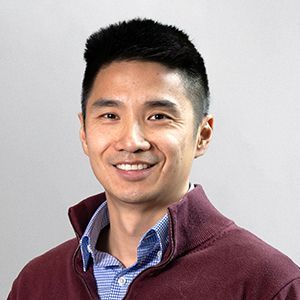
Dr. Long is an Associate Professor of Pathology and an Institute Scholar of Stanford ChEM-H (Chemistry, Engineering & Medicine for Human Health). His laboratory studies the molecular mechanisms of mammalian energy homeostasis. Dr. Long is the recipient of the Alfred P. Sloan Research Fellowship in Chemistry, the Breakthrough Sciences Award from the Ono Pharma Foundation, and the NIDDK Catalyst Award. Prior to arriving at Stanford, Dr. Long completed his Ph.D. in Chemistry at Scripps Research and his postdoctoral work at Harvard Medical School.
What does this award mean to you?
I’m grateful for this recognition from a community that has played a key formative role in my development as a scientist. I am also appreciative of the creativity and hard work of the students, postdocs, and collaborators I’ve been fortunate to work with, and the generosity of mentors who encouraged me to fearlessly pursue critically unanswered open questions.
How is your research making a difference in the field?
Our lab studies the role of metabolites in cell-cell communication and chemical signaling. Our specific focus has been to uncover the chemical effectors that link cellular metabolism to systemic physiology and metabolism. We hope that understanding these pathways will ultimately open up new therapeutic opportunities for treating metabolic diseases.
What excites you most about the future of your research area?
There is a rapid and growing availability of large-scale genetic and multi-omic data, especially from large human cohorts. I am excited about the possibility of gene and metabolite discovery directly using humans as the experimental system.
Bioconjugate Chemistry Early Career Award
This award recognizes the contributions of one person who has made a major impact working at the interface of the synthetic and biological worlds.
Winner: Dr. Michael Erb, Scripps Research (USA)
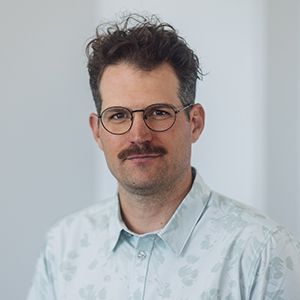
Dr. Erb is an Associate Professor and the Peter K. Vogt Endowed Chair in the Department of Chemistry at The Scripps Research Institute. He graduated with a B.A. in biochemistry from Claremont McKenna College in 2014, received his Ph.D. from Harvard University under the mentorship of Jay Bradner and Nathanael Gray in 2017, and then began his independent career as one of the inaugural Scripps Fellows. His laboratory at Scripps Research is principally interested in using chemical tools to understand the mechanisms by which chromatin-regulated processes are controlled in living cells. They prioritize the development of new proximity pharmacology approaches to rewire cellular pathways and target historically undruggable proteins. Prof. Erb is the recipient of an NIH Director’s Early Independence Award (2018) and an Ono Pharma Foundation Breakthrough Science Initiative Award (2020).
What does this award mean to you?
This award is a vital recognition for an early career researcher. It provides scientific validation for the independent research direction I have established in bioorthogonal photocatalysis. Receiving this honor during my transition to a full professorship at Beijing Normal University is particularly meaningful; it offers the visibility and momentum necessary to launch my new laboratory's next phase of innovation. This recognition from the American Chemical Society reinforces my commitment to developing rigorous chemical tools that address fundamental questions in biology and medicine.
How is your research making a difference in the field?
Our research addresses a critical gap in chemical biology by providing a programmable "remote control" for chemical reactions within complex living systems. Through the CAT-X platform, we have achieved subcellular-scale resolution in proteomics and multi-omics without relying on genetic or enzymatic methods. By leveraging near-infrared light and catalytic efficiency, we can now map membrane receptor dynamics and profile cell-cell interactions in clinical samples and living animals. This framework transforms how researchers interrogate biomolecular functions with unprecedented spatiotemporal precision and biological compatibility.
What excites you most about the future of your research area?
I am most excited by the development of a universal toolkit for non-invasive, site-specific chemical intervention. The power of photochemical tools in biology lies in their dual-level controllability: the reaction space is governed by the precise localization of catalysts, while the reaction timing is governed by remote external light. While my current work focuses on light-triggered reactions, the next frontier involves harnessing a broader spectrum of exogenous stimuli, such as ultrasound and other physical signals, to achieve deep-tissue penetration for in vivo applications.
The challenge of ultrasound-controlled chemistry is significant, yet its potential for clinical application is immense. My ultimate goal is to leverage the unique advantages of chemical technology to decode complex molecular mechanisms within clinical and hard-to-transfect samples that are often inaccessible to conventional biological methods. By translating these bioorthogonal strategies into precision therapeutics, we aim to enable the site-specific activation of drugs or the modulation of biological pathways directly at the site of disease with surgical accuracy. Successfully bridging the gap between basic chemical innovation and clinical application will provide a powerful framework for both understanding and treating human diseases.
Stay informed about upcoming nomination opportunities
Bookmark and revisit the post below throughout the year for the latest announcements about nominations for future Biological and Medicinal Chemistry lectureships and awards.

Biological and Medicinal Chemistry Lectureships and Awards
Explore nomination opportunities and browse the lectureship and award winner archives from ACS Publications' Biological and Medicinal Chemistry portfolios.