Learn more about the winners of the 2026 ACS Catalysis Lectureship for the Advancement of Catalytic Science.

Join us as we celebrate the winners of the 2026 ACS Catalysis Lectureship for the Advancement of Catalytic Science. In partnership with the ACS Division of Catalysis Science and Technology (CATL) and the ACS Division of Organic Chemistry (ORGN), this year’s awards tie directly to a ground-breaking publication in ACS Catalysis.
In recognition of the large scope of catalysis covered by ACS Catalysis, the 2026 awards have been given in each of the three areas of catalysis covered by the journal: biocatalysis or enzymology, heterogeneous catalysis, and homogeneous catalysis. The awards honor recent and significant contributions to the field, which appeared as a publication in ACS Catalysis within the last 36 months preceding the nomination deadline (2023, 2024 or 2025).
This year’s recipients reflected on the influence of their research and shared their perspectives on where the field of catalysis is headed next.
In their interviews, they discussed:
- How their research is making a difference in their field
- What excites them about the future of their research area
- What the biggest opportunities and challenges are in their field of research right now
Together, their insights highlight the curiosity, discipline, and inventive mindset driving the future of catalysis.
Browse by Award or Winner:
2026 ACS Catalysis Lectureship for the Advancement of Catalytic Science in Biocatalysis
Winner: Dr. Stephen G. Bell, Adelaide University, Australia
Winning Article: Engineering Peroxygenase Activity into Cytochrome P450 Monooxygenases through Modification of the Oxygen Binding Region
2026 ACS Catalysis Lectureship for the Advancement of Catalytic Science in Heterogeneous Catalysis
Winners: Prof. Ayman M. Karim, University of Virginia, USA; Prof. Hongliang Xin, Virginia Tech University, United States
Winning Article: CO Oxidation on Ir1/TiO2: Resolving Ligand Dynamics and Elementary Reaction Steps
2026 ACS Catalysis Lectureship for the Advancement of Catalytic Science in Homogeneous Catalysis
Winner: Prof. Richard Liu, Harvard University, United States
Winning Article: Pd-Catalyzed Azidation of Aryl (Pseudo)Halides
2026 ACS Catalysis Lectureship for the Advancement of Catalytic Science in Biocatalysis
The ACS Catalysis Lectureship for the Advancement of Catalytic Science in Biocatalysis recognizes researchers with recent, significant publications in ACS Catalysis.
Winner: Dr. Stephen G. Bell
Winning Article: Engineering Peroxygenase Activity into Cytochrome P450 Monooxygenases through Modification of the Oxygen Binding Region
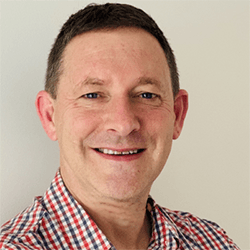
Dr. Stephen G. Bell is a teaching and research academic in the School of Physics, Chemistry and Earth Sciences at Adelaide University, Australia. He supervises research projects on enzymes sourced from diverse bacteria and archaea that inhabit interesting and extreme biological environments.
A focus of his group’s recent work has been the protein engineering of the oxygen activation machinery of monooxygenase enzymes to enable hydrogen peroxide-driven catalysis eliminating the need for nicotinamide cofactors and auxiliary redox proteins. This has resulted in the discovery and development of robust, thermostable heme enzymes capable of catalysing highly selective C–H bond hydroxylations. The overarching goal is to apply these enzymes as biocatalysts for the late-stage functionalisation of complex organic molecules, enabling access to compounds that are challenging to produce using conventional chemical methods.
Dr. Bell will be honored at an upcoming Award Symposium at ACS Fall 2026, taking place in Chicago from August 23-27, 2026.
Why did you choose ACS Catalysis to publish your winning research?
ACS Catalysis started publishing articles at around the same time I established my independent research career. The journal’s strong commitment to biocatalysis closely aligns with my research interests and our collaborative mechanistic work with Prof. James De Voss (University of Queensland).
Importantly, articles published in ACS Catalysis reach a broad target audience. This wide visibility, combined with the consistently high standard of published research, makes the journal an excellent outlet for our best work.
What inspired you to pursue your field of research? How would you describe it to someone outside your field?
Heme monooxygenases represent a remarkably diverse set of enzymes that perform the chemically challenging oxidation of inert carbon-hydrogen bonds under ambient conditions with exquisite selectivity. During my first few years at Adelaide, we were exploring the diversity of the ferredoxin electron transfer partners that support bacterial cytochrome P450 enzymes. However, these systems often exhibited low catalytic activity and would require extensive optimisation, limiting their practical application in all but a few systems. During these investigations, we identified an unusual enzyme containing a distinctive amino acid sequence within the region responsible for dioxygen activation. This sequence showed similarities to those found in heme peroxygenase enzymes and indeed it enabled this enzyme to use hydrogen peroxide as its sole cofactor for the oxidation of lignin-derived aromatics. This discovery led us to investigate whether this activity could be introduced and significantly enhanced in archetypal cytochrome P450 enzymes using a targeted protein engineering approach. This was successful and enabled these enzymes to operate without the need for expensive nicotinamide cofactors or additional electron transfer partners, greatly simplifying their use in larger-scale synthesis. Importantly, this region of this enzyme superfamily can be easily identified without structural information, and the method could be applied to other members.
The research is designed for graduate student research projects, and this paper was predominantly undertaken by Dr. Matthew Podgorski during his PhD degree. He was responsible for implementing the idea behind this work and transforming it into the detailed experimental work presented.
The generation and optimisation of modified proteins capable of efficiently catalysing challenging chemical oxidation reactions with high selectivity would increase the methods available for chemical synthesis. Such biocatalysts are employed in laboratory-scale chemical synthesis where selective oxidation of unreactive C–H bonds is required. However, their broader adoption has been constrained by system complexity, including the reliance on additional auxiliary proteins and costly chemical cofactors. Simpler hydrogen peroxide-driven biocatalysts overcome these limitations by using peroxide directly as the oxygen source. The next step is to develop enzyme catalysts which are resistant to elevated temperatures and higher concentration of hydrogen peroxide and organic solvents. These enzyme biocatalysts enable selective oxidation reactions in complex organic molecules—including terpenoids, steroids, and pharmaceutical compounds. They will facilitate access to high-value products with a range of applications including flavour and fragrance compounds and chemicals with medicinal/biological properties.
What would you say is the biggest opportunity and biggest challenge in your field of research currently?
The heme cofactor, together with the enzymes and proteins that contain it, supports an exceptionally diverse range of chemical reactions. Rapid advances in enzyme discovery, protein engineering, and de novo enzyme design continue to expand the repertoire of chemical transformations that these and other enzymes can perform. The judicious use of machine learning/AI is increasing the pace at which new activities are being discovered. In addition, chemists are generating new catalysts and enzyme cofactor mimetics which can catalyse C-H bond activations. Many of these can be inserted into protein scaffolds and when coupled with the ability to incorporate non canonical amino acids into enzyme structures offers powerful new opportunities to modify and enhance catalytic activity beyond what is achievable with current natural systems.
These developments create significant potential for the application of enzymes in areas such as sustainable chemical synthesis, bioremediation, and the valorisation of materials traditionally regarded as waste. Pleasingly the use of enzymes for chemical synthesis is increasing and becoming a more widely accepted strategy. Despite this promise, important challenges remain. There is a need to develop enzymes with broader functional diversity and improved robustness, capable of operating efficiently under the conditions often required for larger-scale chemical processes. Addressing these challenges using the strategies and methods detailed above will be vital to fully realising the full impact of enzymes in applied settings.
2026 ACS Catalysis Lectureship for the Advancement of Catalytic Science in Heterogeneous Catalysis
The ACS Catalysis Lectureship for the Advancement of Catalytic Science in Heterogeneous Catalysis recognizes researchers with recent, significant publications in ACS Catalysis.
Winners: Prof. Ayman M. Karim & Prof. Hongliang Xin
Winning Article: CO Oxidation on Ir1/TiO2: Resolving Ligand Dynamics and Elementary Reaction Steps
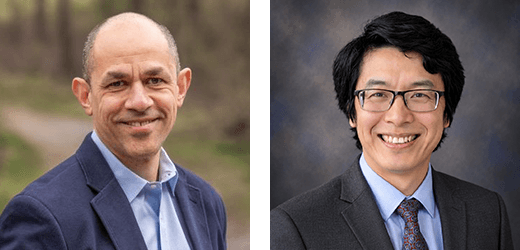
Prof. Ayman M. Karim is the Olsen Bicentennial Professor and Chair of the Department of Chemical Engineering at the University of Virginia. With an accomplished background in catalysis, Prof. Karim’s research focuses on designing heterogeneous catalysts for energy and environmental applications, using controlled synthesis, detailed kinetics measurements, and advanced in-situ and in-operando characterization techniques. His group has made significant advances in understanding the active site's structure of isolated atoms and subnanometer clusters and their reaction kinetics.
Prof. Hongliang Xin is Professor of Chemical Engineering at Virginia Tech, where he has been a faculty member since 2014. His research focuses on developing an explainable artificial intelligence (AI) platform for catalysis science. He is Communications Director of the North American Catalysis Society (NACS). He served as the inaugural co-chair for the 2026 Gordon Research Conference on AI for Materials, Energy, and Chemical Sciences (GRC AIMECS). He initiated and co-chaired the AI for Multidisciplinary Exploration and Discovery (AIMED) Workshop and has led community efforts to shape the responsible reporting practices toward agentic catalysis.
Prof. Karim and Prof. Xin will be honored at an upcoming Award Symposium at ACS Fall 2026, taking place in Chicago from August 23-27, 2026.
Why did you choose ACS Catalysis to publish your winning research?
We chose ACS Catalysis because it was the natural home for this work. The study was not only about catalytic performance; it was about the reaction mechanism, specifically how the local environment of a well-defined active site evolves under reaction conditions and how that evolution governs the elementary steps. ACS Catalysis is especially well suited for research that combines mechanistic depth with clear catalytic relevance. We also value the breadth of the journal. Although this work is rooted in heterogeneous catalysis, it touches ideas that resonate across catalysis more broadly, especially around ligand effects, active-site definition, and structure-reactivity relationships. The broader readership of ACS Catalysis mattered to us, because we hoped the paper would speak to researchers thinking across traditional sub-disciplinary boundaries.
What inspired you to pursue your field of research? How would you describe it to someone outside your field?
What inspired us to pursue this field is the realization that a very small change at the atomic scale can completely change the outcome of a chemical reaction. We have always been drawn to problems where fundamental understanding and real-world impact are tightly connected, and catalysis is exactly that kind of field. Over time, we became especially interested in understanding catalytic behavior through electronic structure, local chemical environment, and increasingly data-driven approaches. To someone outside the field, we would describe our research as designing better “chemical matchmakers”, materials that help molecules react faster, more selectively, and with less waste. In simple terms, we try to understand why one atomic arrangement works better than another so we can design cleaner and more efficient chemistry.
What would you say is the biggest opportunity and biggest challenge in your field of research currently?
The biggest opportunity in the field right now is the ability to connect atomic-scale understanding with data-driven catalyst design. Advances in catalyst synthesis, operando characterization, first-principles theory, and machine learning methods are giving us a real chance to move beyond trial-and-error discovery. The biggest challenge is that real catalysts are dynamic: the active site can change with temperature, pressure, reactant composition, and the surrounding support environment. Furthermore, isolated sites and small clusters are fluxional and their ligand environment and structure changes throughout the catalytic cycle as our highlighted paper shows. That makes it difficult and time consuming to define the true working structure and to build models that are both predictive and chemically meaningful. In our view, solving that challenge, with multimodal operando characterization techniques and detailed kinetic studies, to enable high fidelity AI and machine learning, is exactly what will unlock the next wave of progress in heterogeneous catalysis.
2026 ACS Catalysis Lectureship for the Advancement of Catalytic Science in Homogeneous Catalysis
The ACS Catalysis Lectureship for the Advancement of Catalytic Science in Homogeneous Catalysis is an annual award honoring recent, significant contributions to molecular catalysis published in ACS Catalysis.
Winner: Prof. Richard Liu
Winning Article: Pd-Catalyzed Azidation of Aryl (Pseudo)Halides
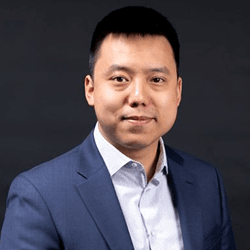
Prof. Richard Liu was born in Changsha, China and moved to Toronto, Canada at the age of six. He earned his A.B. in chemistry and physics from Harvard University in 2015, working in the labs of Profs. Ted Betley and Eric Jacobsen. Richard pursued Ph.D. studies at the Massachusetts Institute of Technology (MIT), earning his degree in 2019 under the supervision of Prof. Stephen Buchwald, with whom he developed several CuH-catalyzed olefin hydrofunctionalization reactions. After a short postdoctoral stay at MIT in Prof. Timothy Swager’s group, Richard returned to Harvard to join the faculty in 2022. His research group is interested in the development and understanding of catalytic methods, including those based on late transition metals, redox-active organic molecules, and photoswitches.
Prof. Liu will be honored at an upcoming Award Symposium at ACS Fall 2026, taking place in Chicago from August 23-27, 2026.
Why did you choose ACS Catalysis to publish your winning research?
ACS Catalysis was established in 2011, when I first started my undergraduate studies. As I went through my training, I also watched ACS Catalysis grow into a field-leading venue that featured many creative catalytic concepts, deep mechanistic studies, and very useful methods. I can remember many examples of papers I had read in ACS Catalysis in the past decade that had considerable impact on my own research. When the opportunity came to publish this azidation method, which we felt had the right mixture of immediate utility and deeper insight, my team felt ACS Catalysis would be a perfect choice. We had initially sought to develop a Pd-catalyzed azidation of aryl halides and triflates to meet a real need (our own need to synthesize such compounds). But the project offered a few real mechanistic surprises: for one, out of many dozens of ancillary ligands we screened, only a couple gave any product at all. As it turns out, digging deeper into this observation revealed quite a lot about product inhibition, the unexpected difficulty of reductive elimination involving azide, and the identification of some unusual dimeric off-cycle species. ACS Catalysis is a journal that has very broad readership representing diverse interests within catalysis. We were honored to be selected for publication.
What inspired you to pursue your field of research? How would you describe it to someone outside your field?
Initially, I was drawn the field of synthetic methodology because I felt like developing a good chemical reaction could be a nice way to contribute to many different fields at once. There are many analogies for chemical discovery, like digging on a beach or finding a needle in a haystack, and the people who invent catalytic reactions are not doing the searching directly but providing tools for those treasure/needle-searchers. It is hard to predict whether a new organic transformation will end up being used to make a drug or pesticide or OLED or sensor. And something about that was appealing to the generalist side of my personality, because my impact would not be limited to just one particular scientific problem or area. As I spent more time in organic chemistry, my interest in catalysis has remained constant, but the motivations perhaps shifted towards the more fundamental. I was certainly too idealistic in my youth: it has turned out to be very hard to predict what reactions will be useful or not. But the process of solving catalytic problems returns a lot of lessons about the rules of organic chemistry and how molecules behave. I now prefer to select problems based on what we can learn, rather than guessing whether people will use the reaction. I encourage my group to ask ourselves, even if someone will never use this reaction, what can they learn about catalysis from reading our paper?
What would you say is the biggest opportunity and biggest challenge in your field of research currently?
I feel more excited than ever about homogeneous catalysis as a topic of study. The past decade has seen some major advances in catalysis from around the world. I have never been good at predicting the future, and I feel a bit hesitant to single out one scientific opportunity as particularly promising. The papers I enjoy reading most are those outside of the mainstream or which bring a fresh, surprising perspective to an established problem. I worry that the field has become so competitive that creativity and risk-taking might start being valued less, as perceived productivity becomes more important. Maybe this is an inevitable price to pay for the rising popularity of catalysis and limited resources. But as a field, we should challenge ourselves to highlight as many kinds of ideas as possible.