
To mark International Open Access Week 2026, five researchers in India share their views on publishing costs, equity, research quality, and what it will take to fund open access sustainably.

Knowledge has the greatest potential to advance discovery and benefit society when it can be accessed, shared, and built upon. The theme of International Open Access Week 2026, “The Cost of Knowledge,” invites us to reflect on the financial and structural factors that shape who can access research and who can participate in its dissemination. In this special feature, researchers from India discuss the reach and impact of open access, along with questions around publishing costs, equity, quality, and sustainable funding. Together, their perspectives offer a nuanced view of the opportunities and challenges shaping the future of open scholarly communication.
In This Article:
Read Interviews from India’s Research Community
Prof. Angshuman Nag
Prof. Swagata Dasgupta
Prof. Athi N. Naganathan
Prof. Sayanti Chatterjee
Prof. Sankar Chakma
Publish Open Access with ACS Publications
Browse Open Calls for Papers
ONOS Support for Open Access Publishing
Read Perspectives from the Scientific Community in India
Prof. Angshuman Nag
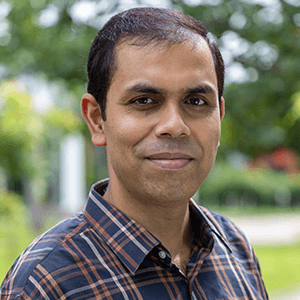
Prof. Angshuman Nag is a Professor at the Indian Institute of Science Education and Research (IISER) Pune, India, and an Associate Editor of JACS Au. He completed his M.Sc. in Chemistry from IIT Guwahati in 2003 and earned his Ph.D. from the Indian Institute of Science (IISc), Bangalore, in 2009. Following his doctoral studies, he carried out postdoctoral research at IISc Bangalore and the University of Chicago. In 2012, he established his independent research group at IISER Pune as a Ramanujan Fellow. His research focuses on developing novel semiconductor materials with advanced optoelectronic properties. Major areas of research in his group include doping metal halide perovskites for near-infrared LEDs and spin qubits, molecular design of hybrid two-dimensional layered perovskites for chiral and nonlinear optoelectronics, and the synthesis and study of colloidal perovskite nanocrystals (quantum dots). His research bridges fundamental materials chemistry with emerging semiconductor and optoelectronic technologies.
Congratulations on joining the editorial team at JACS Au! Could you share your experience as an Associate Editor at JACS Au and the qualities that, in your view, distinguish a strong manuscript submitted to the journal?
So far, my experience as an Associate Editor at JACS Au has been highly rewarding. I have had the opportunity to evaluate high-quality research before it is published. Reading reviewers’ reports, including sometimes conflicting views, has enriched me as a scientist and helped me appreciate different ways of evaluating a scientific work. I also learn a great deal from our monthly editorial meetings. Overall, this role has helped me develop a broader perspective on what constitutes meaningful scientific research.
I expect a strong manuscript to communicate its key finding clearly in a single sentence, or at most in two sentences. The significance of the finding should also be stated clearly and concisely. Importantly, the claims should be supported by carefully designed and appropriately analyzed experimental and/or theoretical evidence.
JACS Au is an open access journal. From an editor’s perspective, how does open access increase the reach and influence of the findings published in the journal? How can this wider accessibility help accelerate scientific discovery and collaboration?
Open-access journals have a broader reach and make research more accessible to readers. Many research-funding agencies across countries also expect research outcomes to be readily available to the scientific community, so I see the growth of open access as a welcome development. However, one important concern is that authors may not always have the necessary funds to cover article publication charges (APCs). Keeping APCs at a moderate level and providing waivers in genuine cases would make open access more inclusive. It is encouraging that ACS Publications has established institutional agreements with a large number of universities that cover APCs. In addition, initiatives such as India’s One Nation One Subscription (ONOS) policy support APCs for Indian authors.
Looking ahead, what changes would you like to see in the scholarly communication landscape to make research more accessible and amplify its impact?
Scholarly communication, in terms of writing, reviewing and even reading, is undergoing a major transformation because of Artificial Intelligence (AI). In my view, the use of AI is unavoidable, since it offers many advantages. Although the major publishers have guidelines for the use of AI, the opportunities, challenges and appropriate boundaries of AI use are still evolving. Every scholar has a unique way of thinking and communicating, and I worry that excessive reliance on AI, particularly among early-career authors, could blur this individuality. I would like to see greater clarity and consensus among publishers, authors, reviewers, and readers regarding the advantages and disadvantages of using AI in scholarly communication.
Ultimately, the impact of a scientific communication is driven by the quality and significance of the original research. Nevertheless, the paper should not simply disseminate results. It should provide the broader context stimulating collaborations across disciplines and inspire new discoveries.
What is one message you would like to share with researchers considering open access publishing?
As an author, I would not like to submit my paper to any journal, if the novelty, significance and rigor of the work are not thoroughly assessed through a robust peer-review process. Once this quality is ensured and funding or institutional support/agreement is available to cover APCs, I would be happy to publish in an open access journal in order to enhance the visibility of my research.
Prof. Swagata Dasgupta
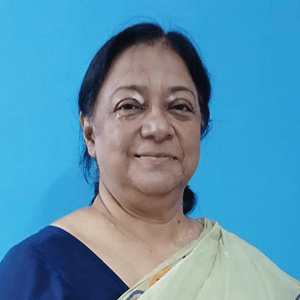
Prof. Swagata Dasgupta is a Professor in the Department of Chemistry at the Indian Institute of Technology Kharagpur, India. She earned her B.Sc. (Hons.) from Presidency College, Kolkata, M.Sc. from IIT Kanpur, and Ph.D. from Rensselaer Polytechnic Institute, USA. Her research in biophysical chemistry focuses on protein-protein and protein-small molecule interactions, protein aggregation, oxidative stress and glycation, protein-nanoparticle interactions, and the utilization of waste proteins for potential applications. She is a Fellow of the Indian Academy of Sciences (Vice-President, 2025 onwards) and an active member of the Indian National Science Academy (INSA). She serves as the National Representative of IUPAC’s Physical Chemistry and Biophysical Chemistry Division (I) 2026-27.
Your research on protein aggregation and protein-nanoparticle interactions brings together protein chemistry, biophysics, nanoscience, and biomedical research. What role do you think open access plays in fostering collaboration across these disciplines and accelerating progress in understanding complex biological processes?
I am not sure whether open access really plays a role in fostering collaborations across disciplines. Several journals publish interdisciplinary research, which was not as common in the past. Open access journals often emphasize broader scope and audience reach. At the same time, editors frequently note that identifying suitable reviewers for interdisciplinary manuscripts can be challenging, which may contribute to longer evaluation timelines and, in some cases, difficulties during the review process.
Reflecting on your experience, what impact has publishing open access had on the reach and engagement of your research? Could you share one of your articles published open access in an ACS journal and about your publishing experience?
It is difficult to attribute the impact of only open access journals on the reach of research but the possibility of a wider readership implies that the research can be made easily accessible — which is the concept of open access. It is a common notion that open access journals do not have the rigorous review process the other journals follow. Hence, publication in these journals is not considered in the same light as non-open access journals. I do have publications in ACS Omega by invitation as well as by journal transfer that have been impactful:
Cell Penetrability of a γ‑Crystallin Peptide Fragment from the Discarded Cataractous Eye Emulsion
ACS Omega (2024) 9 (13): 14840–14848
Cross-Linking in Keratin-Based Films Enhances Cationic and Anionic Dye Adsorption
ACS Omega (2025) 10 (49): 60235–60244
Looking ahead, what changes would you like to see in the scholarly communication landscape to make research more accessible and amplify its impact?
Options should be made available for authors to choose whether they would like to opt for open access. Sometimes the costs are prohibitive. The common argument is that now the financial burden has shifted from readers to authors. This is disadvantageous for researchers without funding as well as early-career scientists and also authors from limited resource countries. While many institutions and consortia now provide APC support and funding opportunities, access to these resources is not universal. As a result, disparities can remain between authors who are able to secure funding and those who are not, potentially limiting equitable participation in scholarly communication.
What is one message you would like to share with researchers considering open access publishing?
To check the pedigree of the journal carefully before considering open access publishing. It would probably be prudent to consider this option after one has established oneself in the research field.
Prof. Athi N. Naganathan
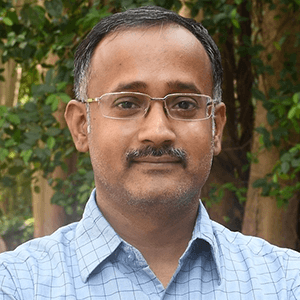
Athi N. Naganathan is a Professor in the Department of Biotechnology at the Indian Institute of Technology Madras (IIT Madras). He received his B.Tech. in Industrial Biotechnology from Anna University in 2002 and Ph.D. in Biochemistry from the University of Maryland, College Park, USA, in 2007. He subsequently held postdoctoral positions at CIB-CSIC, Madrid, and the Barcelona Supercomputing Center, Spain, including a Juan de la Cierva Fellowship. Since 2012, his Protein Biophysics Laboratory at IIT Madras has employed experimental spectroscopy, functional studies, simulations, and theoretical modeling to understand and manipulate the basic energetic and entropic factors governing the folding of proteins, with implications in protein evolution, function, and design.
Your research bridges protein biophysics and computational biology. In your experience, how has open access publishing helped broaden the reach of interdisciplinary research across different scientific communities?
Biology is an inherently interdisciplinary science, and many of its most significant advances have come from researchers trained outside the discipline. Physicists, chemists, mathematicians, and computer scientists have repeatedly reshaped the field, with the recent breakthrough in AI-based protein structure prediction being a prime example. Such an interdisciplinary research domain would therefore benefit greatly from open access (OA) publications as more information can be accessed readily, freely and by anyone. Media outlets are far more likely to cover research they can access in full, bringing interesting findings to students, policymakers, and the wider public. Given the current ONOS scheme that funds gold OA publications in India, I would expect more researchers to publish in OA journals.
Reflecting on your experience, what impact has publishing open access had on the reach and engagement of your research? Could you share one of your articles published open access in an ACS journal and about your publishing experience?
We do see a clear pattern where our OA publications have attracted higher view counts and downloads, if not a higher number of citations. This clearly suggests that more people are reading our work. For a group like mine working at the interface of biophysics and computation, this wider readership matters, because our audience is spread across several disciplines. It has already led to some unexpected and very fruitful collaborations.
One of the latest open access articles published by our group is:
Local and Global Breathing Motions Prime the Access to Buried Binding Site in an Antibiotic-Sequestering Protein
ACS Bio Med Chem Au (2025) 5 (5): 840–851
We show how local and global dynamics coordinate to enable access to a buried antibiotic-binding site within a protein. It was an uncomplicated publishing experience overall. The submission and production stages were clear and well organized, as we have come to expect from ACS journals. The open access process added no additional complexity, which made the decision to publish this work as OA an easy one.
Looking ahead, what changes would you like to see in the scholarly communication landscape to make research more accessible and amplify its impact?
I believe the preprint servers will start dominating eventually in Biology, as they do for research in the field of Physics and Mathematics. This enables rapid dissemination and early feedback, rather than waiting for the more cumbersome (but necessary) peer-review process. With the advent of AI tools, it is imperative than even these pre-print servers are also tightly regulated and moderated. The publishing houses and journals will also have to be proactive in their filtering steps to detect AI-generated content robustly.
Researchers would still publish in journals, as peer reviewing (despite its pitfalls and slow evolution) is one of the few ways available to build trust in the data generated/presented. If a given journal is traditionally known to have a strong peer review community (providing constructive reviews), researchers will still gravitate towards it, even if OA is not possible.
What is one message you would like to share with researchers considering open access publishing?
Quite simple: if the funds are available, choose open access. This will maximize outreach and, by extension, the impact of the publication.
Prof. Sayanti Chatterjee

Prof. Sayanti Chatterjee is an Assistant Professor in the Department of Chemistry at the Indian Institute of Technology Roorkee. She received her Ph.D. in Bioinorganic Chemistry from the Indian Association for the Cultivation of Science (IACS), India, in 2016, followed by postdoctoral research at the University of Virginia, USA (2017–2018), and the Max-Planck-Institut für Kohlenforschung, Germany (2018–2020), as an Alexander von Humboldt Research Fellow. In 2020, she joined the Max Planck Institute for Chemical Energy Conversion Germany, before returning to India in 2022 to establish her independent research program at IIT Roorkee. Since August 2024, she has been serving as the Head of the Max Planck Partner Group at IIT Roorkee. Her research group, the PO!TION LAB at IIT Roorkee, develops sustainable catalytic platforms through the rational design of inorganic complexes, integrating advanced spectroscopy, electrochemistry, and mechanistic investigations to uncover fundamental reactivity and translate these insights into environmentally benign strategies for challenging chemical transformations. Prof. Chatterjee has been awarded with several national and international research grants including funding from agencies such as ANRF, CSIR, DST India and International Grant from Max Planck Society.
Your research combines bioinorganic chemistry, catalysis, spectroscopy, and sustainable chemical transformations. How can open access help such interdisciplinary research reach diverse scientific communities and accelerate the development of more sustainable approaches to chemistry?
Our research integrates bioinorganic chemistry, catalysis, and spectroscopy to develop nature-inspired, sustainable chemical transformations using earth-abundant elements. We envision a scientific ecosystem where discovery is not confined to laboratories but resonates with society. Knowledge should not remain restricted by subscription barriers; it must reach researchers, students, and communities to inspire discoveries, foster awareness, and enable responsible applications.
Open access can accelerate sustainable chemistry by facilitating interdisciplinary collaboration, global knowledge exchange, and the development of safer, resource-efficient catalytic processes. It also enables communities beyond well-funded institutions to participate in and benefit from scientific advancement. Ultimately, sustainability must extend beyond the laboratory to societal practices and everyday lifestyles.
Realizing this vision requires balancing equitable access to knowledge with the economic viability of scientific publishing. Publishing models must remain sustainable without allowing financial barriers to limit society’s access to scientific discoveries. Research policies among nations worldwide should establish dedicated funding mechanisms for open-access publishing. With appropriate financial support, researchers would be better equipped to make their work freely available. Such investment could strengthen knowledge dissemination and promote a sustainable circulation of research funding within the scientific community, benefiting both science and society. By democratizing knowledge, open access can foster a more sustainable and inclusive publishing model, bridge scientific innovation and societal needs, advance sustainable technologies, and contribute to a more informed, inclusive, and equitable future for all.
Reflecting on your experience, what impact has publishing open access had on the reach and engagement of your research? Could you share one of your articles published open access in an ACS journal and about your publishing experience?
As researchers, we want our discoveries to reach the widest possible audience, transcending institutional, geographical, and economic boundaries. Open access facilitates this by making research accessible to diverse scientific communities, encouraging knowledge exchange, and creating opportunities for collaboration and further discovery.
Publishing open access in ACS Organic & Inorganic Au has been a very positive experience for our group:
Mechanistic Insights into the Reductive N–O Bond Cleavage of O‑Acyl Hydroxylamines: Dual Reactivity as Potent Oxidants and Nitrogen Transfer Agents
ACS Org. Inorg. Au (2025) 5 (5): 385–399
We were grateful for the special invitation that enabled us to publish without paying the article processing charge. The manuscript underwent a thorough review, the processing time was efficient, and the post-acceptance publication process was straightforward. Overall, this experience reinforced our belief in the value of making scientific knowledge freely accessible.
Looking ahead, what changes would you like to see in the scholarly communication landscape to make research more accessible and amplify its impact?
Looking ahead, we envision a scholarly communication landscape that makes research more accessible, equitable, and impactful, maximising the value of scientific knowledge for society. Open access must move beyond removing reader paywalls to eliminating financial barriers for authors, supported by sustainable funding models that make knowledge-sharing an “asset” rather than a “burden”. Equally important is recognizing that science advances not only through successful discoveries but also through failed experiments, reproducible findings, and openly shared data. Embracing transparency, machine-readable research, and responsible artificial intelligence can accelerate discovery and foster interdisciplinary connections. Finally, academic institutions must recognize holistic research impact, rewarding open data sharing, transparency, and public engagement alongside scientific excellence, rather than relying predominantly on journal impact factors.
We believe scholarly communication should be viewed not merely as a publishing process but as an integral part of sustainable development. Through international cooperation and equitable research policies, we envision to transform open knowledge into a catalyst for scientific innovation and collective human progress. In this spirit, we are reminded of Rabindranath Tagore’s timeless vision:
“Where the mind is without fear and the head is held high; Where knowledge is free; Where the world has not been broken up into fragments…”
What is one message you would like to share with researchers considering open access publishing?
My message to researchers is to view open access not merely as a publishing choice, but as a commitment to making knowledge a public good. Fundamental research and transformative discoveries must be nurtured alongside application-driven research, for the breakthroughs that shape our future often begin with curiosity-driven exploration. The words of Acharya Prafulla Chandra Ray, the Father of Indian Chemistry: “There are occasions that demanded that I should leave the test tube to attend to the call of the country”, remind us that the purpose of science extends beyond the laboratory and the pages of scientific journals. Our ultimate responsibility is to place scientific knowledge at the service of humanity: to share knowledge widely, pursue research not merely to increase publication counts, but to advance understanding, address societal challenges, and contribute to the welfare of humankind.
Prof. Sankar Chakma

Prof. Sankar Chakma is an Associate Professor of Chemical Engineering at the Indian Institute of Science Education and Research Bhopal, India. He earned his B.E. in Chemical Engineering from Jadavpur University in 2009, followed by M. Tech. and Ph.D. degrees from IIT Guwahati in 2011 and 2015, respectively. His research focuses on sonochemistry, waste-to-wealth, pyrolysis, electrooxidation, and wastewater treatment.
He has received several honors, including the ACS Rising Star Award, Ambuja Young Researcher’s Award, IEI Young Engineers Award, and ISEES Young Scientist Award. He is an Associate of the Indian Academy of Sciences and a Fellow of the Institution of Engineers (India) and the Indian Institute of Chemical Engineers (IIChE). He serves as an Associate Editor for Biomass and Bioenergy and other journals. He currently serves as Vice-Chairman of the IIChE Bhopal Regional Center.
Engineering innovations often have real-world applications beyond academia. How does open access help ensure that research findings reach practitioners, innovators, and other stakeholders who can translate them into meaningful impact?
I believe engineering or applied science research is truly valuable when it goes beyond generating new ideas and knowledge to address real-world challenges and improve people’s lives. Open access plays a crucial role in this by allowing people to read and benefit from research without the burden of subscription fees. This is especially valuable for engineers, industry professionals, entrepreneurs, and researchers working in institutions where access to quality journals may be limited. When research findings are freely available, it becomes easier for them to explore new ideas, keep up with technological developments, and apply new knowledge to solve practical problems. Also, open access encourages stronger collaboration between academia and industry by helping turn scientific discoveries into practical solutions. Moreover, it opens research to everyone and ensures that promising ideas reach communities that can transform them into real-world impact
Reflecting on your experience, what impact has publishing open access had on the reach and engagement of your research? Could you share one of your articles published open access in an ACS journal and describe your publishing experience?
My experience publishing open access in ACS journals has been both positive and rewarding. We have published open-access articles in ACS Engineering Au and Chem & Bio Engineering:
Unlocking Efficient Electrochemical Urea Oxidation and Understanding Mechanism Insights of Co-Doped NiS
ACS Eng. Au (2025) 5 (4): 450–467
Strategies for Mitigation of Intermediate CO2 Poisoning to Promote Electrocatalytic Efficiency during Urea Oxidation Reaction
Chem Bio Eng. (2026) 3 (6): 598–609
These experiences have further strengthened my belief in the importance of making scientific research accessible to a broader audience. What I value most about open access is that it allows people beyond the academic community to benefit from research, including students, researchers at the institutions with limited resources, and professionals working in related industries. By removing subscription barriers, open access makes it easier for scientific ideas to cross boundaries and reach those who can learn from them or put them into practice. For me, open access is more than just a publishing model; it reflects a commitment to sharing knowledge, encouraging wider collaboration, and ensuring that our research can make a meaningful difference in society and for future generations.
Looking ahead, what changes would you like to see in the scholarly communication landscape to make research more accessible and amplify its impact?
I would like to see a scholarly publishing system in which access to knowledge and opportunities to publish are not constrained by financial resources. Although open access has made research more accessible to readers, publication charges can still pose a significant challenge, particularly for researchers in developing countries and those with limited research funding. Publishers, academic institutions, and funding agencies may work together to develop a sustainable publishing model that makes open access affordable for authors while ensuring that research remains freely accessible to readers. I believe greater support through publication fee waivers, institutional agreements, and alternative publishing models would help more researchers to share their findings with the scientific community globally. I would also welcome greater emphasis on research data sharing, interdisciplinary collaboration, and communicating scientific findings to audiences beyond academia. At the end of the day, scholarly communication should not just be about publishing papers; it should be about ensuring that knowledge actually reaches people and creates a real scientific and social impact.
What is one message you would like to share with researchers considering open access publishing?
I encourage researchers to consider open access as a golden opportunity to share their research and new findings with a broader scientific community. The value of scientific research should not end with publication; its findings should reach those who can build on existing knowledge and translate scientific findings into practical solutions to real-world challenges. My own experience with open access publishing in ACS journals has reinforced the importance of making scientific knowledge accessible beyond traditional academic boundaries. At the same time, of course it is important to choose journals carefully, taking into account their scientific quality, peer-review standards, and publishing policies. By making our research more accessible, we can contribute to a more inclusive scientific community where knowledge is shared more widely and has a greater opportunity to make a meaningful and long-lasting impact on future generations.
Browse Open Calls for Submissions
We invite researchers to consider the following open calls for papers:
JACS Au
Call for Papers: Optoelectronics and Energy Materials: Synthesis, Properties, and Device Applications
Deadline: 1 May 2027
ACS Physical Chemistry Au
Call For Papers: Carrier Spin Dynamics in Materials
Deadline: 30 November 2026
ACS Materials Au
Call For Papers: Photovoltaics: From Halide Perovskites to Emerging Materials
Deadline: 1 December 2026
ACS Organic & Inorganic Au
Call For Papers: From Flask to Factory: Chemical Innovations That Scale
Deadline: 31 December 2026
ACS Omega
Call for Papers: Focus on Peptides: Synthesis, Characterization, and Applications
Deadline: 30 April 2027
Call For Papers: Colors in Archaeology: Analytical, Methodological and Conservation Advances Through Case Studies
Deadline: 30 April 2027
ONOS Support for Open Access Publishing
We are pleased to share that ACS Publications has three high-impact open access journals included under India’s One Nation One Subscription (ONOS) Article Publishing Charges (APC) support:
Eligible researchers in India publishing in these journals can avail centrally funded APCs through ONOS. Learn more:

ACS Publications: Shaping India’s Research Future Through One Nation One Subscription (ONOS)
Learn how ACS Publications is strengthening India’s research ecosystem through ONOS, from nationwide journal access to ethical publishing guidance.